Account Login or Join Submit a Wedding
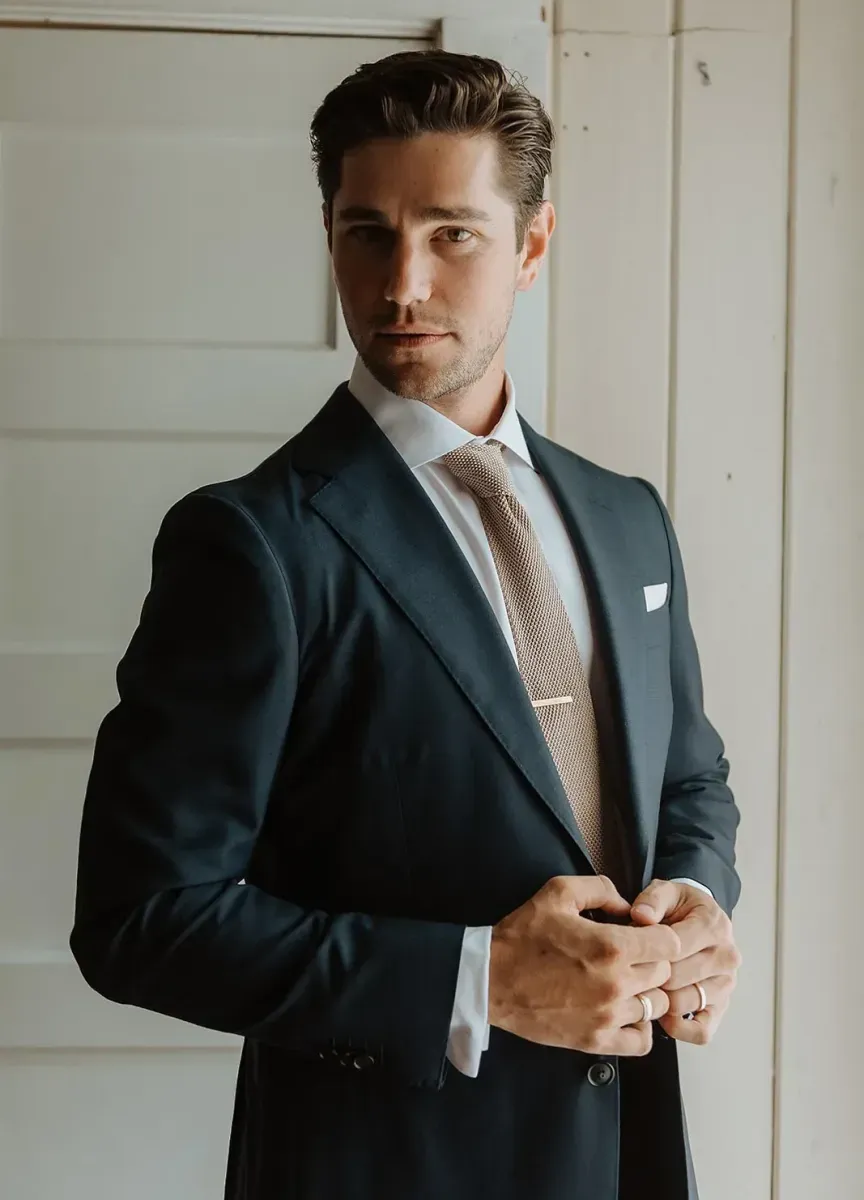
A groom buttoning a navy tuxedo jacket with a white floral boutonniere.
PRO TIPS

Men's Wedding Attire: A Complete Guide to Dress Codes, Suits, and Modern Groom Style

Looks for the Leading Men
Cindy Skanderup / 08 29 26
Tec Petaja Photography

Men's wedding attire is set by three things, in this order: the dress code on the invitation, your role in the day, and the venue. Everything after that is styling.

The dress code is the only part that is not up for debate. Black tie means a tuxedo. Cocktail means a suit. A four o'clock ceremony on sand means neither. Role comes next, and it’s simpler than you’d probably think: The groom dresses one degree apart from every other man in the room, groomsmen coordinate without matching him exactly, and guests stay a step below the wedding party. Venue and season handle the remainder, which mostly comes down to fabric weight and color.

Here’s the part worth knowing before you spend anything, according to the 3,161 weddings in the Carats & Cake dataset. Rented menswear appears at roughly the same rate at every budget level: 10.9 percent of weddings under $100,000, 10.2 percent between $100,000 and $250,000, and 6.9 percent above $250,000. Couture gowns, meanwhile, range from 4.5 percent to 16.1 percent. The dress often reflects the budget, but that’s not exactly how the suit factors in. For instance, the groom at the $500,000 wedding is about as likely to be in a rental as the groom at the $75,000 one. Otherwise, you can select a suit to hold onto as a memento (or for all future special occasions). 

What’s the moral here? The price of your suit is the least of your worries, but the priorities include fit, color, and details. Below, we’ve outlined everything you need to know about styling yourself for the big day.

How to read the dress code on a wedding invitation

The dress code is an instruction, not a suggestion. It tells you the formality ceiling and the floor, and every other decision happens inside that range. The following six categories cover essentially every wedding you’ll be invited to—including your own.

White tie

The rarest and strictest. A black tailcoat, black formal trousers with satin braid, a white piqué waistcoat, a white winged-collar shirt, a white bow tie, and black patent oxfords. No substitutions, no personal spin, no colored anything. If you receive a white tie invitation, rent or commission the full kit instead of assembling it, because the components have to match in fabric and finish, or the whole thing looks like a costume.

Black tie

A black or midnight-blue tuxedo, a white dress shirt, a black bow tie, and black formal shoes. The jacket has satin or grosgrain facing on the lapels and a matching stripe down the trouser. Midnight blue goes deeper and richer than black under artificial light, which is why it’s slowly become the preferred choice at evening weddings. A cummerbund or low-cut waistcoat covers the waistband. And keep in mind a long tie is not black tie, no matter what the internet tells you.

Black tie optional

The host is signaling a formal evening and giving you a choice. A tuxedo is welcome, and a dark suit with a white shirt and a conservative tie is equally correct. Charcoal or midnight navy reads better here than mid-grey. If you are unsure which way the room will lean, the dark suit is the safer of the two, because being slightly under the most formal guest is invisible while being the only man in a tuxedo at a suit wedding is not.

Formal or cocktail attire

A suit, full stop. Dark for evening, and open to color and pattern for daytime. This is the most common dress code at weddings hosted in the United States, and the one with the most latitude. Fit carries the entire look at this level, since there is no tuxedo doing the work for you.

Semi-formal or dressy casual

A suit without the obligation of a tie, or a sport coat with tailored trousers, and loafers instead of oxfords. This is the register most daytime and garden weddings are actually operating in, even when the invitation says something more vague.

Casual, beach, and garden

Tailored trousers with a linen or lightweight cotton shirt, and an optional jacket. Casual at a wedding never means what casual means anywhere else. It means no tie, breathable fabric, and shoes that can handle grass or sand. It does not mean shorts, and it does not mean the shirt you would wear to brunch.

When the invitation lists no dress code at all, take your cue from the venue and the start time. A ballroom at seven in the evening is a dark suit. A vineyard at three in the afternoon could welcome a slightly less formal and more colorful ensemble.
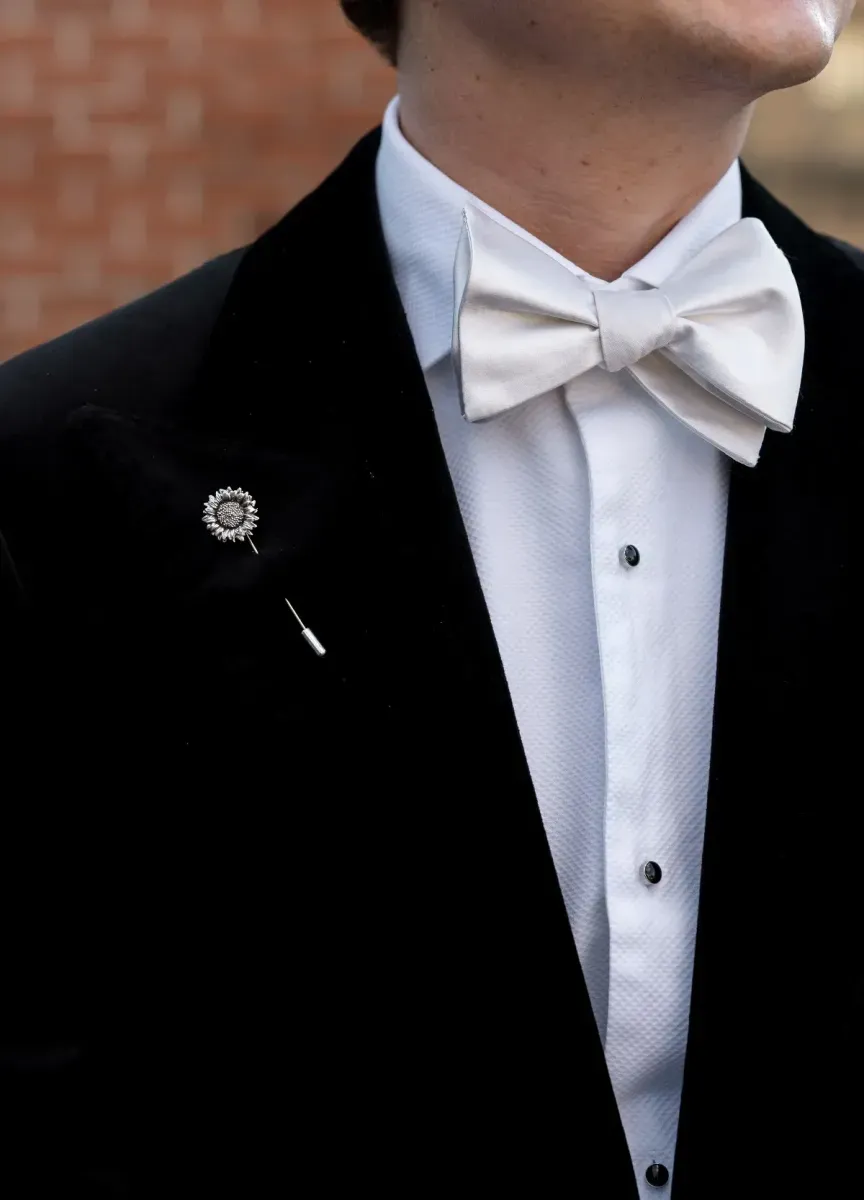
An up-close look at a groom with a white bow tie and tuxedo with a pin on the lapel.
Hiba Eddine
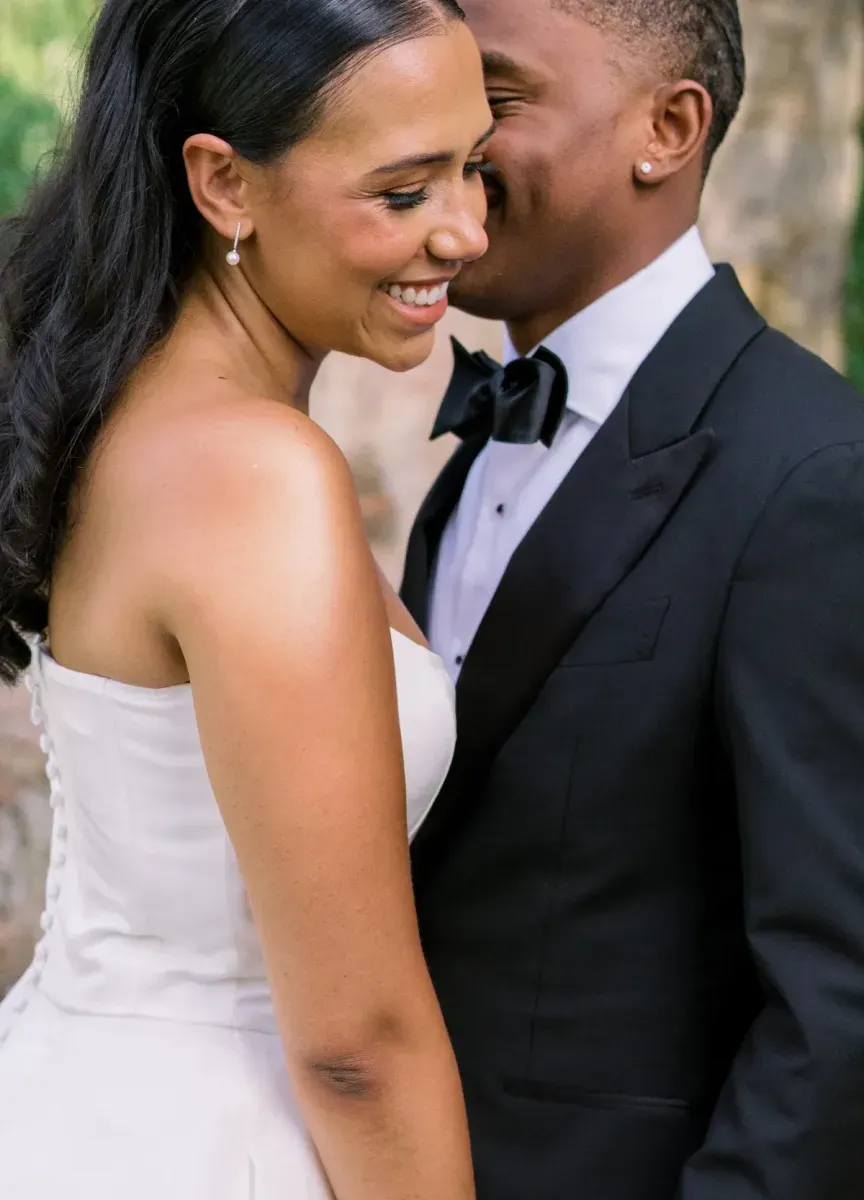
A bride in a strapless wedding gown smiling with a groom in a black tuxedo with a black bow tie smiling whispering in her ear.
Gabriele Malagoli
A groom looking directly at the camera and holding his suit dark suit jacket, with a button down shirt and neutral-toned tie.
@brittneycouture
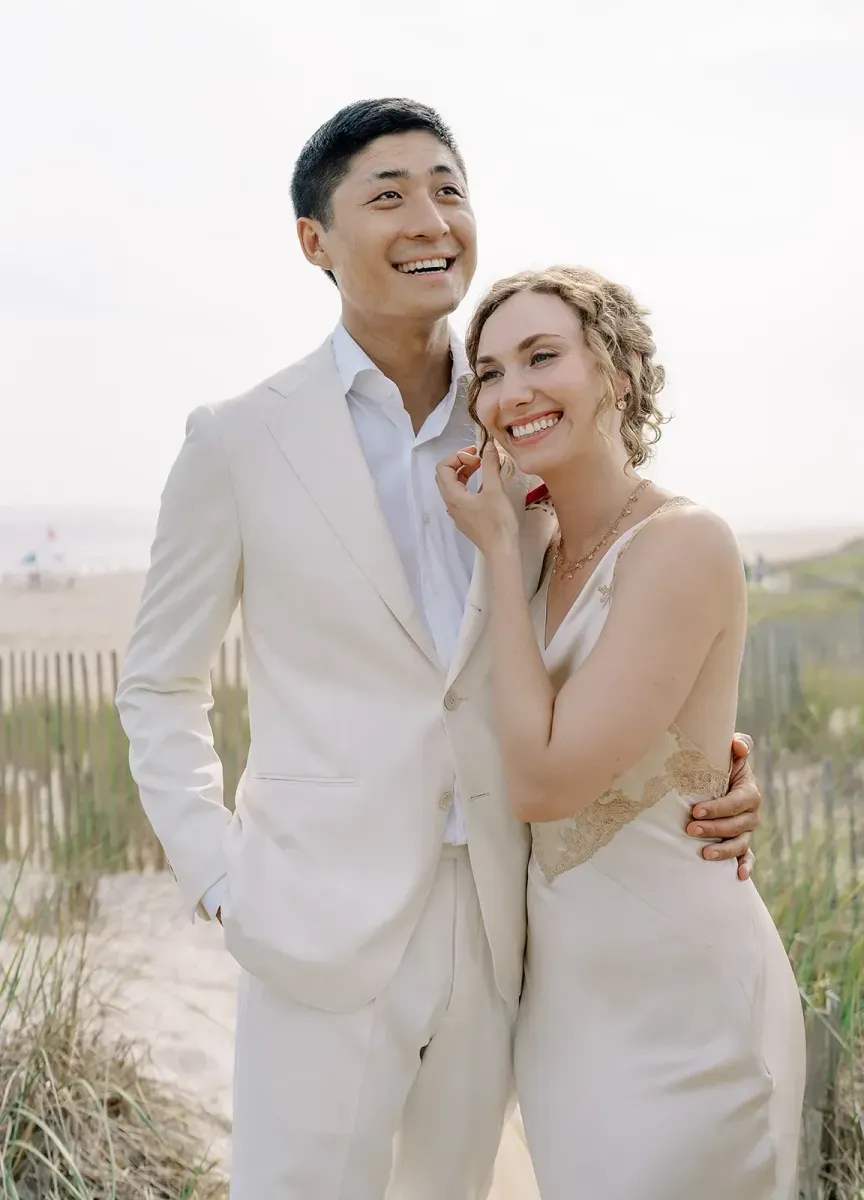
A bride and groom in cream-hued outfits embracing and smiling on the beach in Water Mill, New York
Kylee Yee Photography

Groom wedding attire by formality level

The groom's job is to be identifiable. In every photograph taken that day, a viewer should be able to find him without being told which one he is, and that has almost nothing to do with wearing something louder.

The reliable move is one degree of separation, chosen deliberately and applied once. If the dress code is black tie and the groomsmen are in black tuxedos, the groom wears midnight blue, or a shawl collar against their notch lapels, or a white dinner jacket. With the party in charcoal suits, the groom takes a different fabric in the same family. 

What does not work is stacking separate pieces. A groom in a different color, a different lapel, a different tie, and a boutonnière three times the size of everyone else's has stopped being the groom and started being a theme. Pick the one that photographs best in your venue and let the rest match.

Formality also applies more to the groom’s wardrobe than any other men at the same wedding. At a cocktail-attire wedding where guests are in suits without ties, the groom should be the one wearing the tie. At a black tie optional wedding where half the room is in dark suits, the groom should be the one in the tuxedo. He’s allowed to be the most formal man present, and shouldn’t be outdressed by a guest.

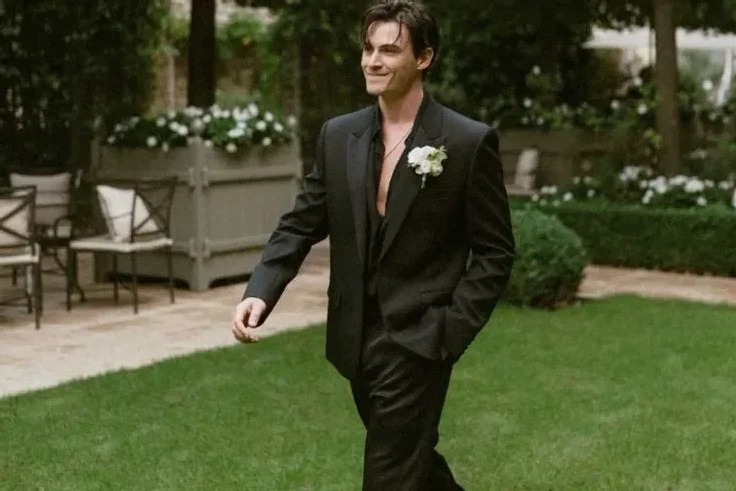
A groom walking wearing a dark suit with an unbuttoned black collared shirt underneath and a floral boutonniere.
Bushwhacked

Modern wedding suits: How proportion replaced the slim fit

The most consequential change in menswear over the last three years has nothing to do with color or lapel width. It’s proportions. The suit that reads current in 2026 has a fuller trouser, a softer shoulder, and a jacket cut with room through the body, and it looks nothing like the compressed slim fit that dominated the previous decade.

The trouser is where this is most visible. A wide-leg or straight-leg trouser with a full break, or a clean single break, changes the entire silhouette of a look before anyone notices the fabric. The lines are longer, the cloth moves when you walk, and the whole thing looks exceptionally tailored. The mistake is treating width as the whole idea. A wide trouser only works when the rise is correct and the waist actually sits where it should, because a low-rise wide trouser just looks like an ill-fitting garment.

Above the waist, the same logic applies in reverse. The jacket can be roomy through the chest and still needs to be exact at the shoulder. A tailor cannot fix the shoulder seam after the fact, and that seam is what separates relaxed tailoring from an oversized suit. Everything else is adjustable.

"The fastest way to modernize a wedding look is to widen the trouser and leave the shoulder alone," says Carats & Cake Editor-in-Chief Cindy Skanderup. "Almost every groom who tells us his suit felt dated was wearing something cut too narrow below the knee."

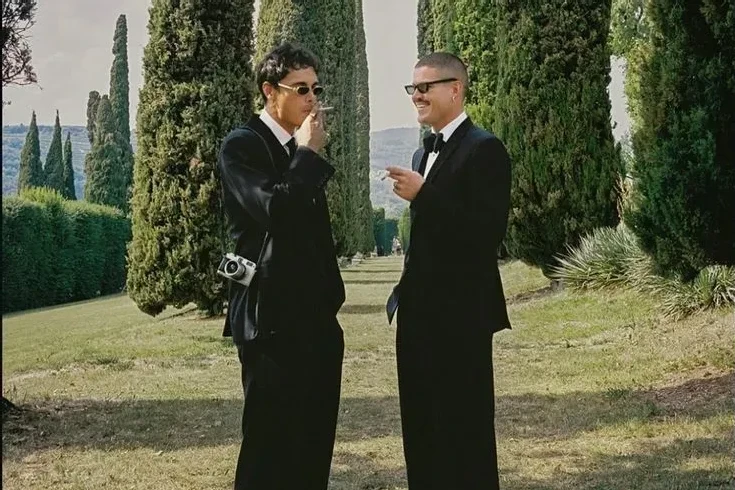
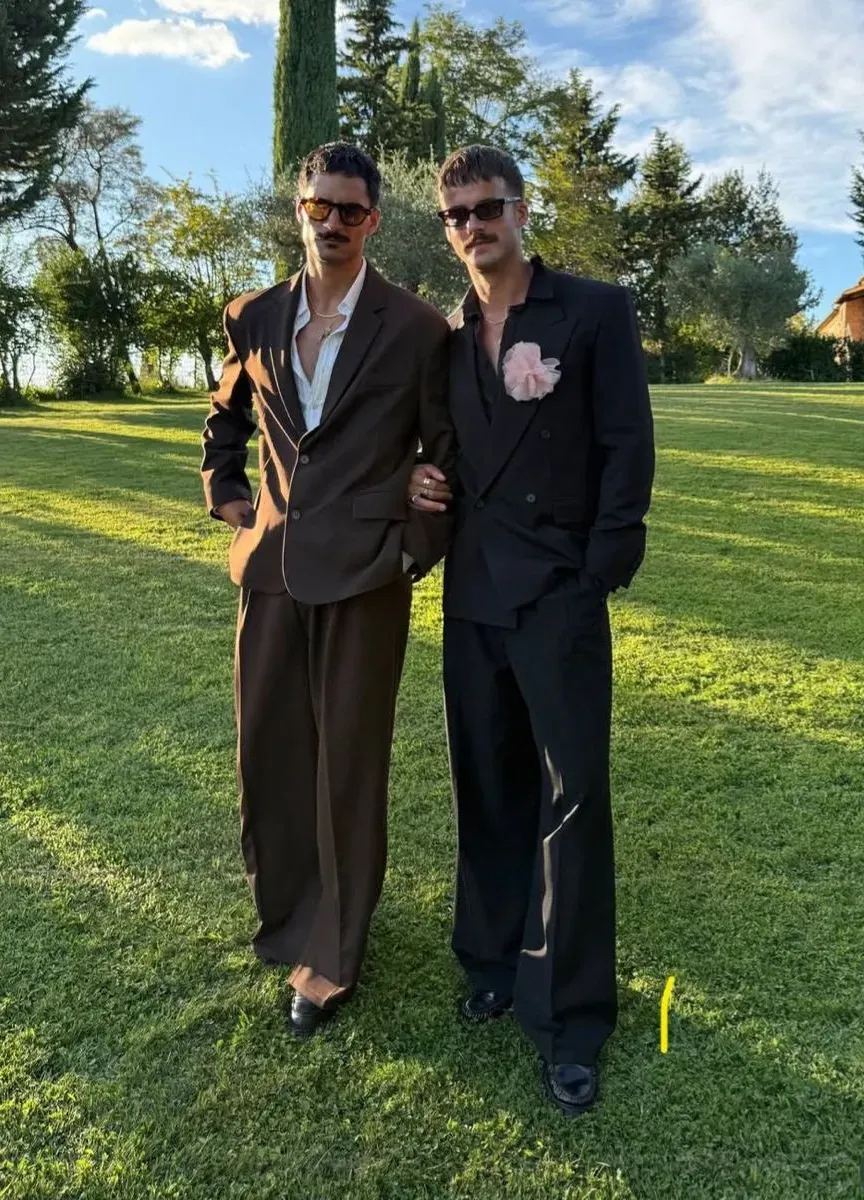
Two grooms in black suits with wide-leg trousers, standing among Italian cypress.
@sarbostudio
Two grooms on a lawn in relaxed brown and navy suits with wide trousers and contrast piping, one wearing a pale pink boutonnière.
Pinterest
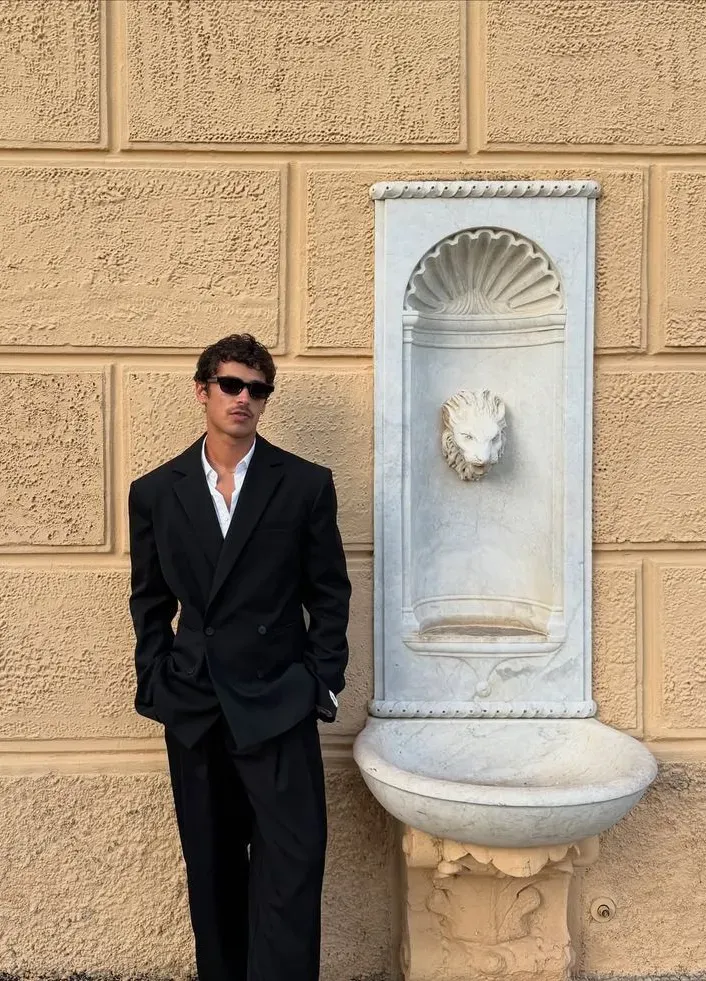
Groom in a relaxed black suit with an open collar, no tie, against an ochre wall with a stone fountain.
Hector Porrata-Doria Gasi

Groom suit ideas: Colors beyond black and navy

Black and navy will always be correct, and both are considered polished but not exactly groundbreaking. Right now, chocolate brown is the defining groom color of the moment. It earns the position because brown flatters every skin tone, achieves a formal look without feeling corporate, and sits beautifully against green, cream, and terracotta, which covers most outdoor venues in the U.S. Brown also holds up in daylight in a way black does not, since black tends to flatten in direct sunlight. The Carats & Cake dataset shows brown palettes appearing at 1.57 times the national rate in California weddings, the only color that meaningfully distinguishes the state, and menswear has followed suit.

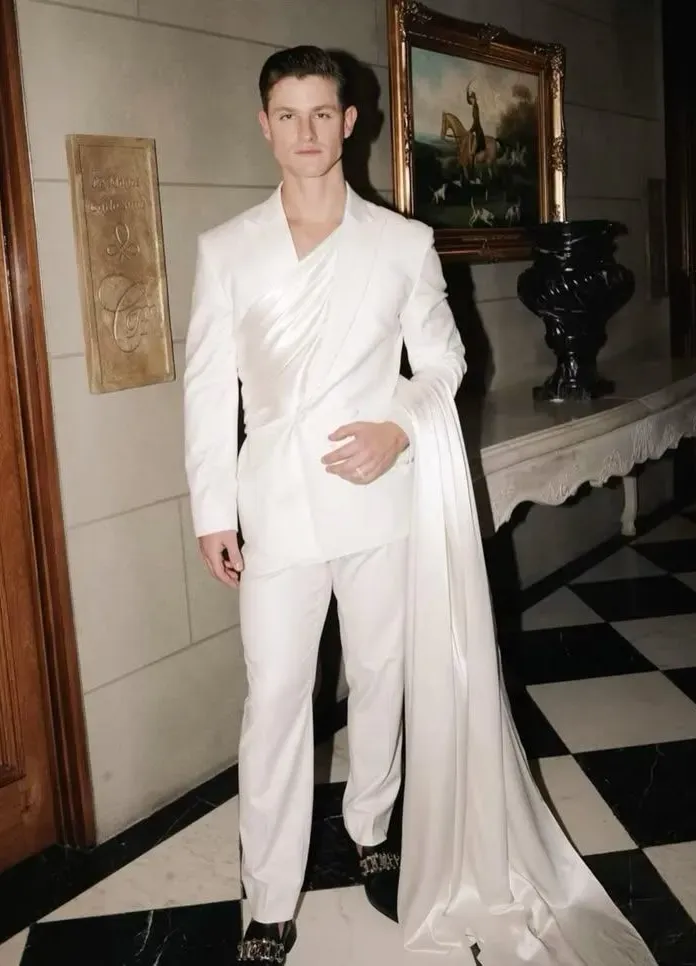
The other on-trend option is ivory or cream. An ivory suit with an ivory shirt, or a cream jacket over cream trousers, gives you the formality of white tie without the rigidity. Nothing beats it at warm-weather and destination weddings, and no other color lets a groom stand fully apart from a party in black without looking like he wandered in from a different event. Temperature is the risk here, since a cooler ivory can appear grey on camera, and a warmer ivory may look yellow under artificial tungsten lighting. 

Beyond those two categories, sage, olive, dusty blue, and warm taupe all work at daytime weddings, but we don’t recommend them at formal evening ones. Save them for a ceremony that starts before four.

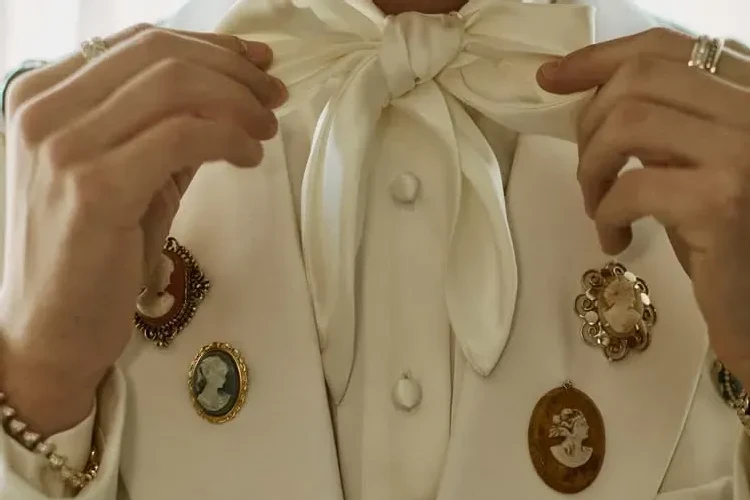
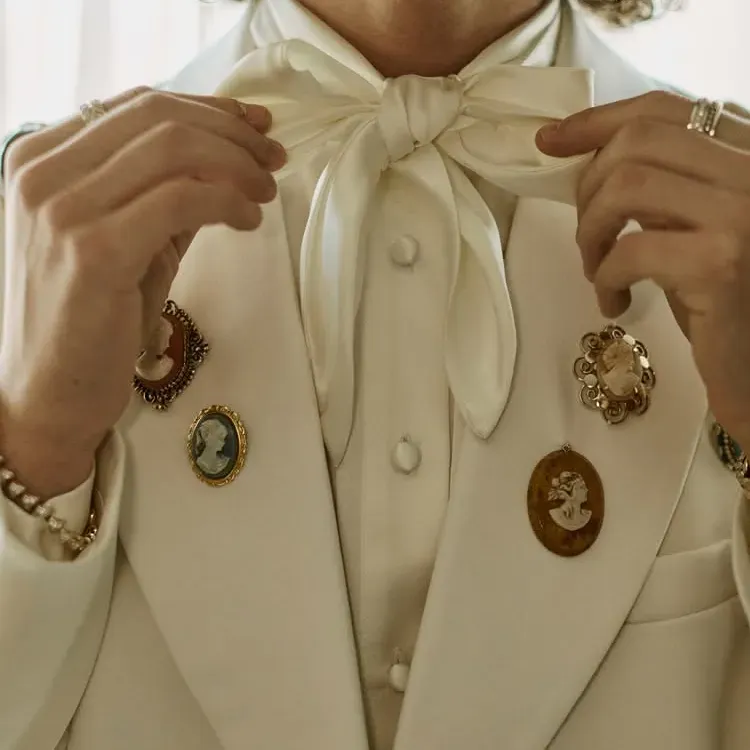
Close crop of an ivory suit with an ivory pussy-bow scarf tie and cameo brooches.
Tanner Fletcher
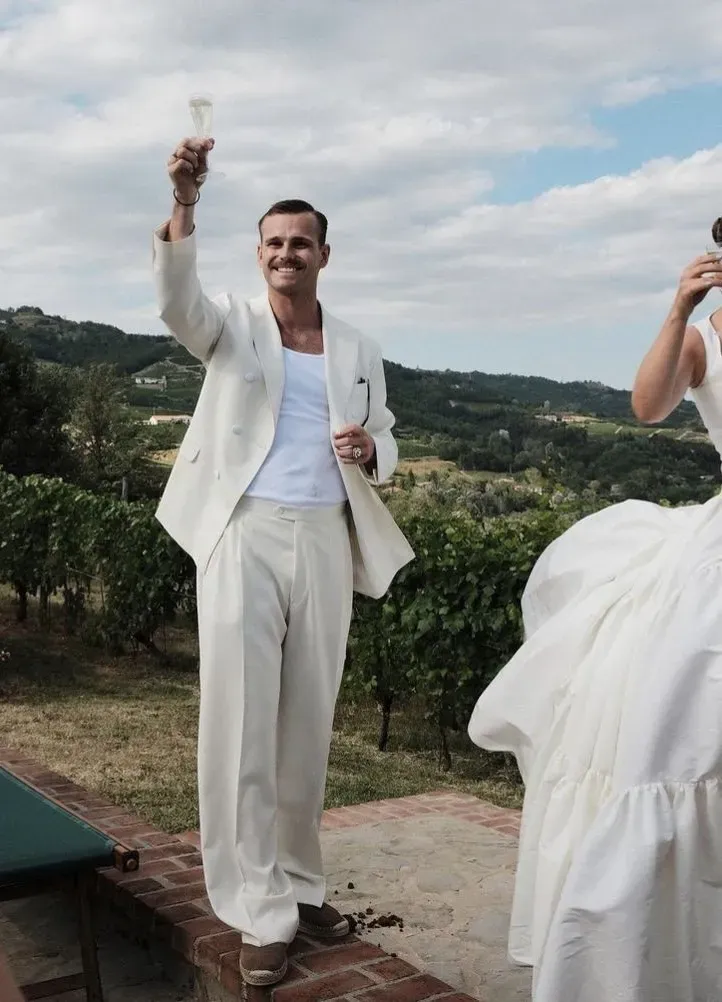
Groom in a relaxed ivory suit over a plain white tank, raising a glass at a vineyard, bride beside him in white.
Pinterest
Full-length white suit with a draped satin sash, photographed in a checkerboard-floor interior.
@mattgodkinweddings

Groom outfit ideas that skip the tie: Open collars, scarf ties, and ribbon

The tie is the first thing grooms are questioning, and the alternatives now split into three clear registers rather than one vague idea of going without.

The plain open collar is the simplest and the hardest to execute. It requires a shirt with enough collar structure to stand on its own, because a soft collar with nothing holding it just looks undone. Keep one or two buttons open, and wear a jacket that closes cleanly so the exposed chest stays framed. This concept suits relaxed tailoring and warm venues, but won’t coordinate with a formal tuxedo.

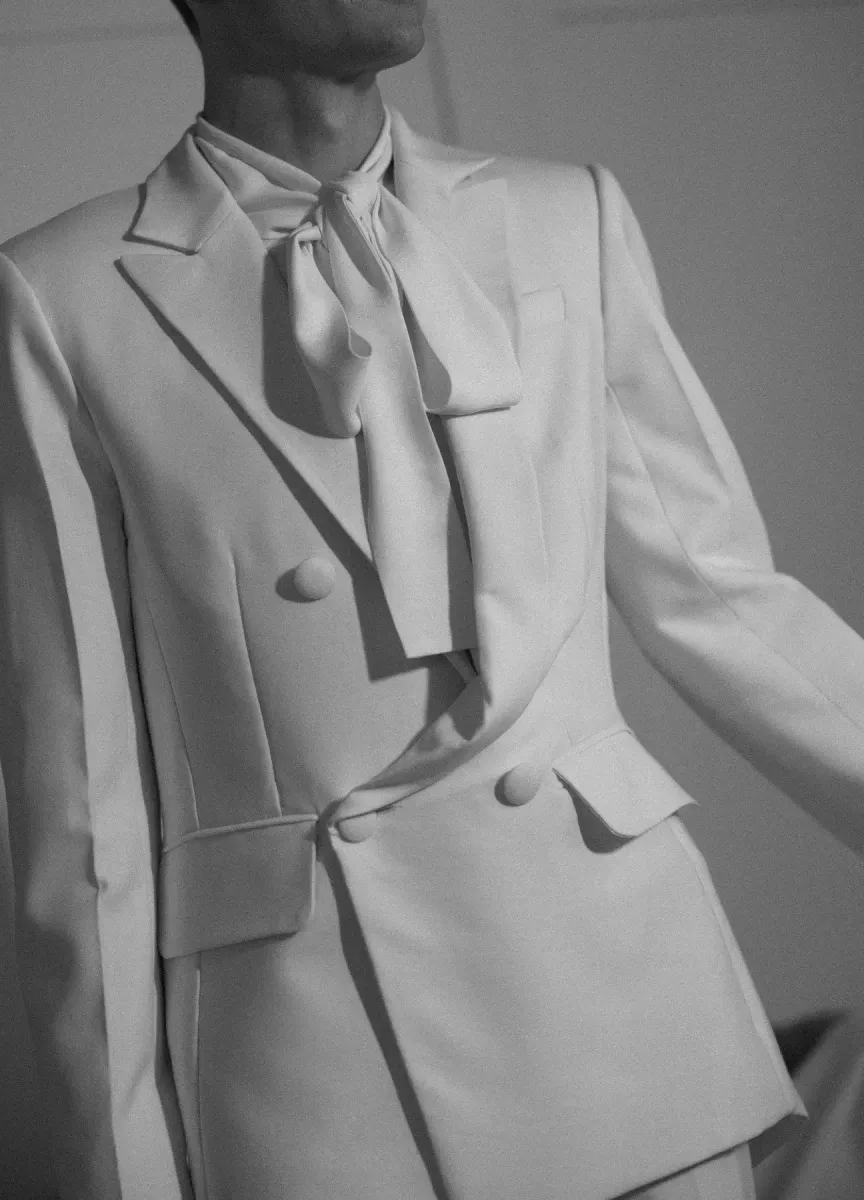
The scarf tie is the most editorial option available to a groom right now. Worn as a pussy bow at the neck, in the same fabric family as the suit, it structurally replaces the job of a tie while reading as something closer to jewelry. Tonal is the move, as a contrasting scarf tie can look like  a costume. To try it out, we suggest ivory on ivory or cream on cream.

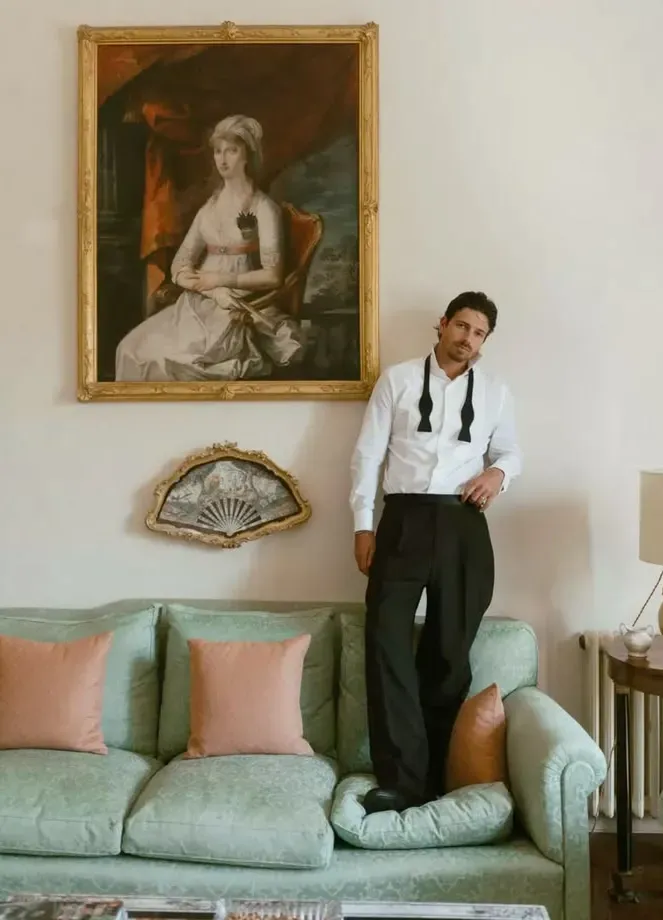
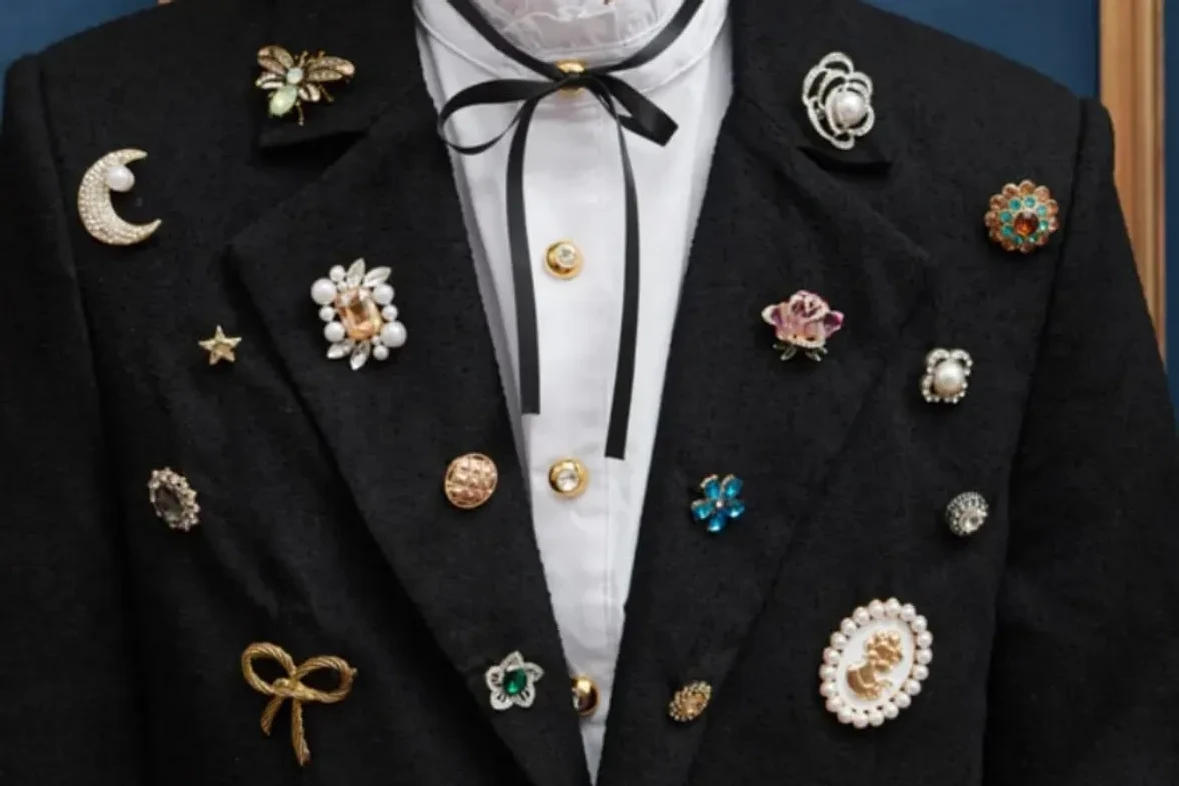
The ribbon tie sits between the two. A long, narrow length of black silk or grosgrain tied loosely at the collar gives you the vertical line of a tie with none of its formality, and it pairs particularly well with a ruffled or banded-collar shirt. 

Studio-lit pale suit with a tonal scarf tie and covered buttons, tightly cropped at the neck and shoulder.
@alibeckphoto
Groom in a white shirt and black trousers with a long black ribbon tie, standing in a green-and-gold sitting room. Ribbon tie without a jacket.
Bushwhacked
Black jacket with a ruffled white collar and a black ribbon tie, shot close.
Tanner Fletcher

Groom accessories for the wedding: Brooches, lapel chains, and boutonnières

Jewelry is the single biggest shift in groom style over the past two seasons, and it has moved well past the cufflink.

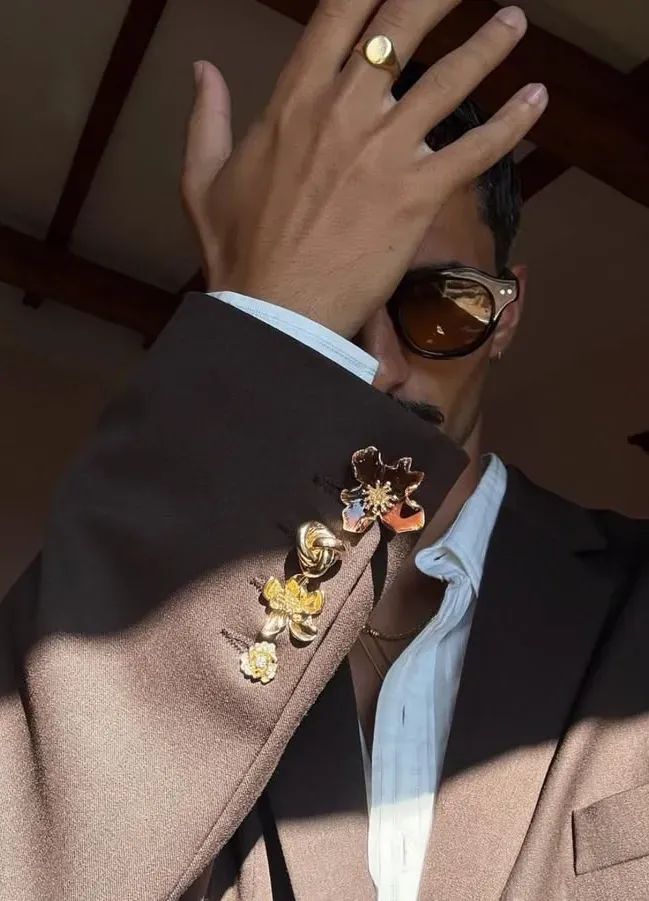
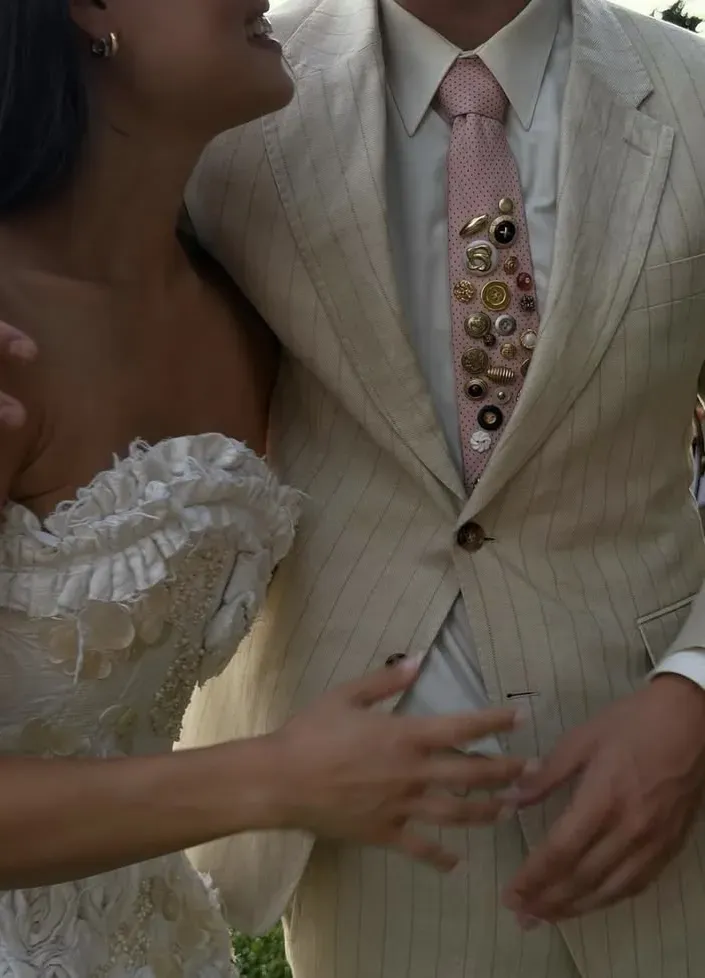
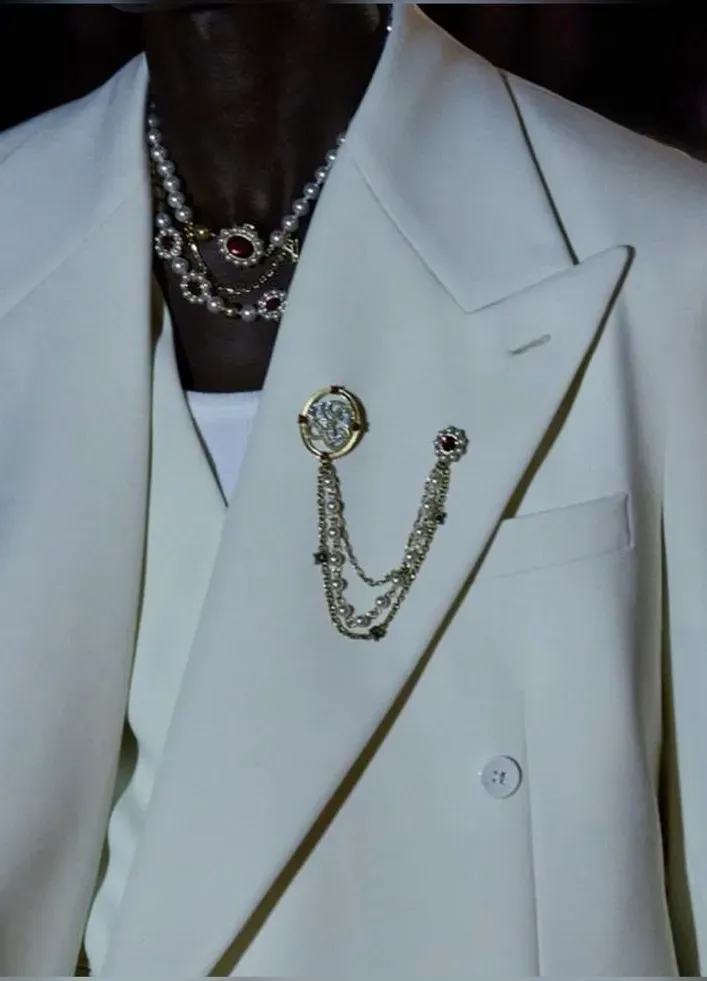
Brooches now come in two approaches, and they are not interchangeable. The first is the cluster: eight, ten, or twenty mismatched vintage pins arranged across a lapel or down a placket, deliberately uncoordinated, and closer to a collection than an accessory. It works because the mismatch is the design The second is the single anchor: one substantial jeweled brooch on the lapel, sometimes with a draped crystal chain running to a second point, functional as a more restrained, standalone decor piece.

The lapel chain deserves its own note. A chain running from a brooch across the jacket adds a horizontal line to a garment made almost entirely of vertical ones, and it catches light in a way flat metal never will.

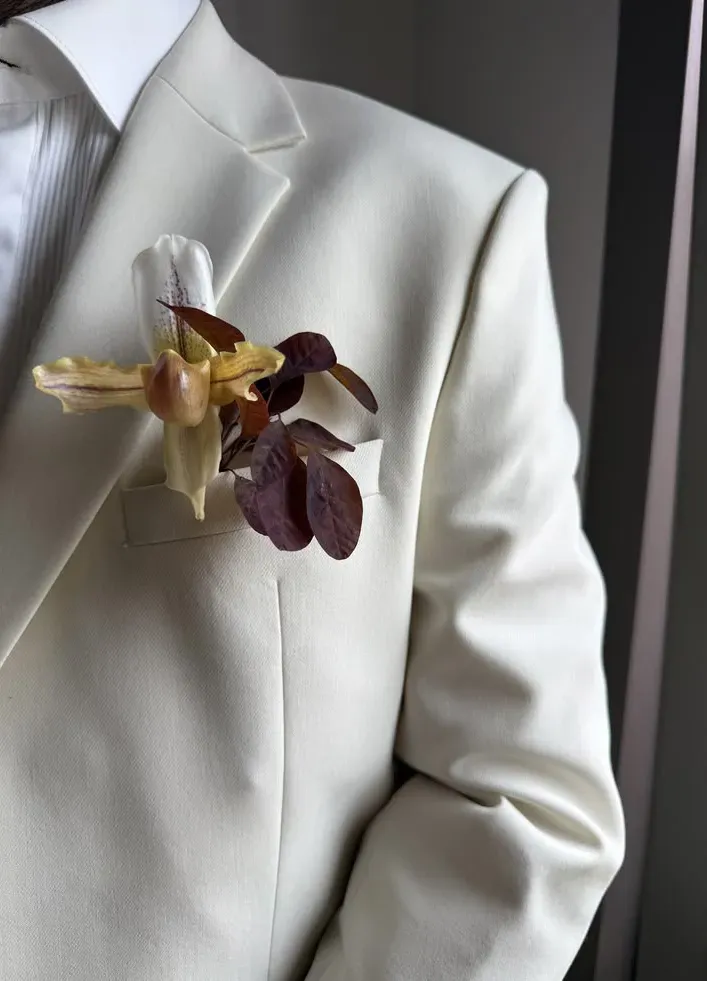
Boutonnières have improved dramatically, mostly by getting smaller and stranger. A single orchid with a copper-toned leaf, one bloom in an unexpected color, or a small sculptural arrangement of seed pods and grasses all beat the carnation-and-baby's-breath default. Size is the tell: a boutonnière should be arranged within the lapel, not in an oversized, overhanging form. Work this out with your wedding florist at the same time as the bouquets, so the palette is consistent for the entire wedding party.

Tight crop of a tan lapel carrying a cluster of enamel and gold floral brooches, with an open pale blue shirt and a gold signet ring visible.
Diogo Baptista
Cream pinstripe suit with a dense run of mismatched vintage buttons and pins down the placket, bride's hand at the waist.
Pinterest
White suit with a single jeweled lapel brooch and a draped crystal chain over layered necklaces.
Louis Vuitton
Ivory tuxedo with an orchid and copper-leaf boutonnière, close crop.
Pinterest

Embroidered and embellished suits: Cuffs, buttons, and hardware

Detail doesn’t only exist on the lapel, and the most interesting placements we’re seeing are the ones that only reveal themselves at close range.

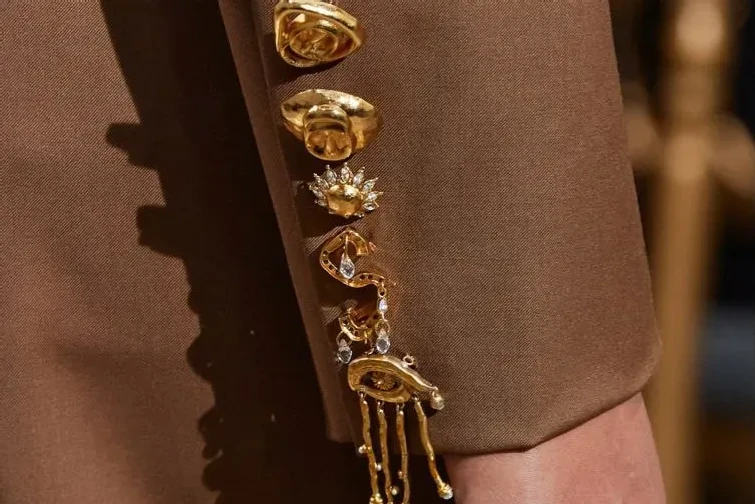
The cuff is the best of them. Embroidery running up the sleeve, decorative buttons that go past function, or sculptural hardware set along the forearm will catch your eye in ring shots, first-look frames, and every image where someone is holding a glass. A cuff detail also stays subtle in wide shots, so it never competes with the ceremony.

Embellished suits at full scale, meaning embroidery across a jacket body or a lapel worked with beading, are a genuine commitment and demand restraint everywhere else. When the jacket is the event, the shirt is plain, the tie is minimal or absent, and the boutonnière shrinks or disappears.

Covered buttons deserve more attention than they get, too. Replacing standard buttons with fabric-covered ones in the same cloth removes the hardest visual break on a tonal suit, and it costs almost nothing at the tailoring stage. It’s a rare opportunity to make a budget-friendly, bespoke-looking design decision.

Brown suit sleeve with a row of gold surrealist rings and hardware set up the cuff, hand emerging at the bottom of the frame.
Schiaparelli

How to modernize a classic black tuxedo

Plenty of grooms want the tuxedo, and the tuxedo is not the problem. What dates a black tie look is almost always the fit and one accessory, and both are fixable without abandoning the format.

Start with the trouser. A tuxedo trouser cut with a fuller leg and a clean break instantly looks current, and no other single change returns more. Have the waist taken up to sit at the natural waist, not the hip, and skip the belt loops entirely, since formal trousers should be held by side adjusters.

Then, select the shirt. A pleated bib and French cuffs are correct and traditional, though a plain-front shirt with a spread collar and covered placket is another appropriate option that looks far more modern—especially on camera, where pleating catches shadow.

Next, choose one (and only one!) accessory to update. A textured grosgrain bow tie instead of satin, a single brooch on the lapel in place of a pocket square, or black velvet slippers instead of patent oxfords. Any of those three refreshes the look, but two of them at once can overshadow the tuxedo, which is the one garment that works best when it’s left alone.

Midnight blue instead of black is the last option, and the most subtle. Few guests at the wedding will notice this is the reason why your wedding pictures look richer.

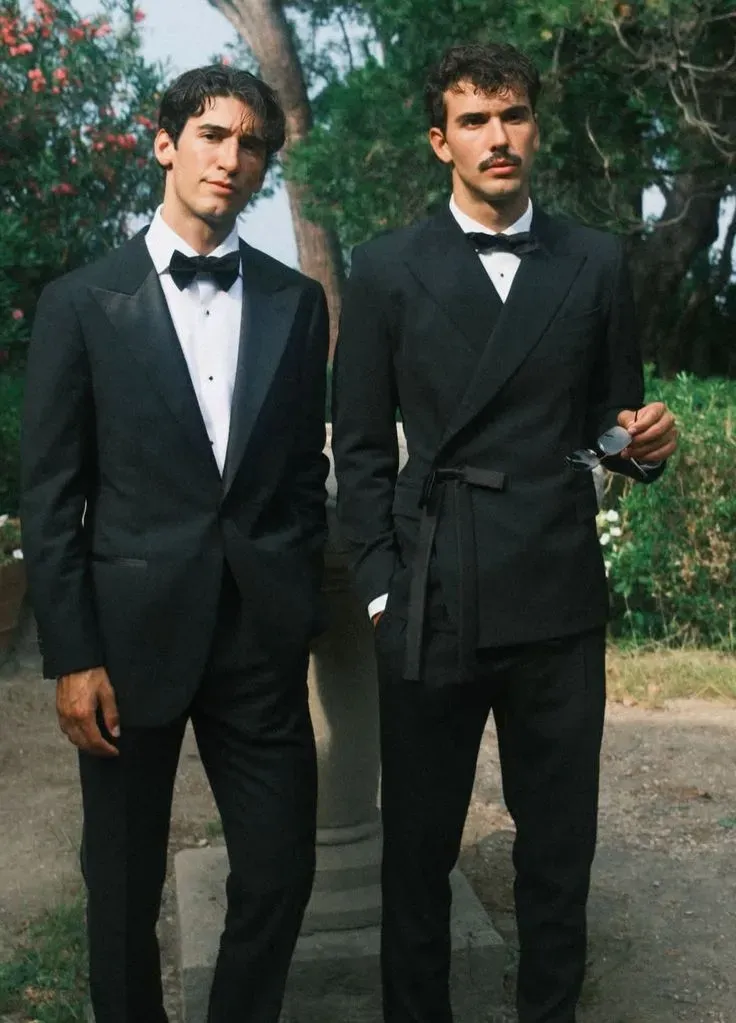
Two grooms outdoors in black tuxedos, one in a bow tie and one in a belted wrap jacket.
Pinterest
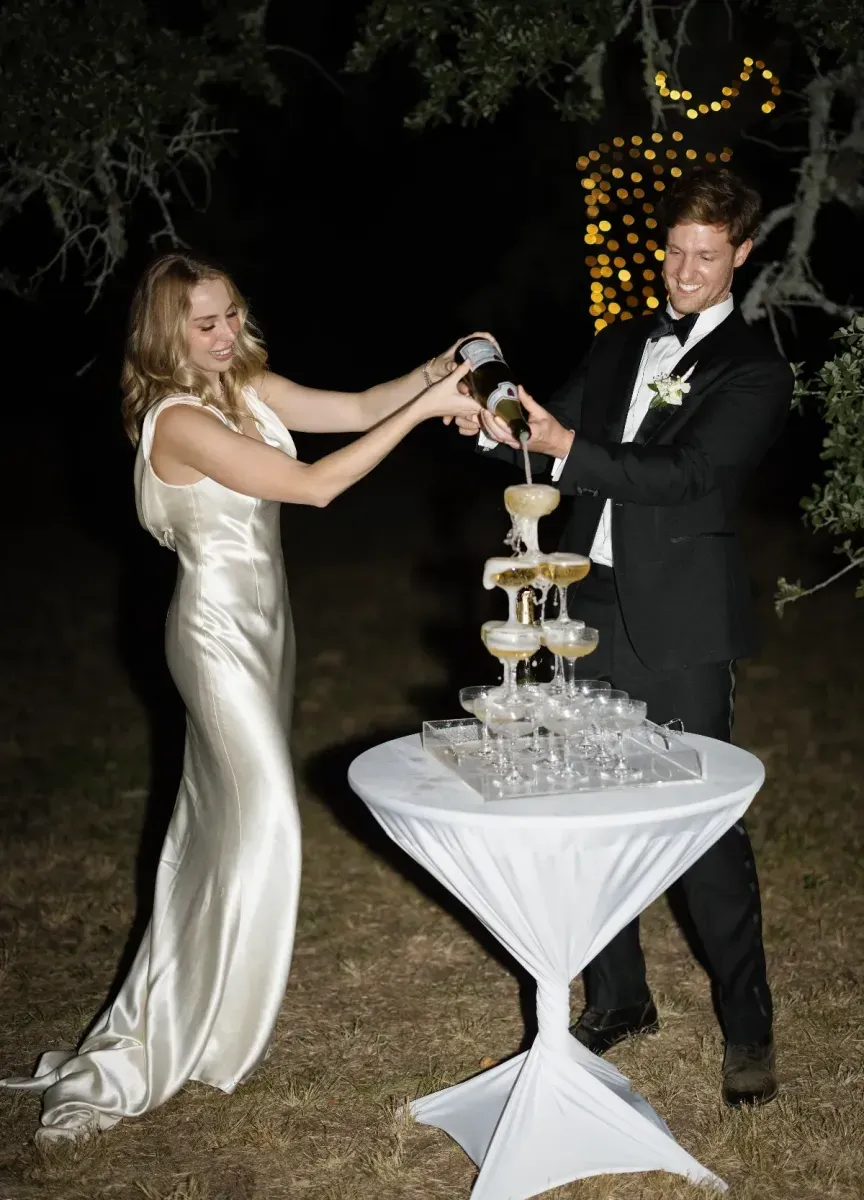
A couple pouring a bottle of champagne onto a tower of champagne flutes, with the bride in a silk floor-length gown and a groom in a black tuxedo.
Colette Elyse Photography

Alternative groom outfits: Sashes, trains, and second looks

The most editorial side of menswear at the moment is borrowing directly from bridal, and it is where grooms who want something genuinely different should be looking.

Sashes and trains are the clearest examples. A length of satin draped across the body and falling behind a white suit gives a groom the one thing menswear has never offered: movement. Nothing else performs like it during the processional, or in any frame with wind or stairs. For a groom who wants real presence, this is the strongest argument on the list. Practicality is the tradeoff, so it’s best to treat it as a ceremony-only element.

Second looks are the more wearable version to consider here. Grooms have started doing what brides have done for years: a full formal look for the ceremony, then something lighter and more comfortable for the reception. Jacket off and a different shirt is the minimal version, or go big with a complete change into tailored trousers with an open shirt and a second jacket. If you weigh this option, look at how celebrity second looks are usually structured, because the change almost always happens at dinner, not at the reception entrance.

The practical constraint on both is your photographer's timeline. Build the change into the schedule instead of assuming it'll happen on its own, since the window between dinner and dancing is faster than anyone expects.

What groomsmen wear, and how closely they should match the groom

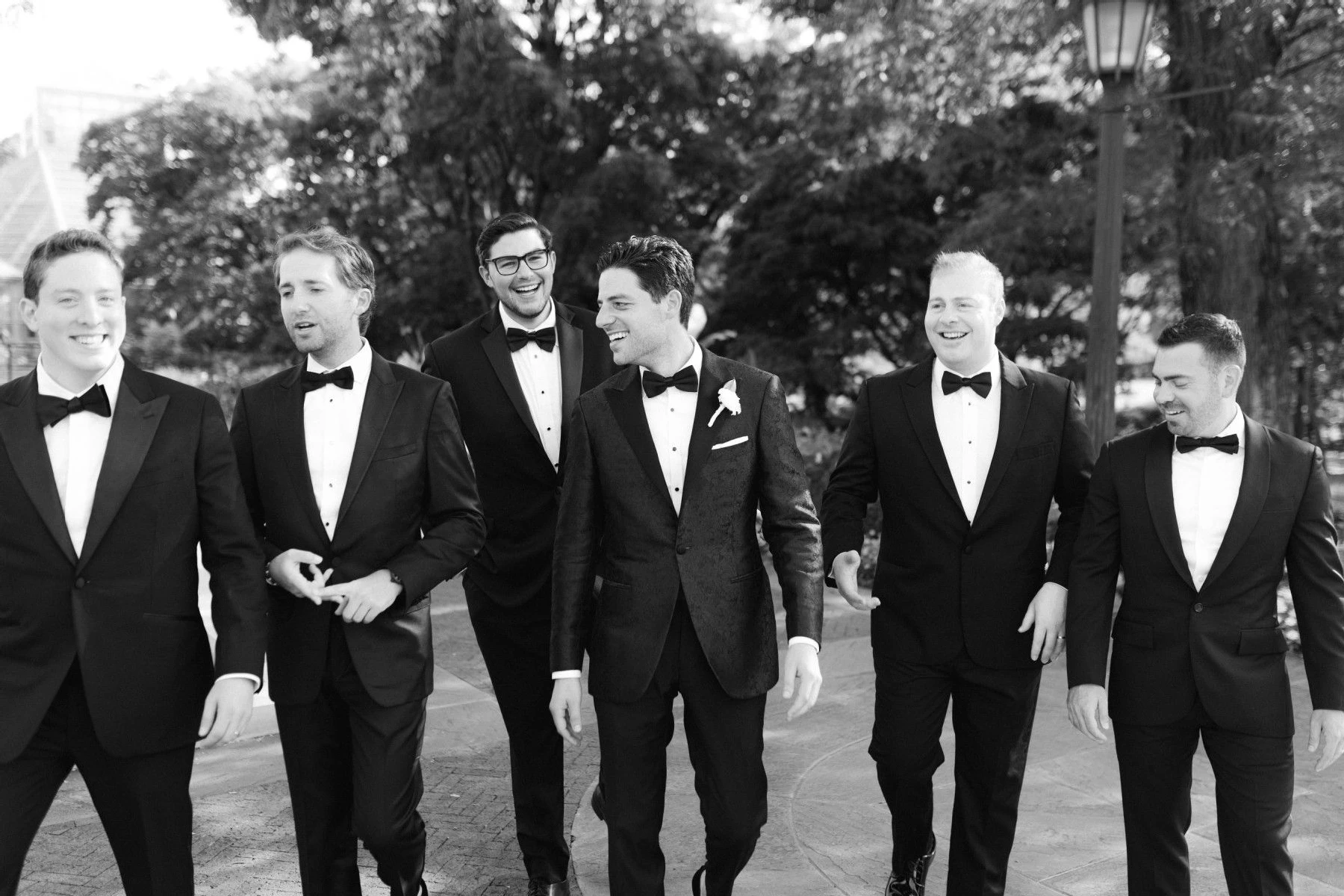
Groomsmen should coordinate, not replicate. Eight men in identical suits look like staff, and the wedding party frame is one of the most-shared images from any wedding.

The most reliable structure is a shared base with individual latitude. Everyone in the same color family and the same formality level, with variation permitted in fabric, tie, or shoes. Charcoal for everyone in the group with slight differences in weave is intentional, though charcoal for six and black for two looks like a glaring misstep.

Mismatched-by-design needs a tight palette and someone directing it. Three or four tones within one family—assigned, not self-selected—with a common element holding them together such as the same tie or the same boutonnière. Avoiding tasking each groomsman with sourcing his own, which could produce eight interpretations of navy.

The groom stays one clear step apart from whatever the group is doing, using the single separation described earlier. If the party is mismatched, the groom is the one in a color none of them are wearing.

Practical matters worth settling early: who pays, and by when. Rental groups need every measurement about four to six weeks ahead, and one groomsman who submits late is enough to compromise the whole party's fitting window. Two of the most-credited menswear names in the Carats & Cake dataset, Suit Supply at 3.9 percent and The Black Tux at 3.3 percent of all weddings, both offer group-order systems built for exactly this problem.

A groom walking in the center of his groomsmen, all in tuxedos.
Jaymo Jaymes

Men's wedding guest attire: What to wear when you're not in the wedding party

Guests operate under one rule that overrides everything else: Stay a step below the wedding party, and never above the groom.

Know the dress code, then dress to its middle rather than its ceiling. At a black tie optional function, wear the dark suit. For a cocktail attire wedding, wear the suit and the tie instead of testing how far the code stretches. The guest who’s slightly more formal than necessary is unremarkable, and the guest who is under-dressed is the one people notice.

Color is the other constraint. Avoid anything that scans white or ivory from a distance, since the rule about not wearing white applies to every guest and not only to women. Avoid matching the wedding party's color exactly, which requires knowing what it is, so you can always ask the couple or a member of the party. Beyond that, most weddings leave guests far more room than they use. A mid-blue suit at a daytime wedding, a rust or olive jacket in autumn, or a patterned tie against a plain suit are all more interesting than the charcoal-and-white default and none of them break any rules.

For destination and multi-day weddings, ask what the welcome party and the farewell brunch are, because those are where guests are most often wrong. Welcome events are typically more casual than the wedding itself.

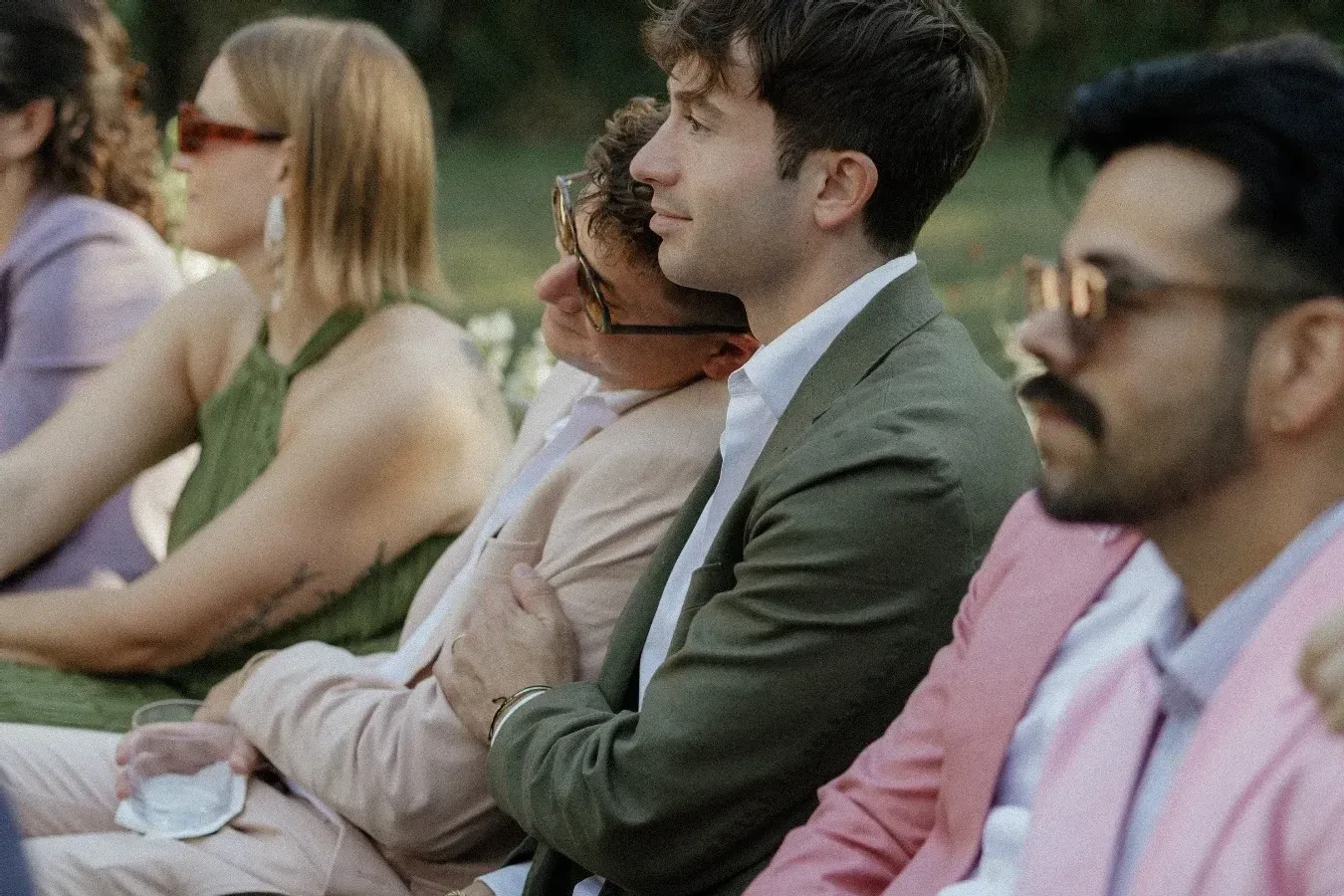
Several male guests watching a wedding ceremony in lightly colored suits.
Ali Beck Photography

Wedding attire for fathers, grandfathers, and older guests

Fathers of the couple have attire that falls between the wedding party and the guests, and they’re the group most often left without instruction.

The most common choice is to match the wedding party's formality without mimicking its styling. Groomsmen in charcoal suits means the fathers wear dark suits of their own choosing and skip the group order. For a black tie wedding, they’ll also need tuxedos. Coordination usually extends only to the boutonnière, which should match members of the wedding party so the family can stand out in pictures.

Comfort matters more here than anywhere else, and it’s worth noting for dads and grandpas. A father who’ll be standing through a receiving line, a ceremony, and several hours of dancing should be in a suit he’s worn before, or one with enough time built in for two fittings. Fabric weight is the usual concern here, as a heavy wool suit at an August outdoor wedding is a problem for a 65-year-old in a way it may not be for a 28-year-old groomsman. 

Grandfathers and older guests should be given the dress code, and then given the freedom to handle the rest. 

Seasonal and venue-driven wedding attire for men

Season and venue can determine fabric, color, and shoes. They don’t necessarily override the dress code, though, so treating them as though they do is the most common styling error at weddings.

Summer and destination weddings call for linen and linen blends, tropical-weight wool, or fresco. All four breathe, all four wrinkle, and the wrinkling is the point, not a flaw. Lighter colors throughout, and unlined or half-lined jackets, will change how a suit wears in heat. For beach wedding venues, skip the tie entirely, keep the jacket for the ceremony, and wear a leather loafer or a suede driver (but nothing with a hard sole).

Autumn is the best season for men's wedding attire and the most underused. Flannel, tweed, corduroy, and brushed wool all carry texture, and the palette opens to rust, olive, deep brown, and burgundy without any of it looking like a costume.

Winter weddings support heavier cloth, velvet jackets at black tie, and darker everything. A velvet dinner jacket at a December wedding is one of the few genuinely seasonal formal options in menswear.

Spring and garden weddings, for the most part, are the closest you’ll get to semi-formal. Think mid-weight wool, lighter blues and greens, and a jacket that can come off during cocktails.

Venue overrides season when the two disagree. A ballroom in July is still a ballroom, and the air conditioning means a proper suit, not linen.

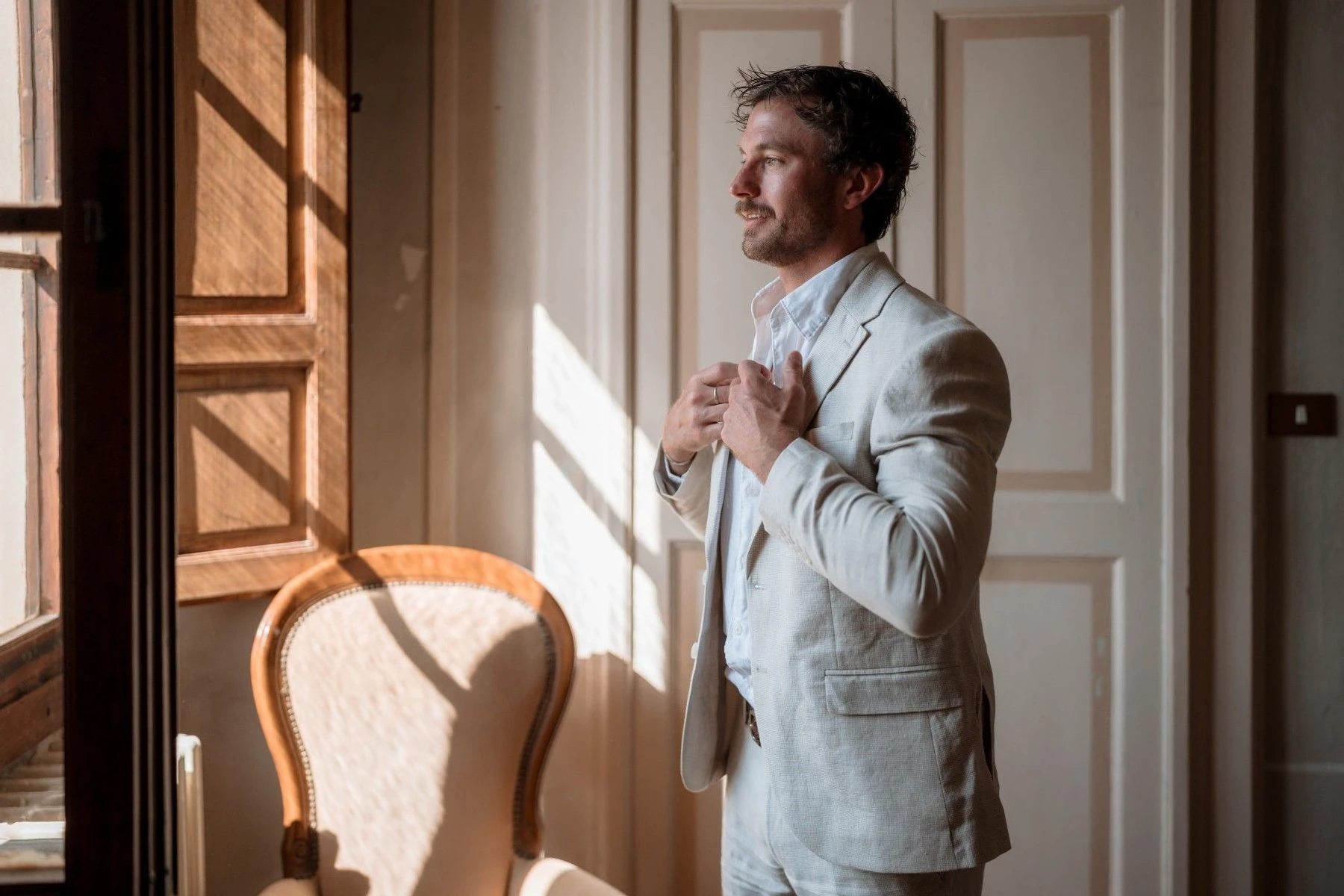
A groom looking out the window, wearing a beige linen suit.
Alberto e Alessandra

Wedding suit trends shaping 2026 weddings

Five shifts define what grooms are wearing this year, and they’re consistent enough across markets to plan around.

  • Proportion has replaced fit as the primary variable. Wider trousers, softer shoulders, and jackets with room through the body have displaced the slim silhouette that was a go-to from around 2012 to 2022.
  • Chocolate brown has become the leading alternative to navy and black, particularly at daytime and outdoor weddings, with tonal ivory taking the formal end of the same impulse.
  • The tie is optional at every dress code below formal, and the open collar, the tonal scarf tie, and the ribbon tie have emerged as three distinct alternatives rather than one undifferentiated absence.
  • Jewelry has moved onto the jacket. Brooches worn in clusters or as single jeweled anchors, lapel chains, and decorative cuff hardware are now a mainstream part of groom wedding attire, no longer a runway-exclusive idea.
  • Boutonnières have shrunk and gotten more unique, moving toward single orchids, sculptural stems, and unexpected foliage, and away from the classic clustered florals.

What hasn’t changed: The dress code still governs, the shoulder still has to fit, and a rented suit that fits beats a purchased one that does not.

How to buy, rent, and tailor a wedding suit on time

Order lead time is the thing most grooms get wrong, and the only part of this process that requires a sense of urgency and can’t be fixed later on.

Made-to-measure and custom suits take about eight to 12 weeks from the first fitting to the final product, and that assumes no remakes or massive changes. Off-the-rack with alterations needs six to eight weeks, because a good tailor books out and a rushed alteration is quite risky. For rentals, allow four to six weeks for the group and longer during peak season, when inventory in common sizes moves fast. Whatever the number, add two weeks just in case. Set the deadline against your other vendor commitments using a full wedding planning timeline so the fitting schedule doesn’t collide with other priorities.

Tailoring is where most of the money should go, and there are few things to remember as you’re shopping. The shoulder has to be right off the rack, since it cannot be meaningfully altered. Sleeve length comes next, then trouser length and break, then waist suppression through the jacket body, then the trouser seat and thigh. A $400 suit with $300 worth of tailoring always looks better than a $1,500 suit worn as purchased, which is the practical version of what the budget data shows.

Rent when the wedding is the only time you’ll wear it, when you’re coordinating a large party, or when you’re busy and can’t make time for fittings. Buy when the suit is one you will wear again, when your size is stable, or when you want something you can’t find at a rental store.

For shops and rental houses by market, browse wedding suit and tuxedo shops and filter to your city, then book fittings before you finalize the wedding party's order so the groom's look is settled first and everyone else coordinates. If you’re still deciding how the whole party will photograph together, our bridal party photos gallery is a useful check on how these combinations complement each other.

Frequently asked questions

What is men's wedding attire for a black tie wedding?

A black or midnight-blue tuxedo, a white dress shirt, a black bow tie, and black formal shoes. The jacket carries satin or grosgrain lapel facing with a matching stripe on the trouser, and a cummerbund or low-cut waistcoat covers the waistband. A long tie in place of a bow tie is not black tie, regardless of how often it appears.

Can a man wear a black suit to a wedding?

Yes, at an evening wedding with a cocktail or formal dress code. A black suit is not a tuxedo and should not be styled as one, so pair it with a regular tie, never a bow tie. At daytime weddings, charcoal or navy holds up far better, because black flattens under direct sun.

What should the groom wear if the invitation doesn't list a dress code?

Take the cue from venue and start time. A ballroom or hotel wedding beginning after five calls for a dark suit at minimum, and a tuxedo is defensible. An outdoor or daytime wedding before four calls for a suit without the formality of black. Whatever you choose, tell your guests, because a wedding with no stated dress code produces the widest range of guest outfits.

Is it OK for the groom to skip the tie?

Yes, at every dress code below black tie. An open collar works when the shirt has enough collar structure to stand without support, and a tonal scarf tie or a silk ribbon tie both give you the vertical line without the formality. Black tie is the exception, where the bow tie is structural to the look.

Can the groom wear a different color suit than the groomsmen?

Yes, and it is among the most effective ways to make the groom identifiable in photographs. Keep both looks at the same formality level and inside the same palette, so the difference looks deliberate. Choose one point of separation and let everything else match.

What should men wear to a beach or destination wedding?

Linen or a linen blend in a light color, an unlined or half-lined jacket, and a leather loafer or suede driver rather than a hard-soled shoe. Skip the tie. Keep the jacket for the ceremony and portraits, then take it off. Beach formality still means tailored trousers and a proper shirt, never shorts.

Can a groom wear jewelry to his wedding?

Yes. Jewelry is one of the defining elements of current groom style. Brooches worn on the lapel, either as a cluster of mismatched vintage pieces or as a single jeweled anchor, along with lapel chains and decorative cuff hardware, all work at cocktail formality and above. Keep it to one placement so the jewelry looks like a decision, not an accumulation.

How far in advance should a groom order his wedding suit?

Eight to twelve weeks for made-to-measure or custom, six to eight for off-the-rack with alterations, and four to six weeks for rentals, longer during peak season. Add two weeks to whatever number applies. Settle the groom's look before the wedding party orders, so everyone else coordinates to him, not the reverse.

Carats + Cake
Join the Community
Create An Account
Back to Login

By creating an account, you agree to our Terms of Use and have read and understood the Privacy Policy.

Back to Login
No problem! Reset your password via email.
Back to Login
Wedding Websites & Invitations
Exclusive Offer!
Get 1 Month Free on a
Bliss & Bone Wedding Website!

For a limited time only, new customers will get their first month free on any Bliss & Bone Wedding Website.

shop with code: BBXCC
Wedding Websites & Invitations