Account Login or Join Submit a Wedding
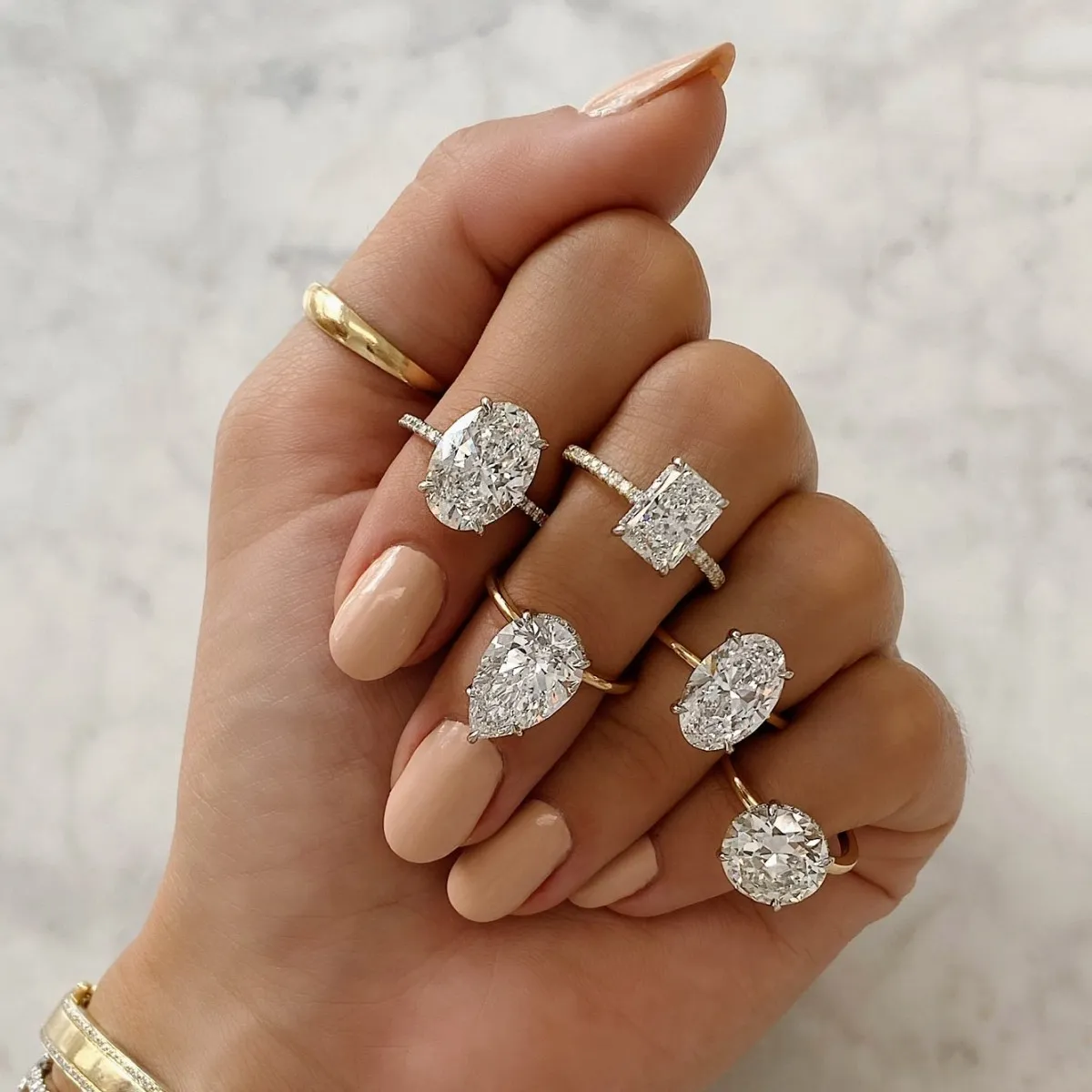
Wedding Ring Design: Five different engagement rings being worn on one hand for display.
TRENDING

Wedding Ring Design: A Complete Guide to Cuts, Settings & Bands

Everything to Know About Putting a Ring On It (Literally)
BY HALEY JENA / 03 11 26
Photo c/o Ring Concierge

Wedding ring design covers more ground than most people expect going in. The cut determines how a diamond interacts with light. The setting determines how it sits on the hand and how much protection the stone gets. The band style determines how it wears over time and how well it pairs with an engagement ring. Each decision affects the others, and all of them affect the final look.

The guide below breaks down every major cut, setting, and band style.

Wedding Ring Design: Two diamond engagement rings in boxes.
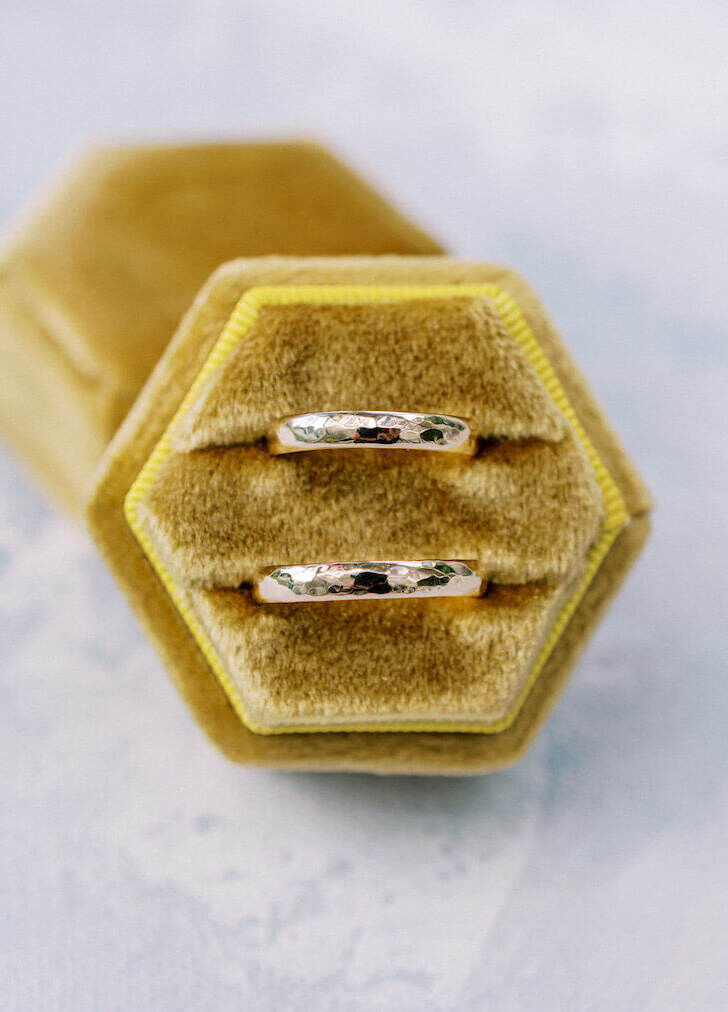
Wedding Ring Design: Two metal wedding bands in a burnt-yellow color suede ring box.
Wedding Ring Design: A bride holding a groom's face in her hands as they lean in to one another. Her marquise diamond ring can be seen on her ring finger.

Engagement Ring Styles

The 4Cs are the standard starting framework for any engagement ring decision: cut, clarity, color, and carat weight. Cut refers to how a diamond's facets are arranged and how well it interacts with light. Clarity measures the relative absence of inclusions and blemishes. Color runs on a D-to-Z scale, with D being colorless and Z showing a light yellow or brown tint. Carat weight measures the physical weight of the stone, with one carat equal to 0.20 grams.

The choice between a natural and lab-grown diamond is worth making deliberately. Both are composed of tightly bonded carbon atoms and respond to light identically. The difference is origin. Natural diamonds are mined; lab-grown diamonds are produced in a controlled environment, which makes them a more sustainably sourced option. Neither is inherently superior, and the decision typically comes down to personal preference and priorities.

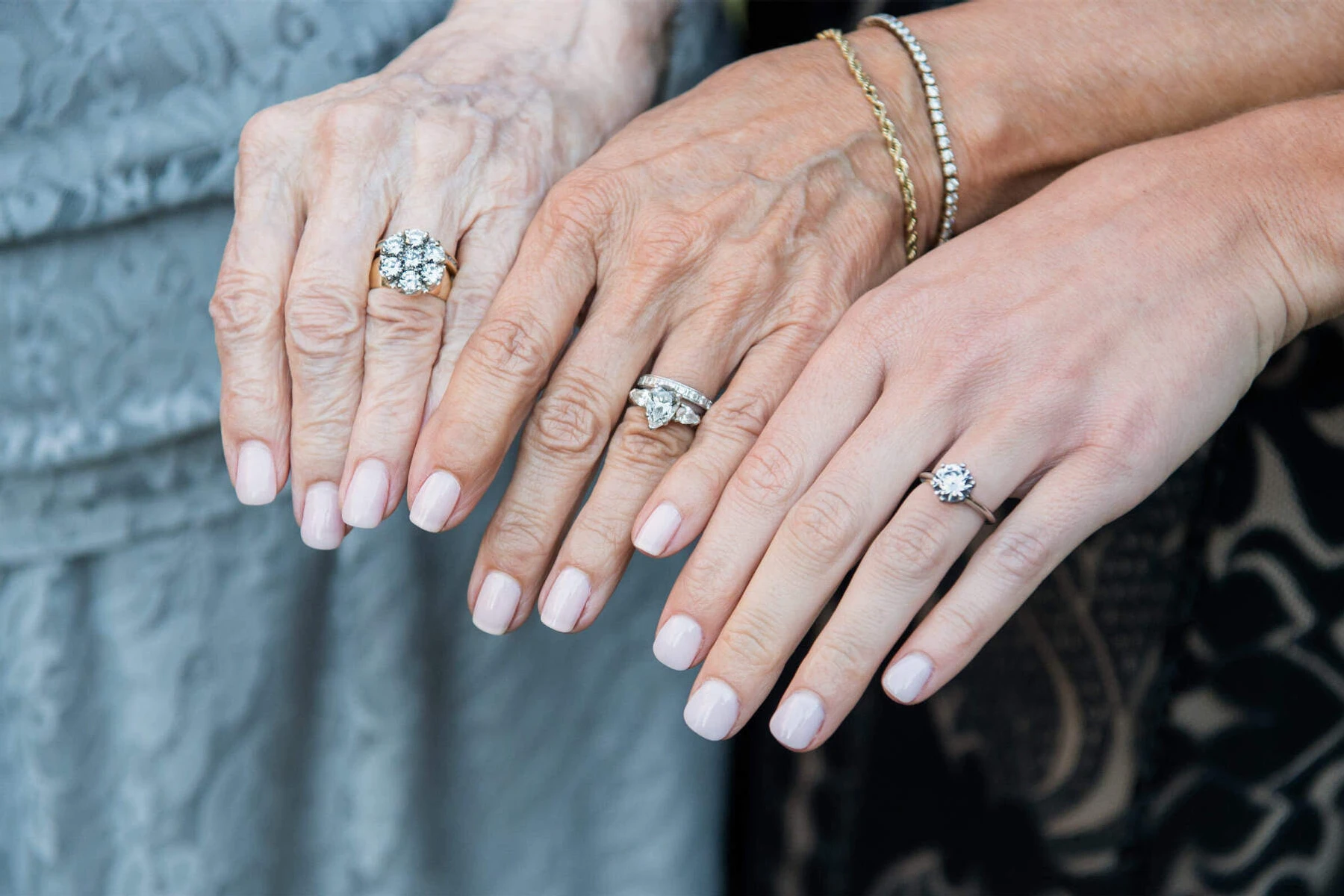
Wedding Ring Design: Three generations of hands with engagement rings on their ring fingers.

Engagement Ring Cuts

A diamond's cut controls its brilliance, scintillation, and dispersion — its brightness, sparkle, and the colors it throws in light, respectively. Cut is distinct from shape: cut refers to how the facets are arranged, shape refers to the outline of the stone from above. Both matter, and both affect how a ring looks on the hand.

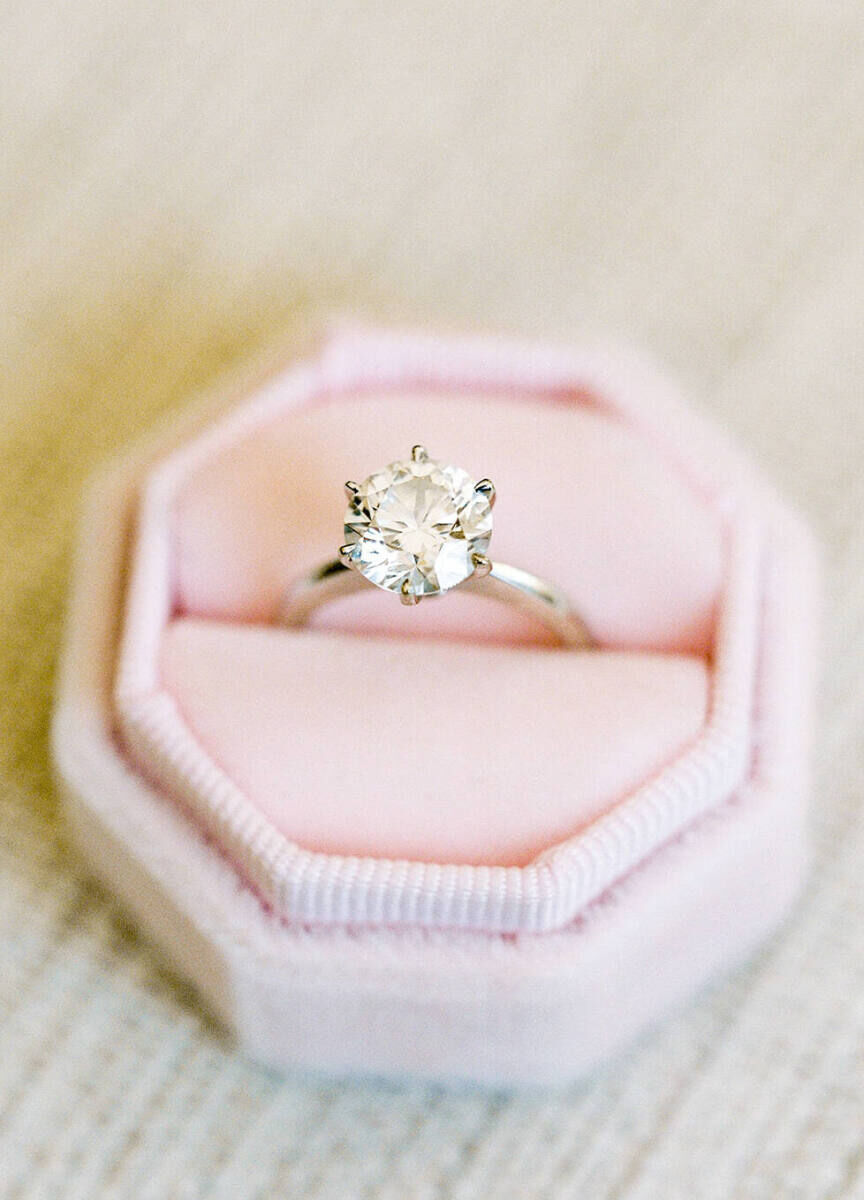
Wedding Ring Design: A round-cut engagement ring sitting in a pink octagonal ring box.

Round cut engagement ring

A round cut is probably what you picture when you think of a traditional engagement ring design, as it's one of most popular shapes out there. This look provides lots of sparkle and a timeless look, making for an always-elegant engagement ring style. "[A round brilliant] is the only perfectly symmetrical shape and offers unmatched brilliance," says Nicole Wegman, founder and CEO of Ring Concierge. But the beauty comes with a higher price tag: "Rounds are also the most expensive shape per carat because the diamond cutter loses the most rough diamond in the process," she explains.

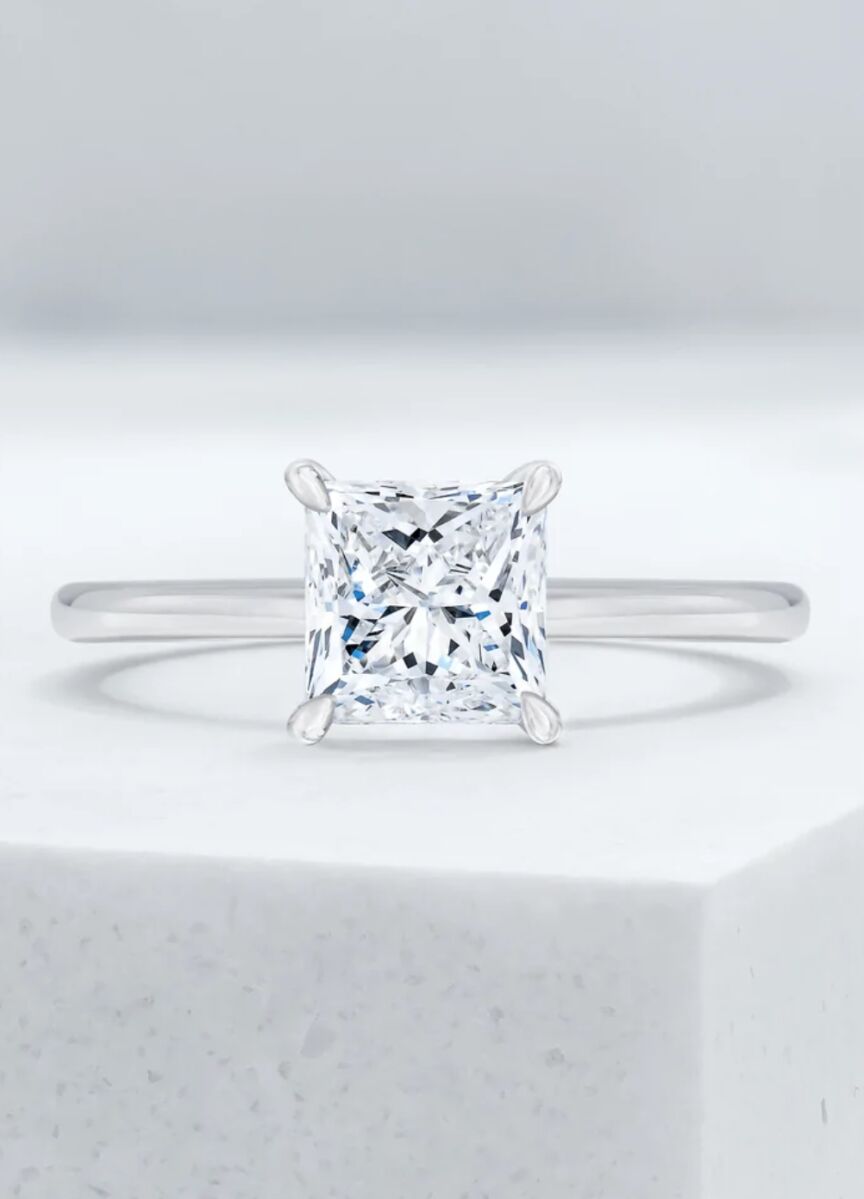
Wedding Ring Design: A princess cut diamond with a silver band.

Princess cut engagement ring

A princess cut engagement ring design offers a striking square or rectangular shape and no shortage of sparkle. With a  modified brilliant facet arrangement, this cut hides includes well, according to Wegman.

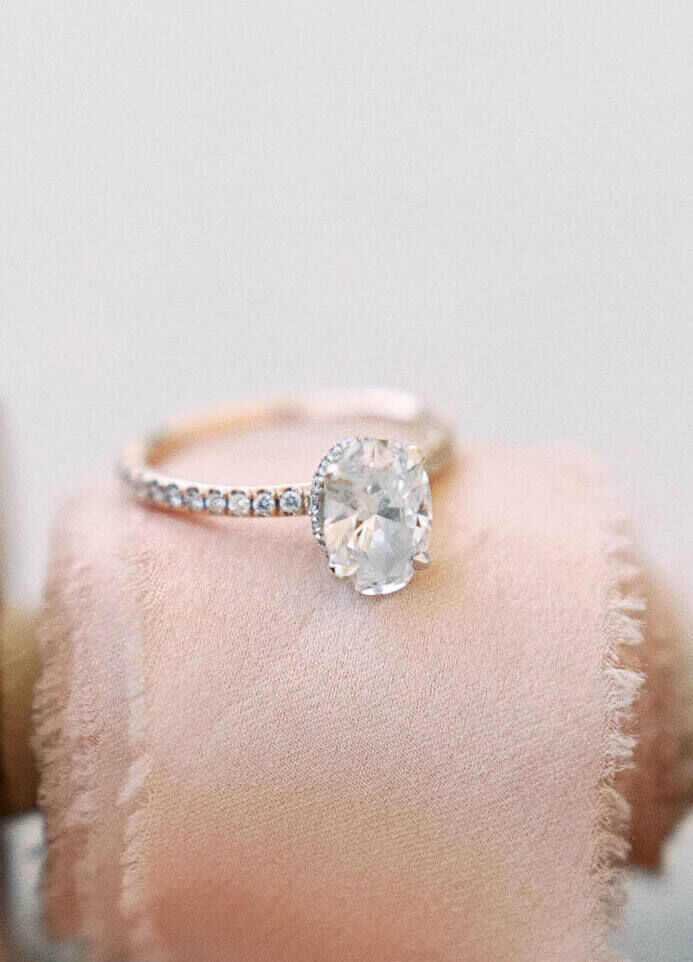
Wedding Ring Design: An oval cut engagement ring sitting on top of a spool of pink ribbon.

Oval cut engagement ring

Another classic engagement ring cut, an oval cut offers an elegant shape and beautiful display of colors when it hits the light. Bonus: They’re also less likely to get chipped. "Oval cut diamonds are our most requested because their elongated shape appears larger than their carat weight," Wegman notes. This cut would work wonderfully with pavé and metal engagement ring bands alike. You're in great company with this cut—Simone Biles and Hailey Bieber both have oval-shaped rings.

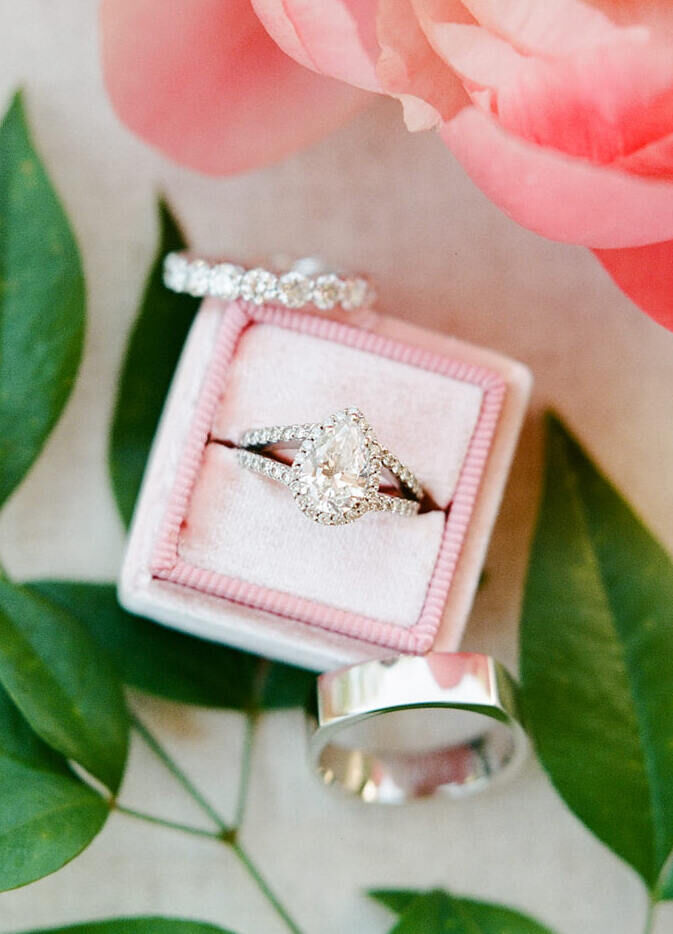
Wedding Ring Design: A pear cut engagement ring sitting in a white and pink box surrounded by two wedding bands against a floral backdrop.

Pear cut engagement ring

It’s important to look for symmetry and a protective setting with this unique engagement ring cut, which resembles the shape of a teardrop. A big bonus to this style: "Pear cuts appear the largest for their carat weight," Wegman shares, adding that "pears mask inclusions well but tend to show warmth in their tip with lower color grade diamonds." Sophie Turner's ring is one example (of many!) of how elegant this style looks on your hand.

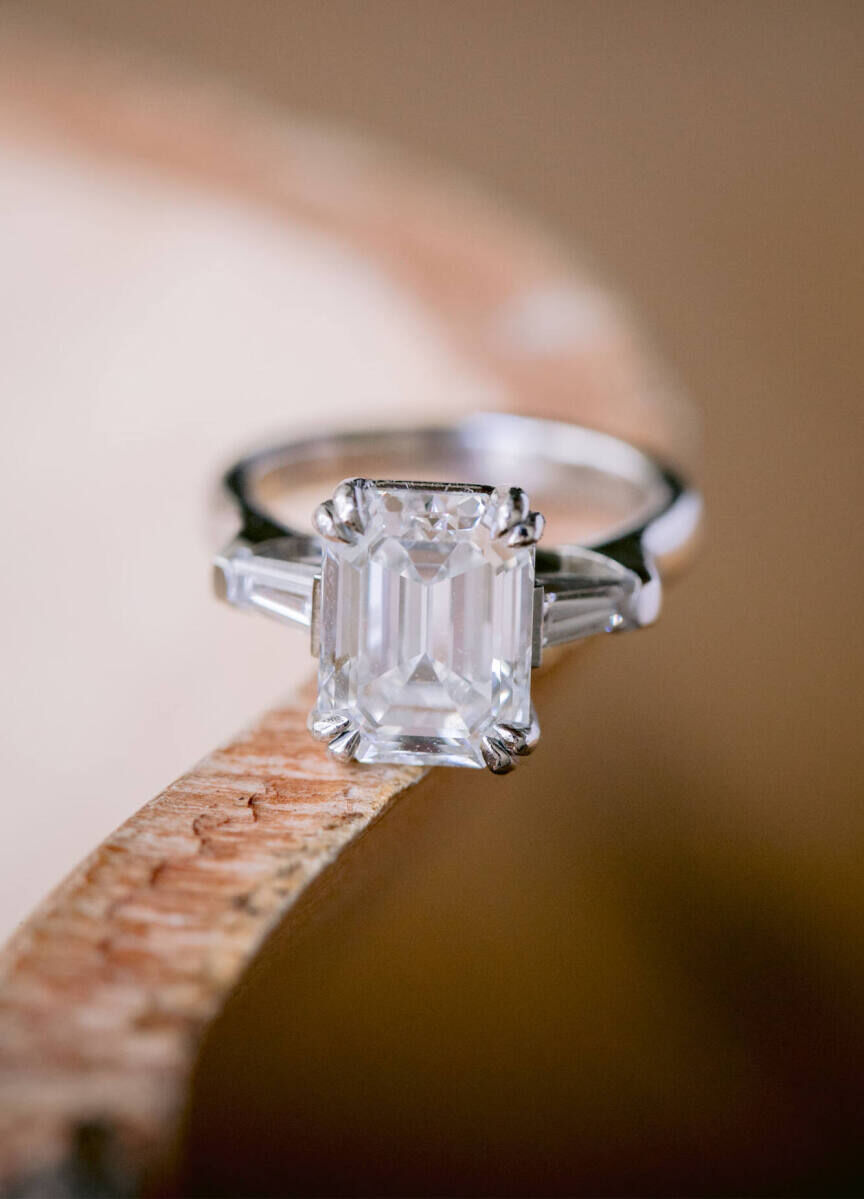
Wedding Ring Design: An emerald cut engagement ring sitting on a table.

Emerald cut engagement ring

This elegant engagement ring design boasts a rectangular shape with beveled corners. "Emerald cuts are created by their step cut, open table which creates a hall-of-mirrors effect with an understated sparkle as opposed to a brilliant sparkle," Wegman explains. "Emerald cuts hide color well but their glassy appearance shows inclusions easily so it’s important to prioritize clarity." You might recognize the style from seeing Amal Clooney's massive emerald-cut ring.

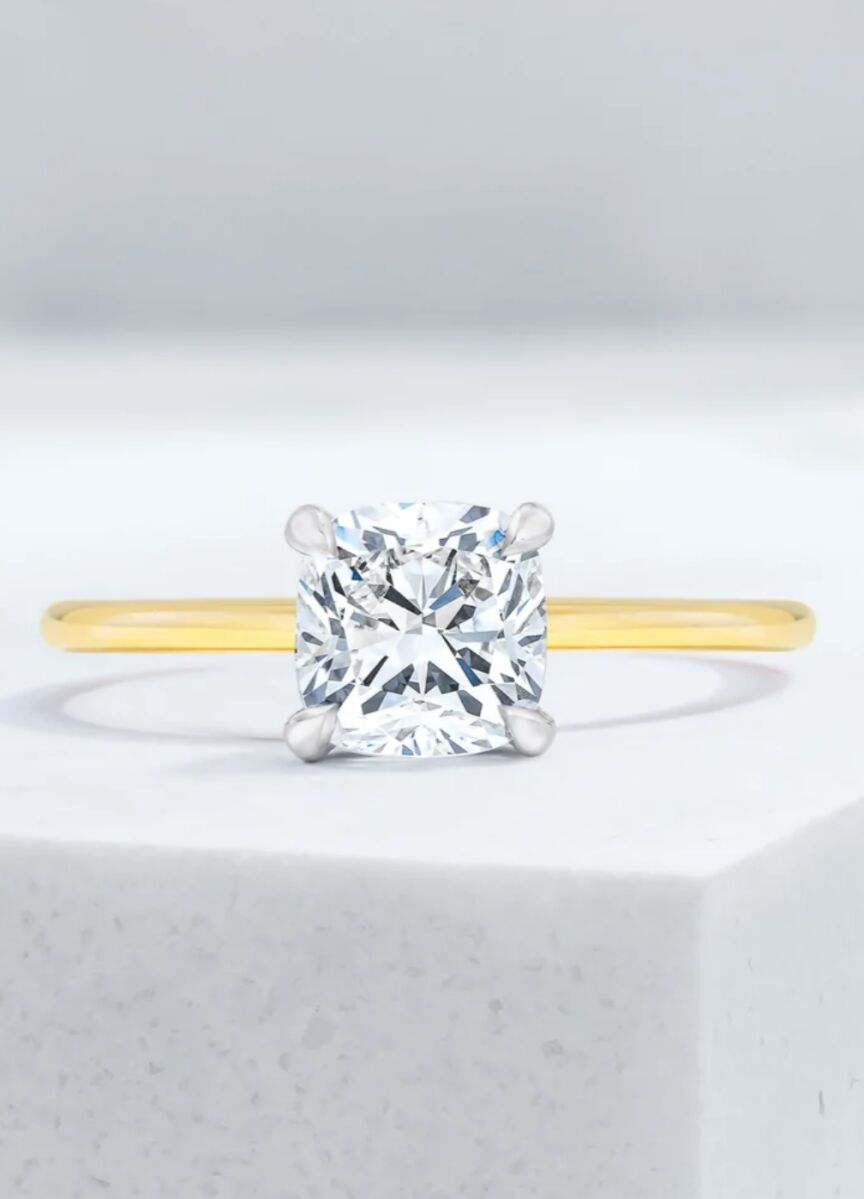
Wedding Ring Design: A cushion cut diamond ring with a yellow gold band.

Cushion cut engagement ring

Chances are good you’ve seen a cushion cut ring on your Instagram feed lately. This pillow-shaped, celebrity-favorite style resembles an old mine cut diamond, which makes it feel both vintage and modern at the same time. They hide inclusions very well, too, according to Wegman. Gabrielle Union, Priyanka Chopra, and Leighton Meester all adorn a cushion-cut style.

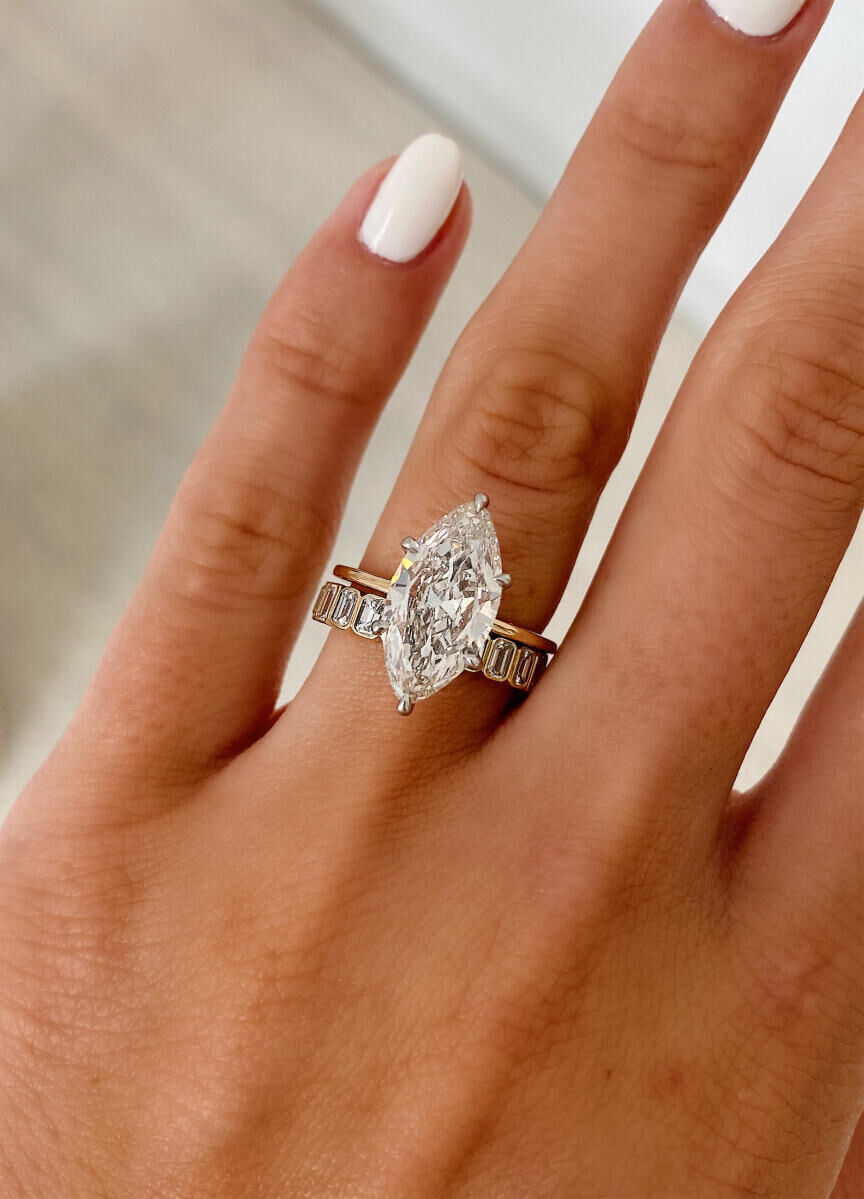
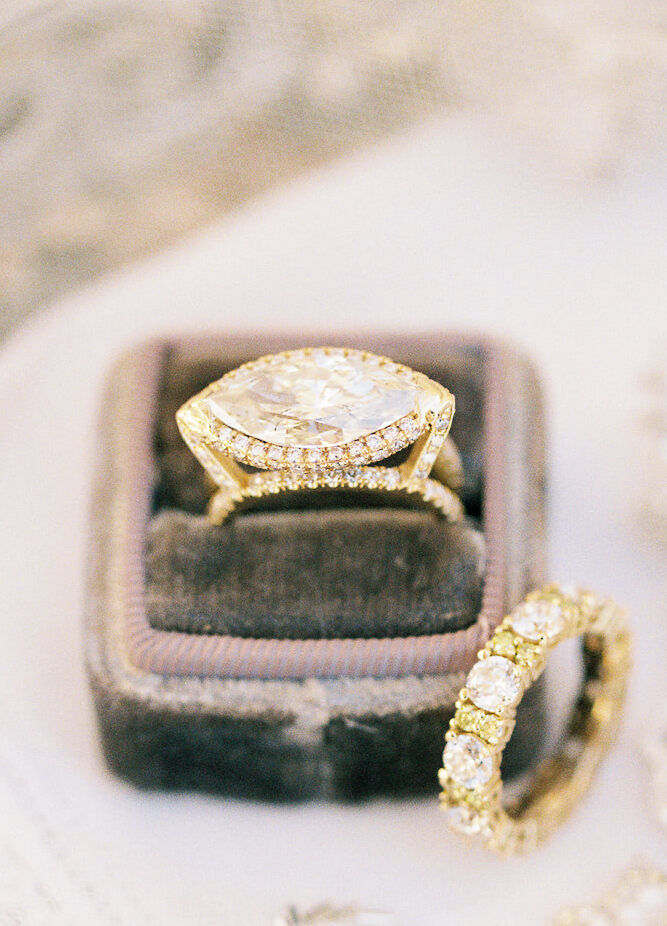
Wedding Ring Design: A marquise engagement ring being worn on a ring finger.

Marquise cut engagement ring

This beautiful, elongated engagement ring design with two points on either end will make your finger appear longer—and look absolutely romantic while doing so. Another pro: "[They] appear larger than other shapes of the same carat weight, making them a good choice when trying to maximize perceived size," Wegman says.

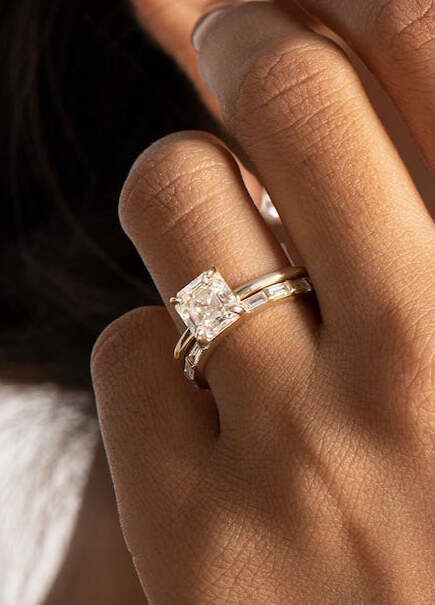
Wedding Ring Design: An asscher cut diamond engagement ring on a ring finger.
c/o VRAI

Asscher cut engagement ring

This artistic, impressive engagement ring design looks like an emerald cut at first glance. What makes the asscher cut special is its larger, more wide-set facets, octagonal shape, and better scintillation (aka sparkle), according to the GIA. "Similar to an emerald cut, asschers hide color very well but show inclusions easily," Wegman adds.

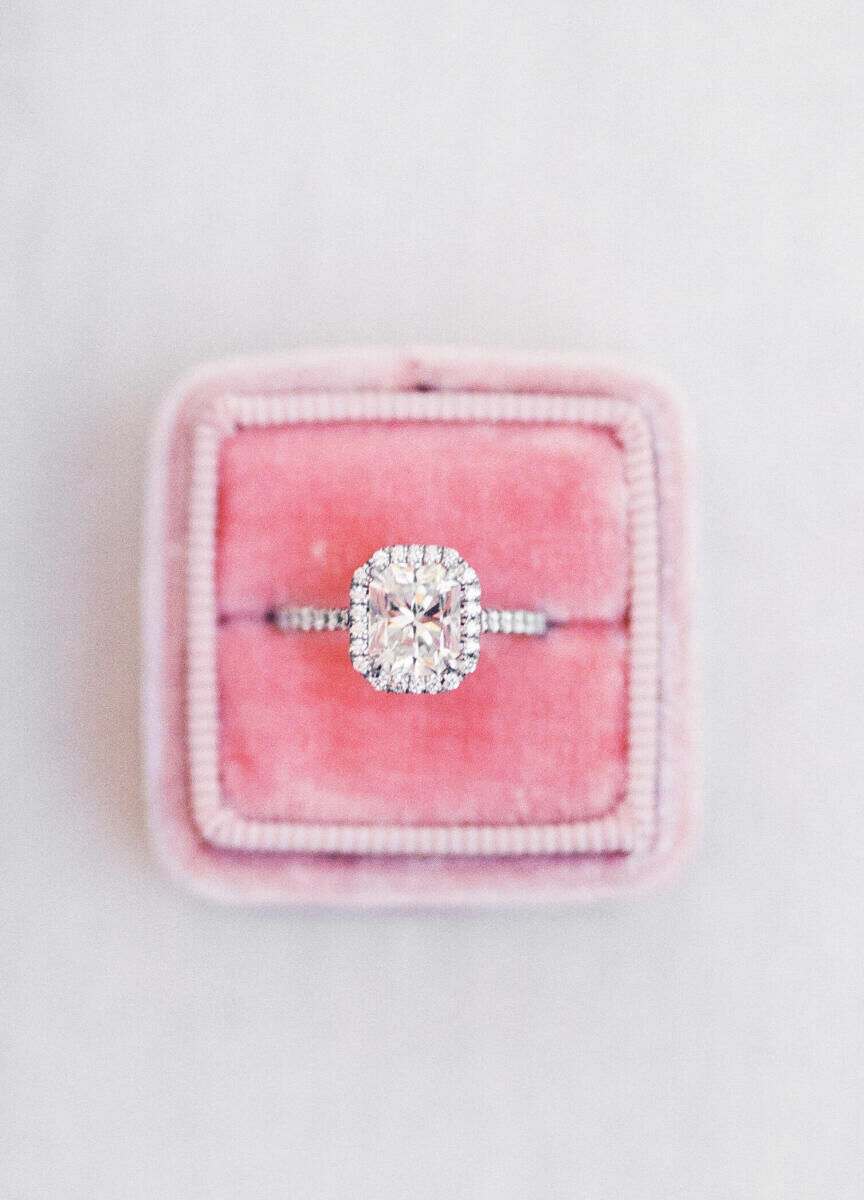
Wedding Ring Design: A radiant cut engagement ring with a halo setting sitting in a pink ring box.

Radiant cut engagement ring

Square or rectangular in shape, a radiant cut boasts beautiful cropped corners, straight edges, and sparkly, light-reflecting facets. "Radiant cut diamonds hide both color and clarity well, allowing you to allocate more of your budget towards carat size without sacrificing beauty," explains Wegman. Another pro tip, per Wegman: "Elongated radiants appear larger than square radiants."

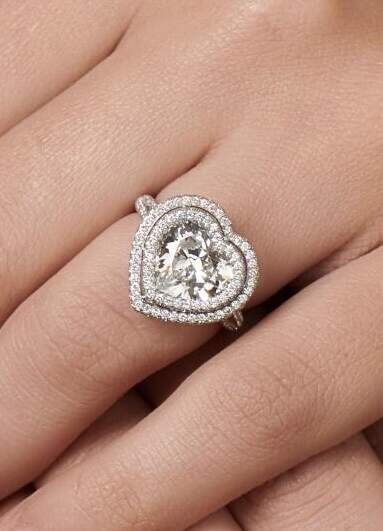
Wedding Ring Design: A heart cut engagement ring with a double halo on someone's finger.

Heart cut engagement ring

What better shape for a ring symbolizing eternal love than a beautiful heart cut? This romantic style is a thoughtful choice, but prioritze symmetry while you shop. "When choosing a heart cut diamond, symmetry is very important since it is critical that the two halves of the heart are identical," Wegman explains. "The cleft (between the two lobes) should be sharp and distinct, and the wings (the sides as they curve down to the point) should have a very slightly rounded shape."

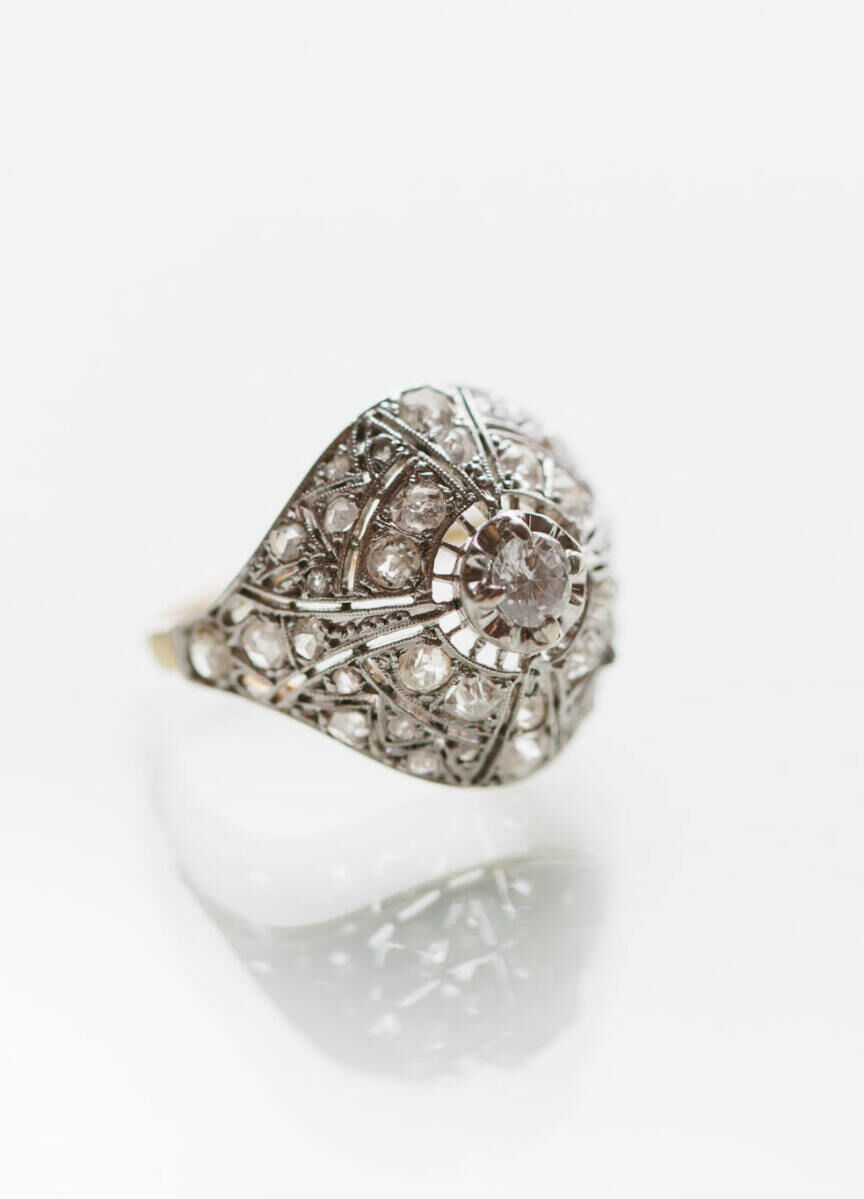
Wedding Ring Design: A vintage-inspired engagement ring against a plain white background.

Vintage engagement ring

Whether you have an Old Mine or Old European cut ring passed down from an older relative or want to shop for an antique style, vintage engagement rings offer a unique distinctiveness that often can’t be found elsewhere.

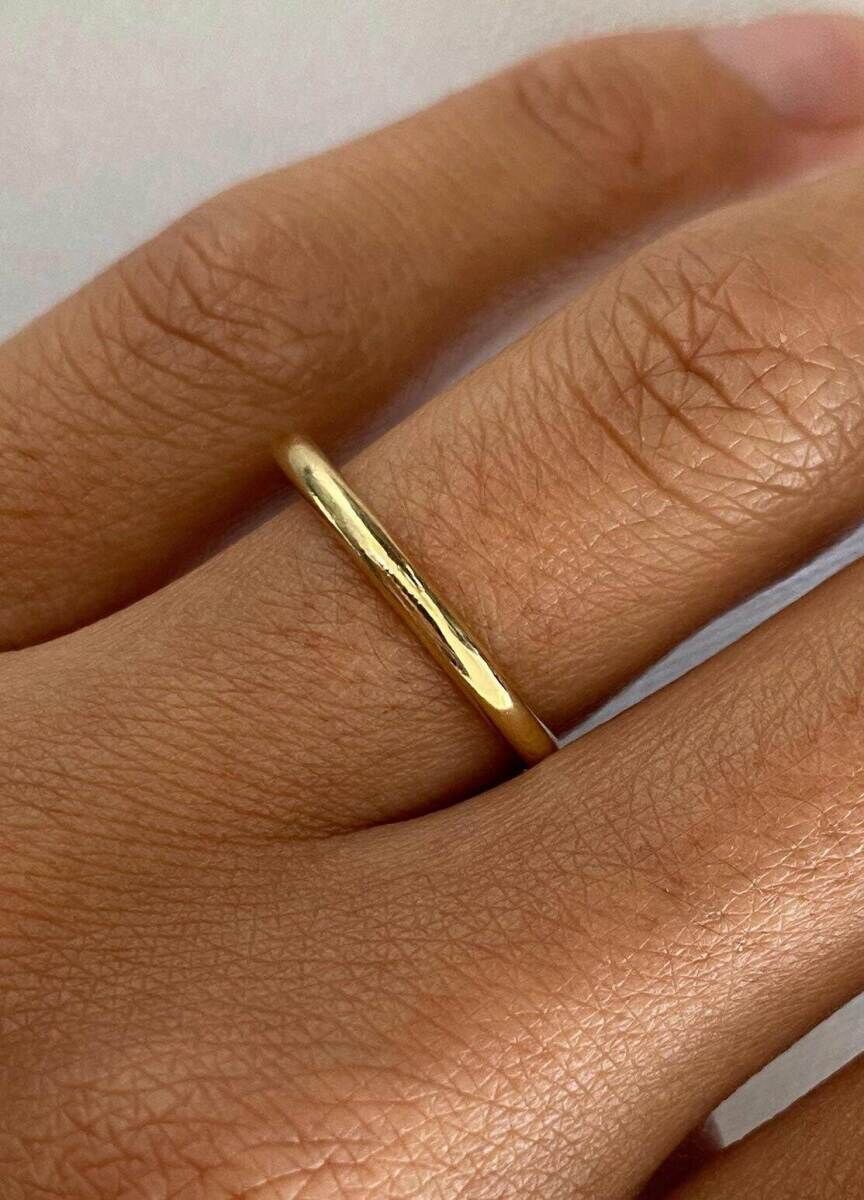
Wedding Ring Design: A plain gold metal band on a ring finger.
c/o Kimai

Metal engagement ring

Not a huge diamond or gemstone person? No problem. Tons of brides- and grooms-to-be opt for a more minimalistic style of engagement ring with the help of a classic metal band. Plus, think about how beautifully it'd stack with a wedding band.

Beyond the cuts listed above, there are additional shapes worth exploring — trapeze, kite, and others that sit outside the standard categories. "You can really have a lot of fun with the design when you experiment with these silhouettes," says Ali Galgano, founder and head jeweler at Serpentine Jewels.

The 4Cs work together rather than independently. Deciding which characteristics matter most will help narrow down the right cut. Once that's clear, the next decision is setting.

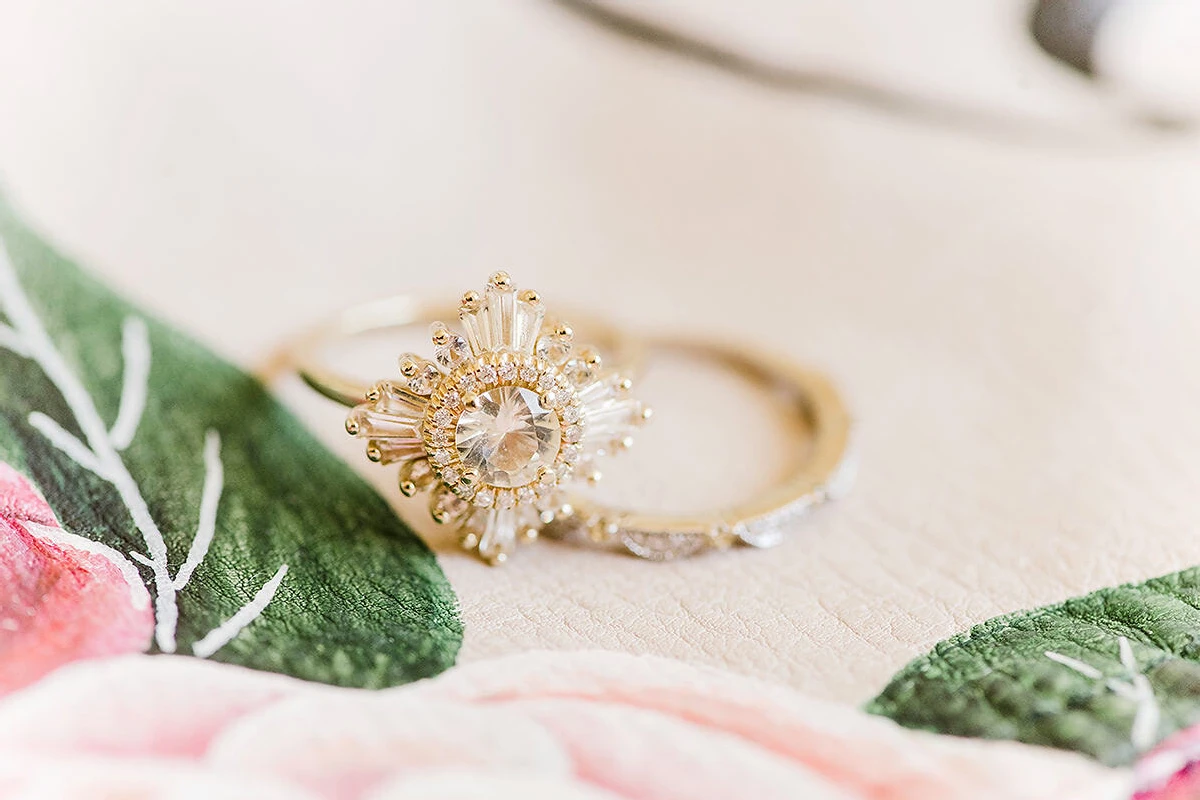
Wedding Ring Design: A beautiful star/flower inspired engagement ring next to a thin wedding band. Both rings are sitting on top of a flower design.

Engagement Ring Settings

The setting determines how a diamond or gemstone is secured to the band and how much of the stone is exposed. It defines the overall silhouette of the ring and affects both the look and the long-term wearability.

Settings share some common features — prongs that hold the center stone in place, for instance, or additional accent stones alongside the main diamond. The setting should also work with the band style. Tiffany-style settings, for example, pair naturally with a clean metal band that keeps the focus on the stone.

It's worth thinking about the wedding band at the same time as the engagement ring. "When you buy your engagement ring, it's nice to actually think about your wedding band at the same time," advises Sidney Neuhaus, co-founder of Kimai and GIA-certified gemologist. "Especially if you want to wear them on the same finger, you need to see the whole picture."

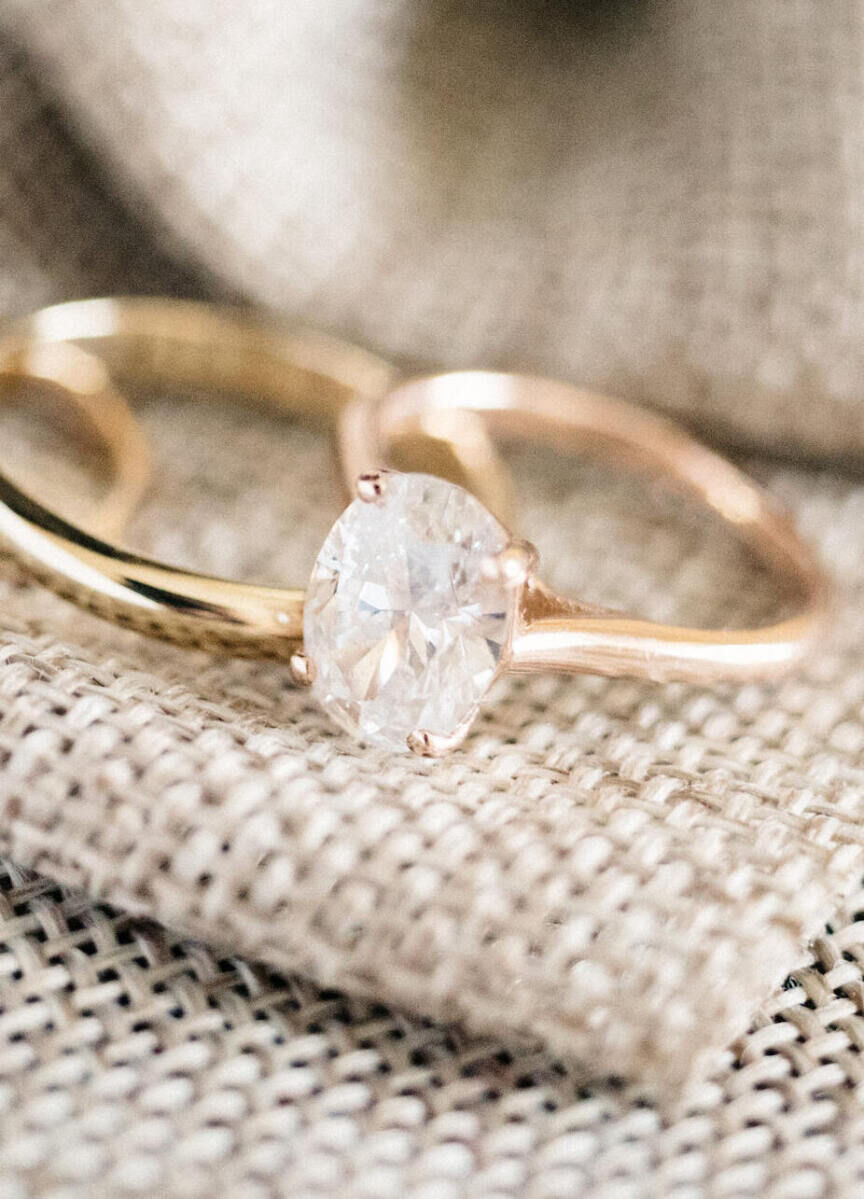
Wedding Ring Design: An oval cut engagement ring in a solitaire sitting perched on beige cloth next to a gold metal wedding band,

Solitaire engagement ring setting

This ultra-popular style showcases a single-stone ring and allows it to catch plenty of light.

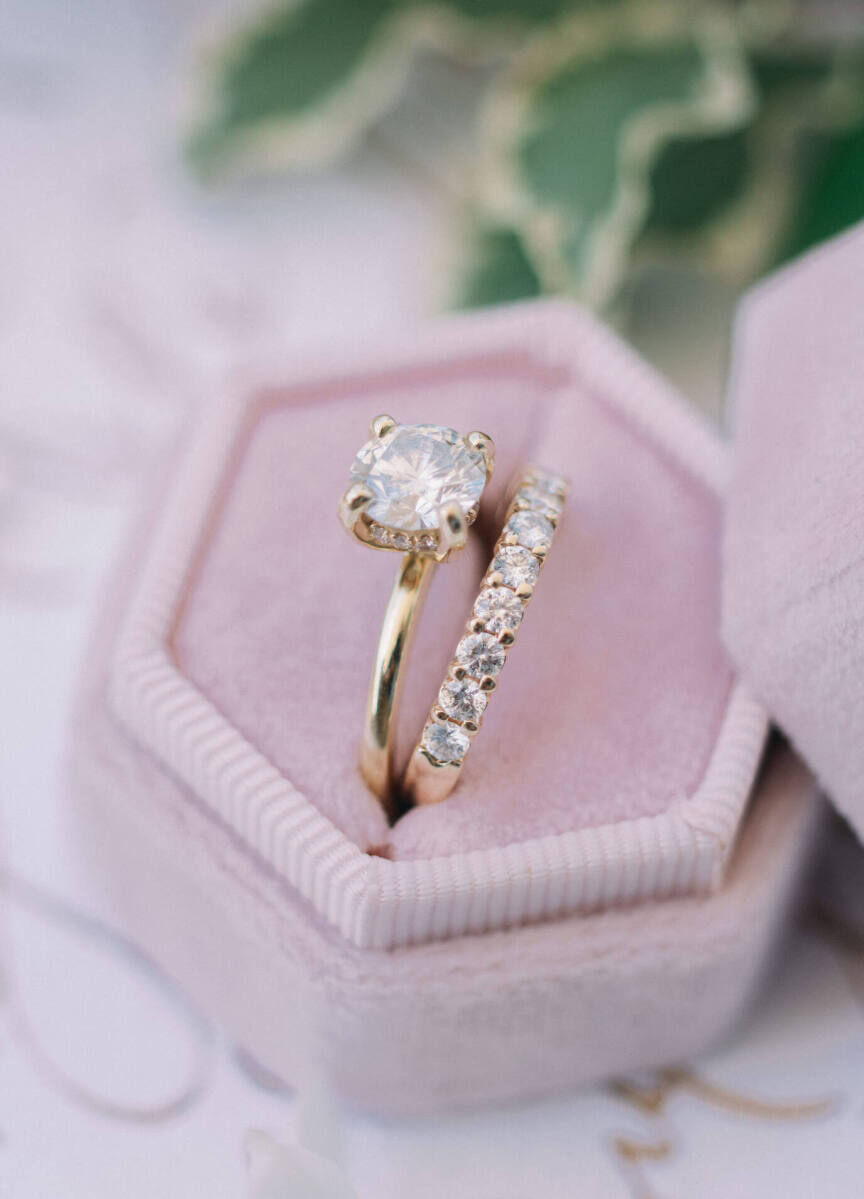
Wedding Ring Design: A round cut engagement ring in a prong setting next to an eternity wedding band in a hexagonal pink ring box.

Prong engagement ring setting

"The most traditional and popular wedding band style is prong set," Wegman shares. "Each individual diamond is set with prongs, keeping the attention on the diamonds, often highlighting the diamond shape." Many engagement settings employ four to six tiny prongs to keep your precious stone safe. 

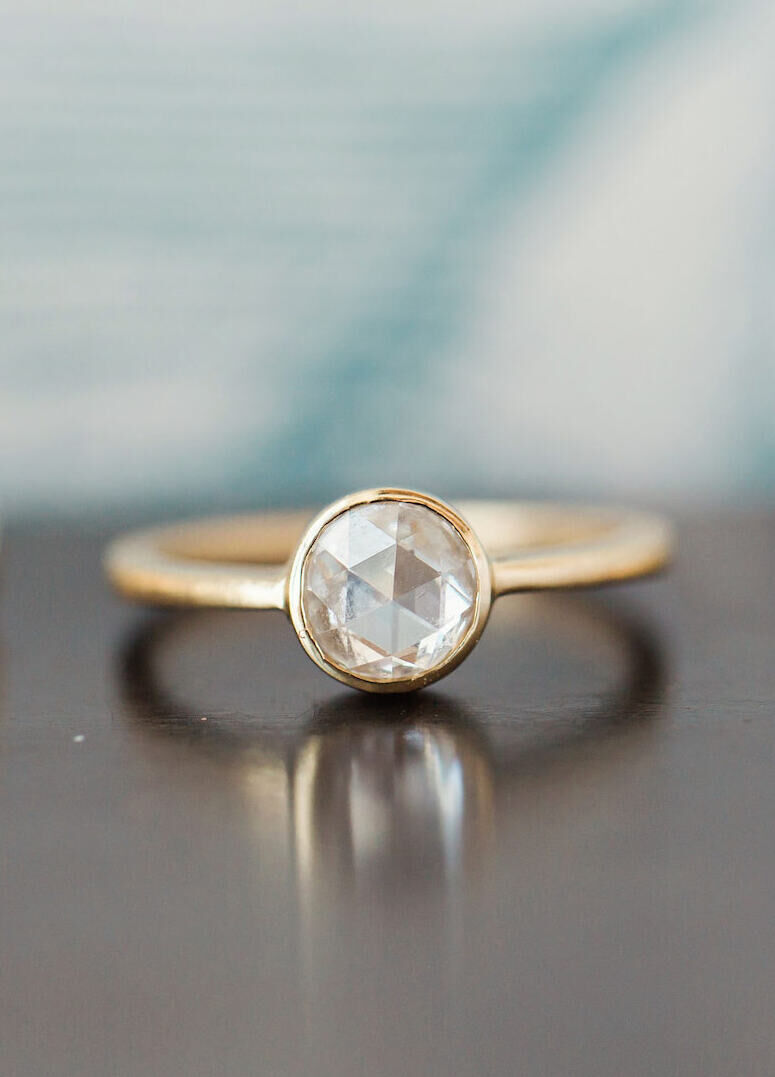
Wedding Ring Design: A round cut diamond in a gold bezel setting resting on a table.

Bezel engagement ring setting

A bezel engagement ring setting completely surrounds your gem, protecting the entire perimeter of the stone (and looking chic while doing so!). "They are bold and minimalistic featuring a thin metal rim around each diamond creating a secure and extremely comfortable setting," Wegman explains. "With the resurgence of 90s styles, they are increasingly becoming more and more popular." Even more, we're noticing unique takes on this setting, like jewelry designer Jessica McCormack's rings featuring trendy black bezel trims.

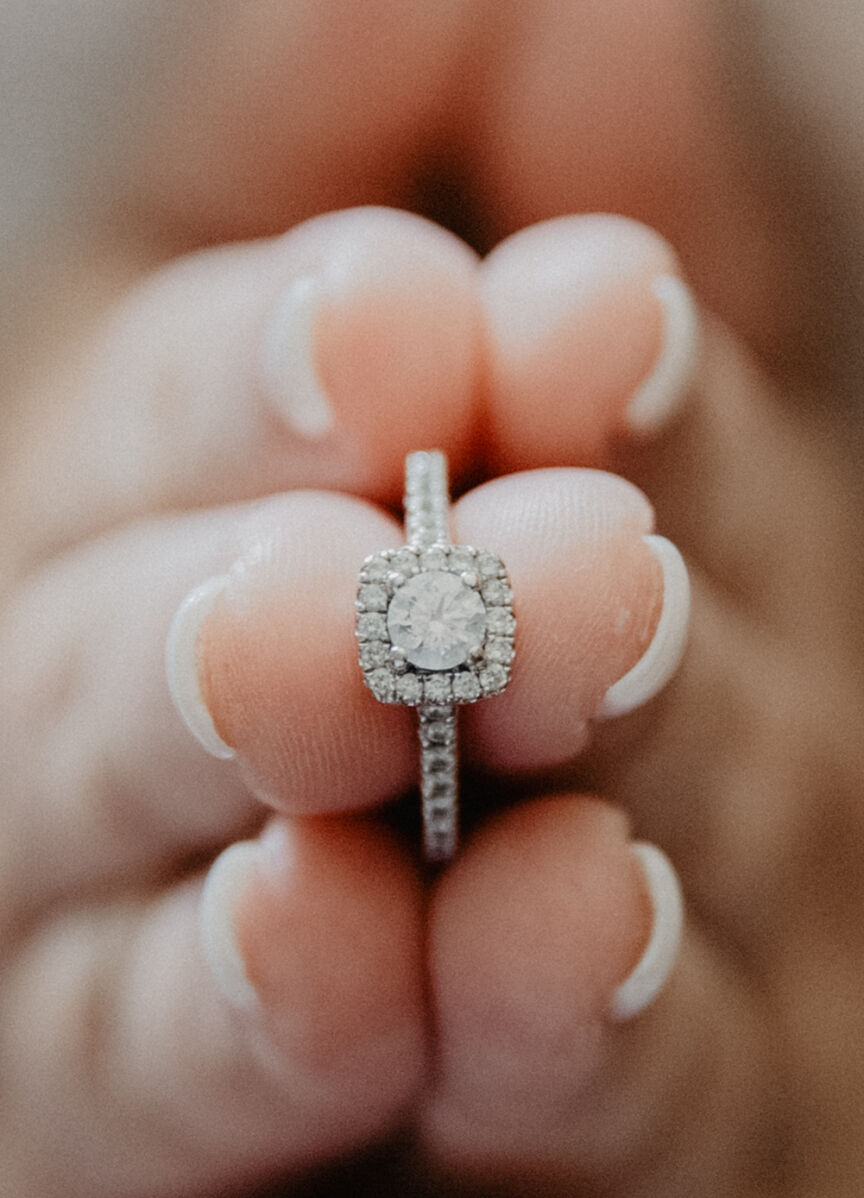
Wedding Ring Design: Two hands holding up a round cut engagement ring with a square halo setting.

Halo engagement ring setting 

A halo setting is exactly what it sounds like: A beautiful halo of tiny diamonds or gems around a larger main stone, which can make it appear larger. You’ll also find variations of this popular engagement ring setting, like a double halo, flower halo, or hidden halo. ("Many clients add a hidden halo which features small micro pavé diamonds on the basket underneath the diamond to give a subtle touch of sparkle for the wearer," Wegman says of the setting.) Best of all, a halo setting goes well with tons of engagement ring bands—we love this pavé band pairing from Erica and Josh’s wedding, for instance. It's a celeb-loved setting too: Princess Diana's diamond-surrounded saphire ring (which Prince William later used to propose to Kate Middleton!) and Katy Perry's flower-shaped style are both halo-inspired cluster styles.

Weddng Ring Design: An oval cut engagement ring with a pavé setting on top of an evergreen square ring box.

Pavé engagement ring setting

A pavé setting features a ring or band covered in small stones extremely close to one another, giving the appearance that the ring’s surface has been paved with diamonds or gems. Kourtney Kardashian and Blake Lively alike sport pavé engagement ring bands.

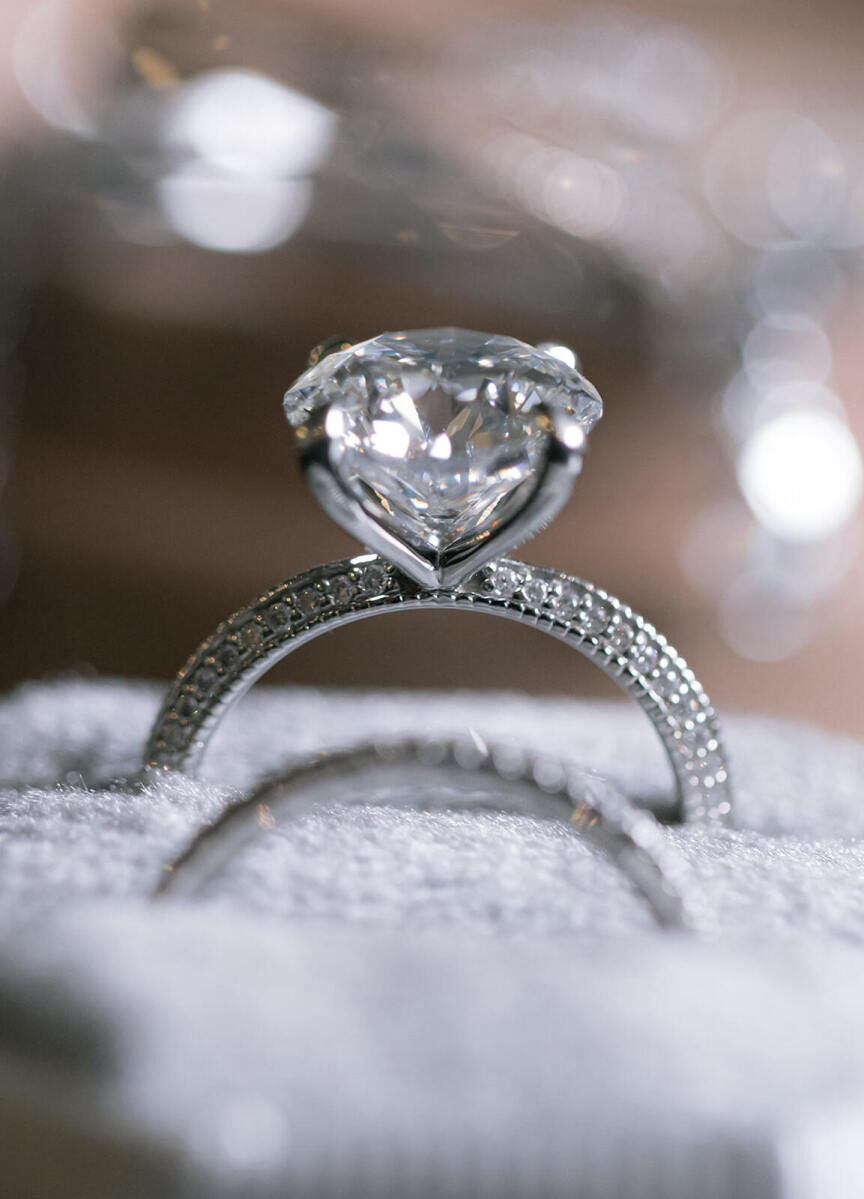
Wedding Ring Design: Side view of a diamond engagement ring with a cathedral setting propped in a box.

Cathedral engagement ring setting

Elegant and intricate in design, a cathedral engagement ring setting uses arcs (which look similar to arches you might find in a cathedral, hence the name!) to secure and lift up your center stone, allowing more of your diamond or gem to be visible.

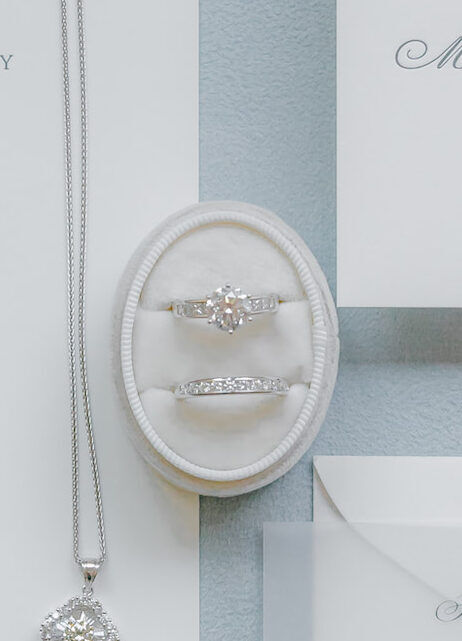
Wedding Ring Design: A Tiffany setting engagement ring in an oval ring box above a wedding band.

Tiffany engagement ring setting

Designed by iconic jeweler Tiffany & Co. in 1886, this famous six-prong setting lifts your diamond up high, bumping up the ring’s light exposure and overall sparkle.

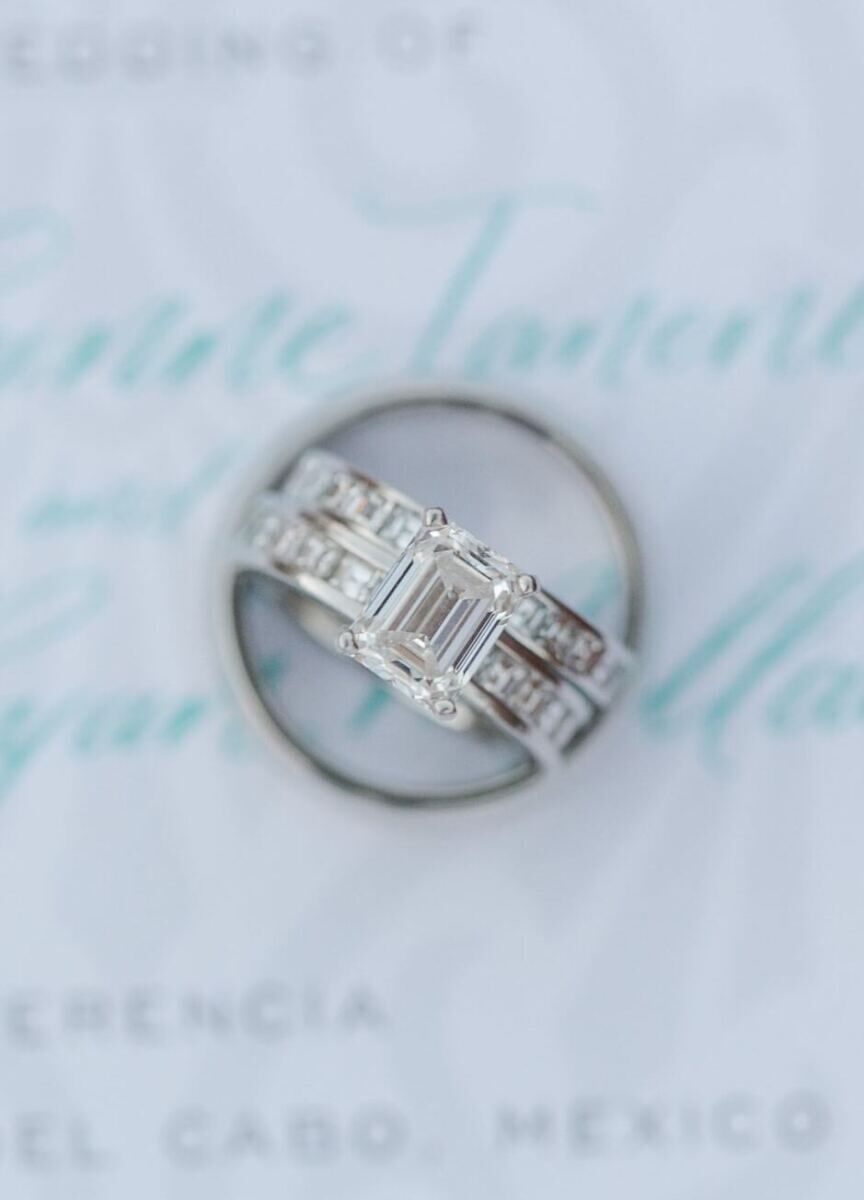
Wedding Ring Design: An emerald cut engagement ring with a channel setting facing up while resting in a wedding band on a blue invitation.

Channel engagement ring setting

This classic style is popular for both wedding bands and engagement rings, touting a string of stones held in place between two “channels,” or the edges of your ring that keep the diamonds or gems in place. "Channel set bands are an older style of setting—in lieu of prongs, the diamonds are 'railroad' set with two walls holding in the diamonds," Wegman explains. Something to keep in mind, though? "They're secure but harder to clean and the stones are more exposed on top."

Wedding Ring Design: East-west diamond engagement ring in a ring box next to an infinity wedding band.

East-west engagement ring setting 

An east-west setting flips your stone on its “side,” making your stone wider than it is tall and horizontally stretching from east to west. This is one of the more unconventional engagement ring ideas to pick from, adding an extra dimension of uniqueness to the style.

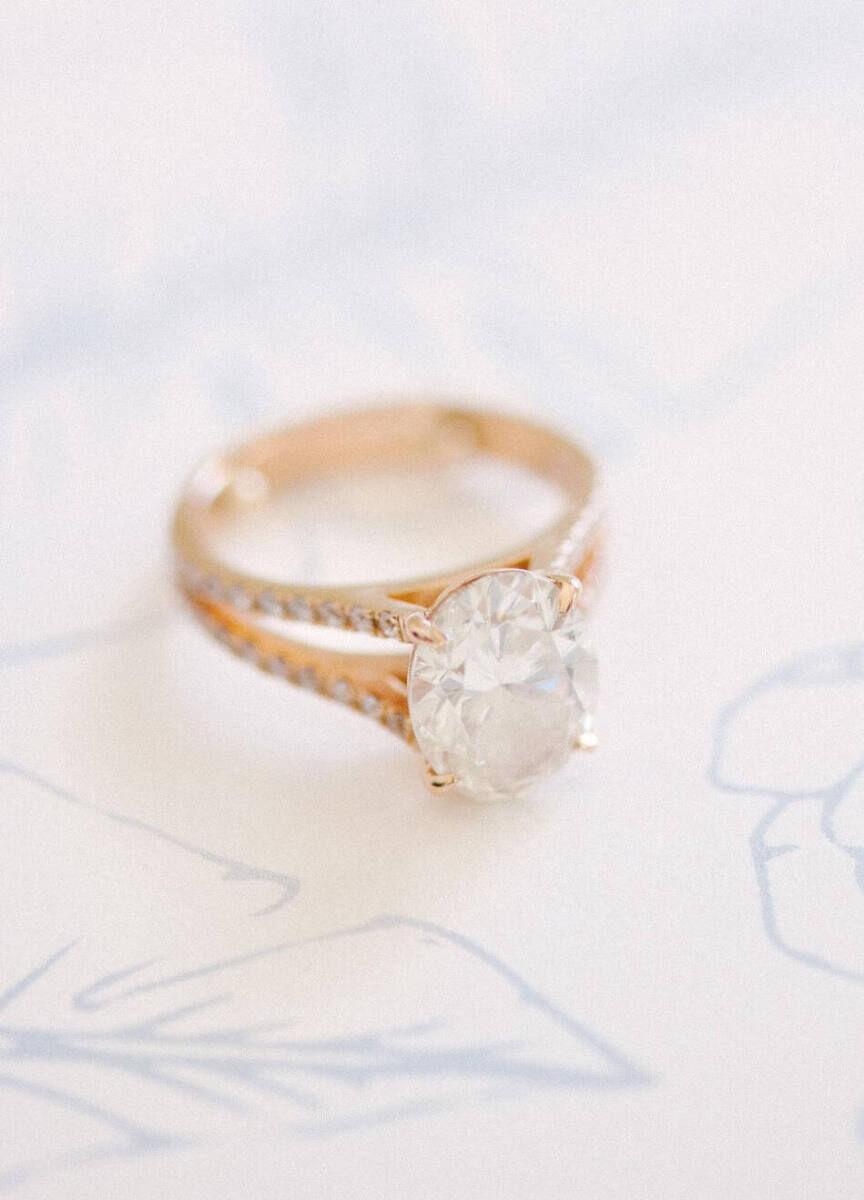
Wedding Ring Design: An oval engagement ring with a split-shank setting and rose band.

Split-shank engagement ring setting

For a modern twist on an engagement ring setting, consider a split-shank, which “splits” the ring band in two and creates negative space on the sides of the center stone.

Wedding Ring Design: A bride wearing a two-stone engagement ring.

Two-stone or three-stone engagement ring settings

Engagement rings with additional stones have become increasingly popular, and it’s easy to see why: A two-stone (aka “toi et moi”) or three-stone ring setting creates a unique design and adds to the overall sparkle. Tons of different engagement ring bands pair well with this setting based on the stones involved, so there’s ample room to make this style your own. It's a celeb-favorite setting too—Jacqueline Kennedy, Emily Ratajkowski, and Megan Fox all rock the style, as does Ariana Grande, whose ring features a unique pearl and diamond pairing.

The settings above cover the most common options, but the full range extends further — bespoke rings and less conventional configurations are worth exploring with a jeweler. For guidance on pairing, let the cut lead. A princess cut works well in a classic solitaire or alongside side stones that highlight the shape. A jeweler can walk through the tradeoffs for any specific combination.

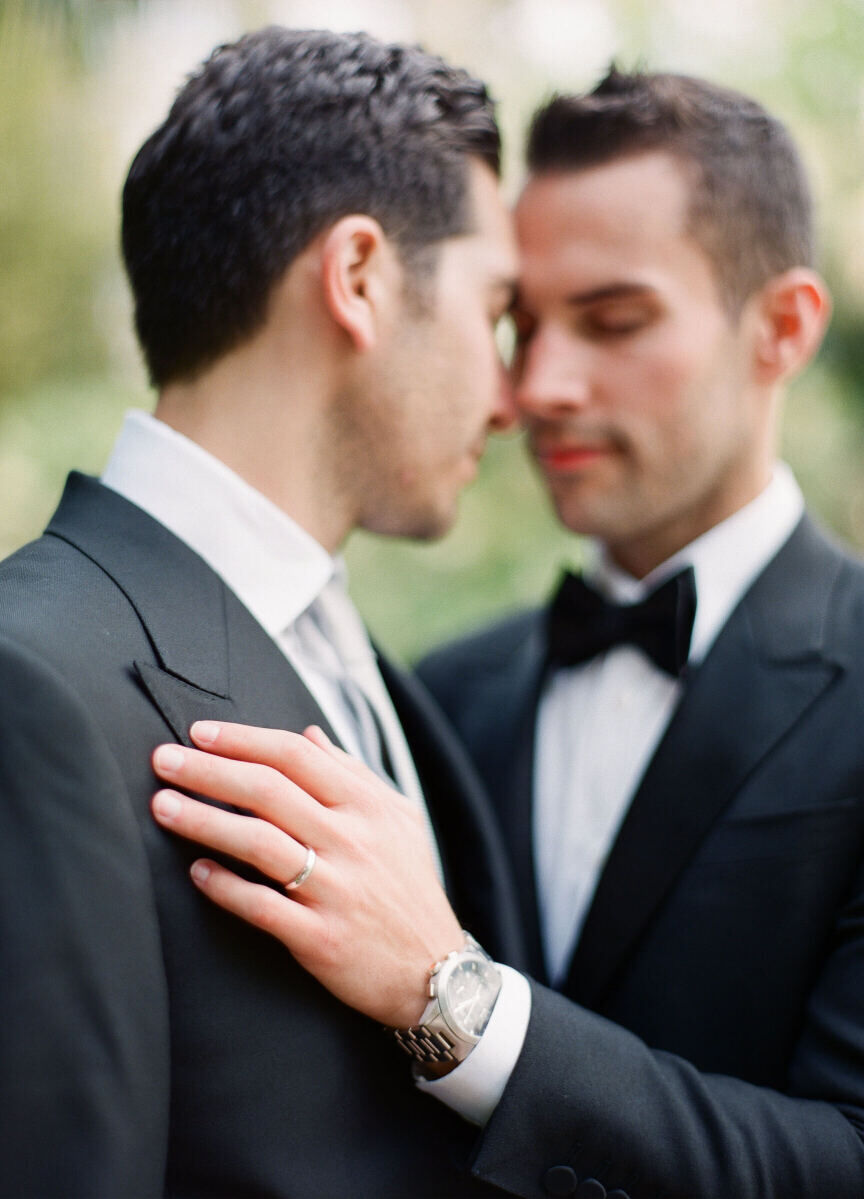
Wedding Ring Design: A groom laying his hand on another groom's chest with his wedding band on his ring finger.
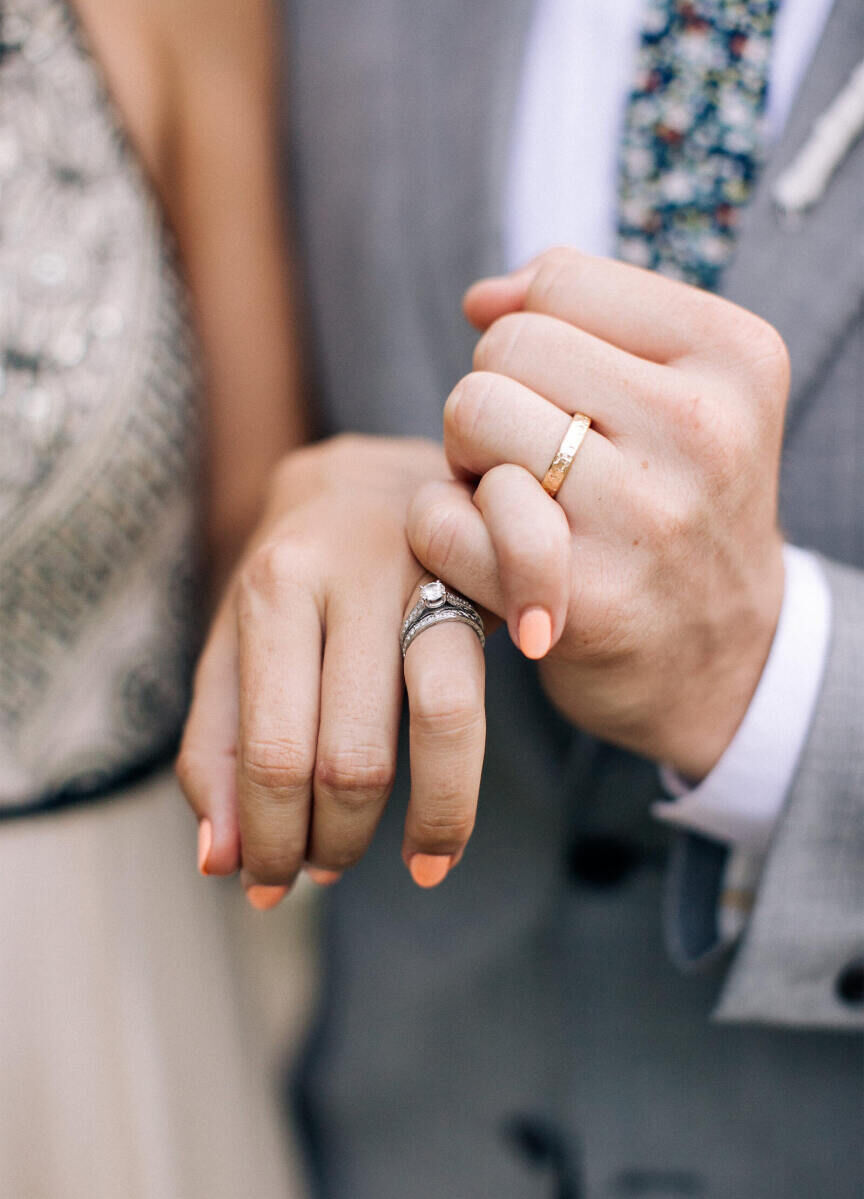
Wedding Ring Design: A bride and groom doing a pink promise with their rings on.
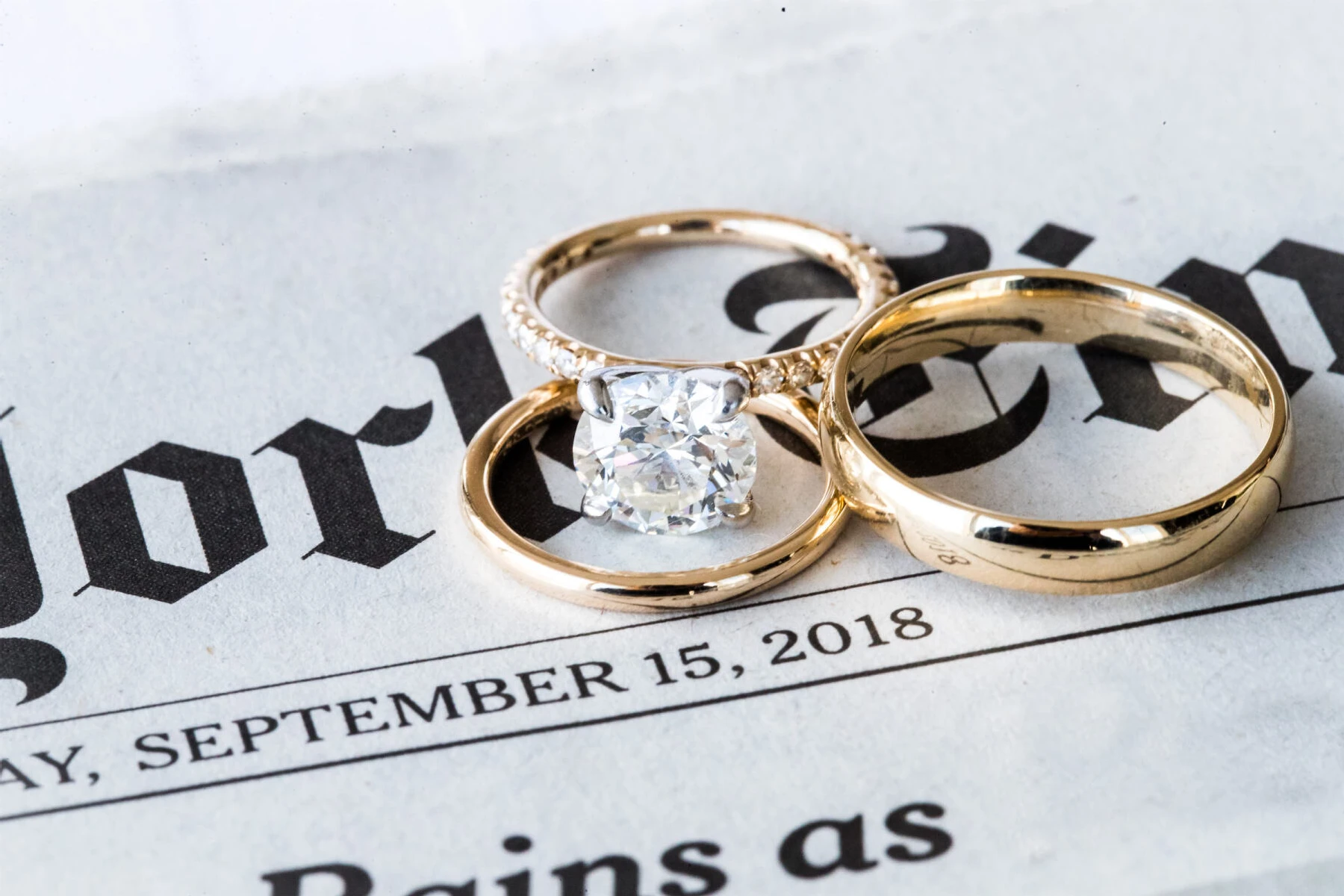
Wedding Ring Design: A round cut diamond engagement ring and two golden wedding bands sitting on top of the front page of the New York Times.

Wedding Ring Design Ideas

Wedding band selection is its own decision, separate from the engagement ring. The primary choice is between a metal band and one set with diamonds or gemstones. Metal bands — typically gold or platinum — are clean and versatile, pairing well with almost any engagement ring style. Diamond and gemstone bands add visual weight and work particularly well alongside simpler solitaire settings where the band can carry more of the design.

The most popular wedding band styles, and the engagement ring cuts and settings they complement best:

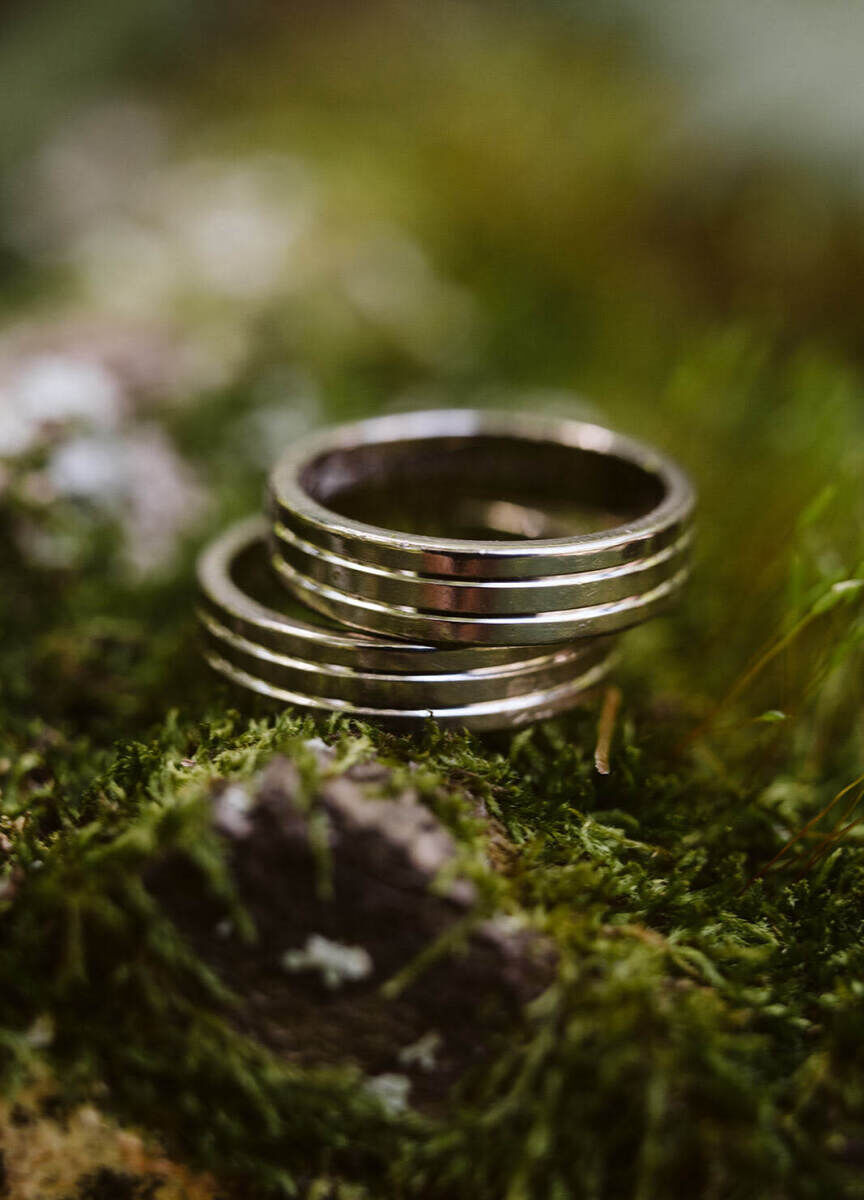
Wedding Ring Design: Two metal wedding rings stacked on top of a mossy perch.

Metal wedding ring design

A metal wedding ring design is the golden standard (literally!), especially when it comes to wedding ring designs for couples. Golden and platinum bands are evergreen picks and will always remain beautiful wedding rings, but other metals like titanium or black tungsten are available too. A metal wedding ring design complements all engagement ring ideas, so you can shop confidently.

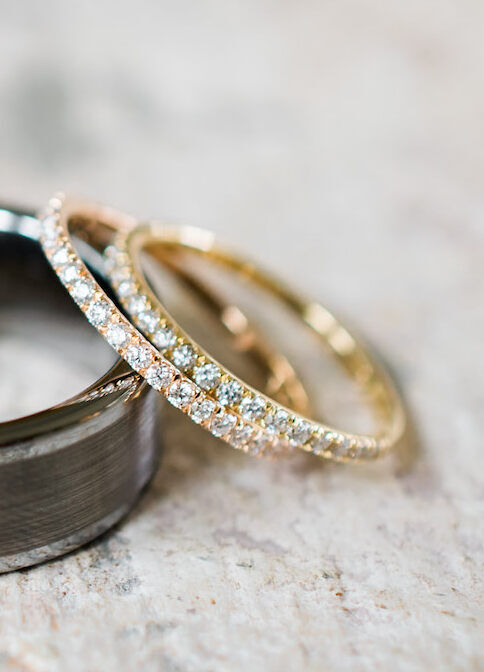
Wedding Ring Design: Gold and pink pavé wedding bands resting against a large metal wedding band.

Pavé wedding ring design

Amp up the glam with pavé wedding band designs. These wedding bands are encrusted with pavé diamonds or gemstones, adding extra sparkle and shine to your wedding ring design. It’s an especially great choice for couples looking for glam wedding ring ideas, and would go well with a plain metal engagement band as it would with a diamond-encrusted engagement band.

Wedding Ring Design: Two matching channel wedding rings.

Channel wedding ring design

Looking for a bit more flair with your wedding ring design? Just like their engagement ring counterpart, channel-set wedding band designs are lined with small diamonds or accent gems, protected by two metal channels on the top and bottom of the band, making for classically beautiful wedding rings. These styles are especially great wedding ring designs for couples too.

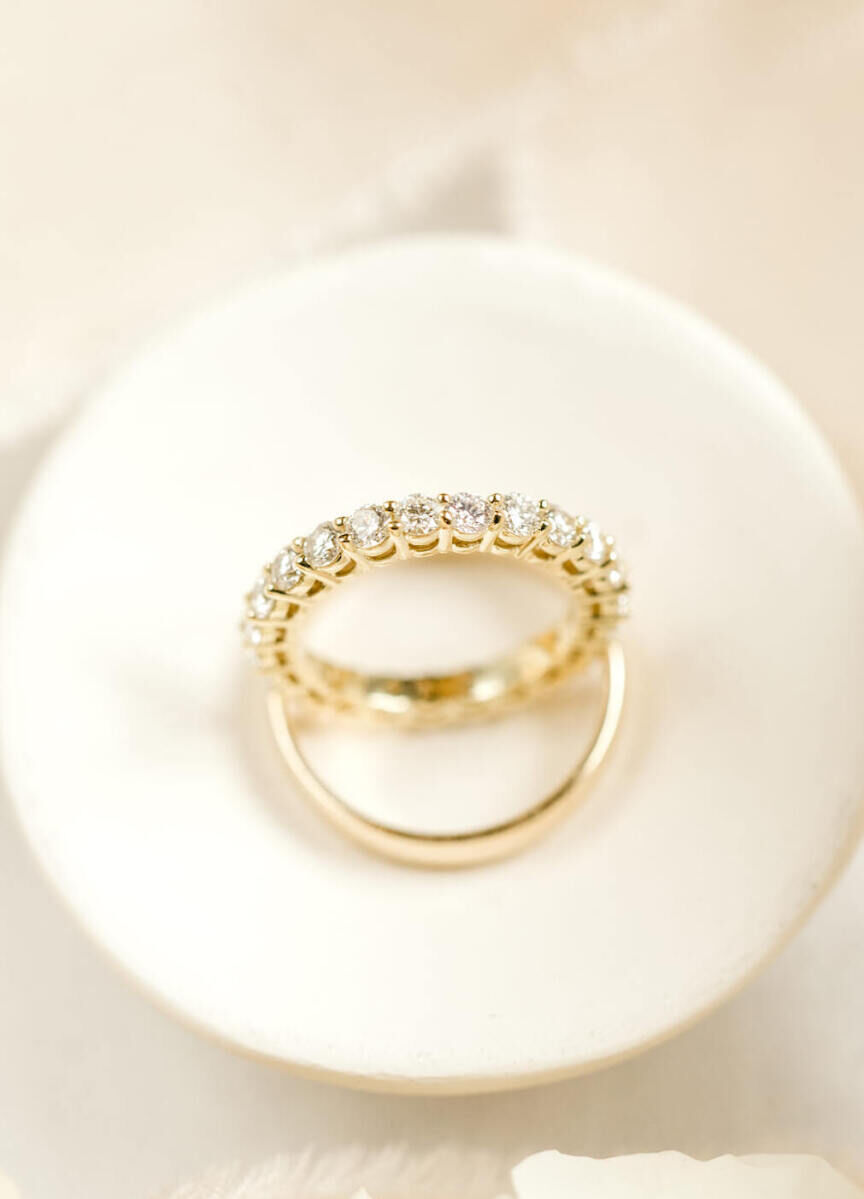
Wedding Ring Design: A gold eternity wedding band sitting in a circular white dish with a gold metal wedding band.

Eternity wedding ring design

These beautiful wedding rings are covered in smaller diamonds or gemstones around the entire band, representing eternal love. If you have a more classic engagement ring (such as an oval-cut or solitaire setting), an eternity ring would make for a beautiful pairing, Neuhaus says. Or, if you have a diamond eternity ring, you could pair it with an eternity band as well, so that the two bands almost appear as one.

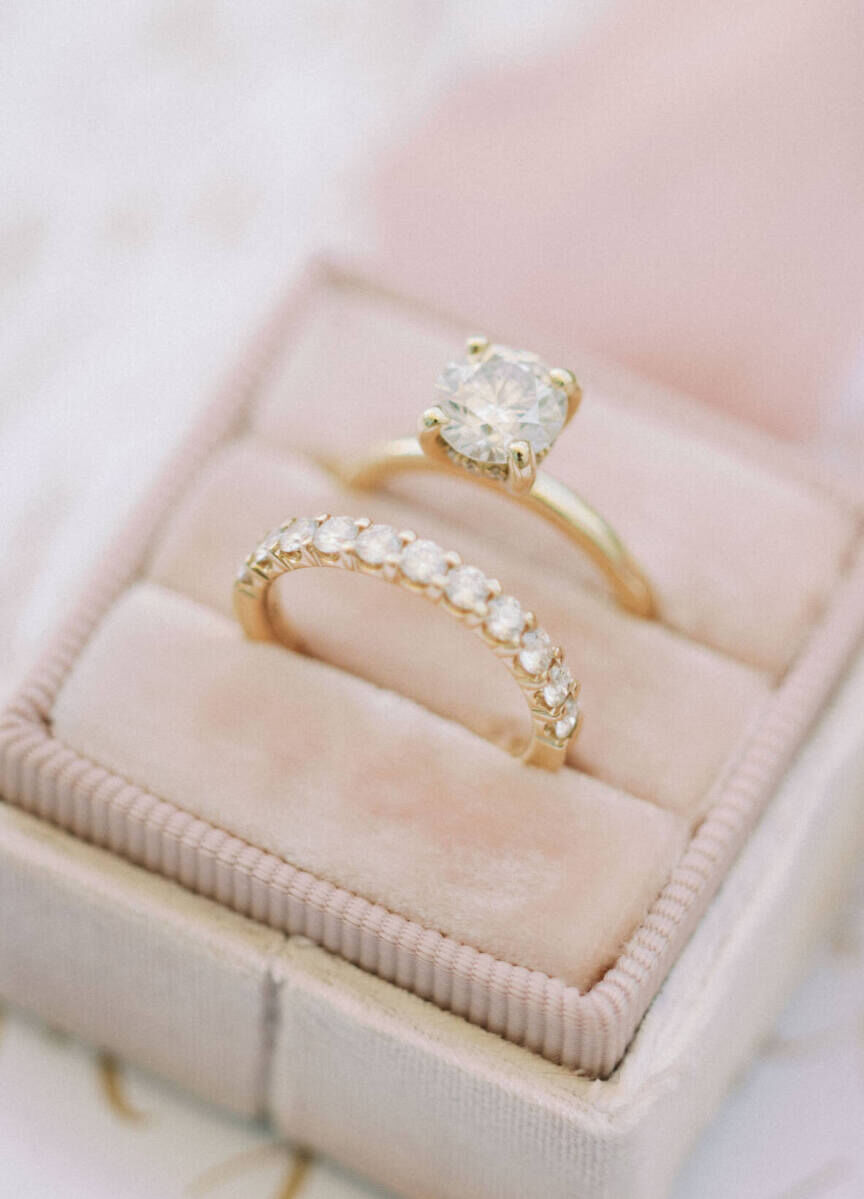
Wedding Ring Design: A gold anniversary wedding ring sitting in a pink ring box next to a solitaire engagement band.

Anniversary wedding ring design

Similar to an eternity band, an anniversary wedding ring design is covered in diamonds or gemstones. The difference is that the stones only go halfway around the ring rather than the entire perimeter. While this is certainly a popular wedding ring idea that’d look great with a metal, pavé, or eternity engagement band, this ring design idea is equally great for an anniversary present of its own down the road.

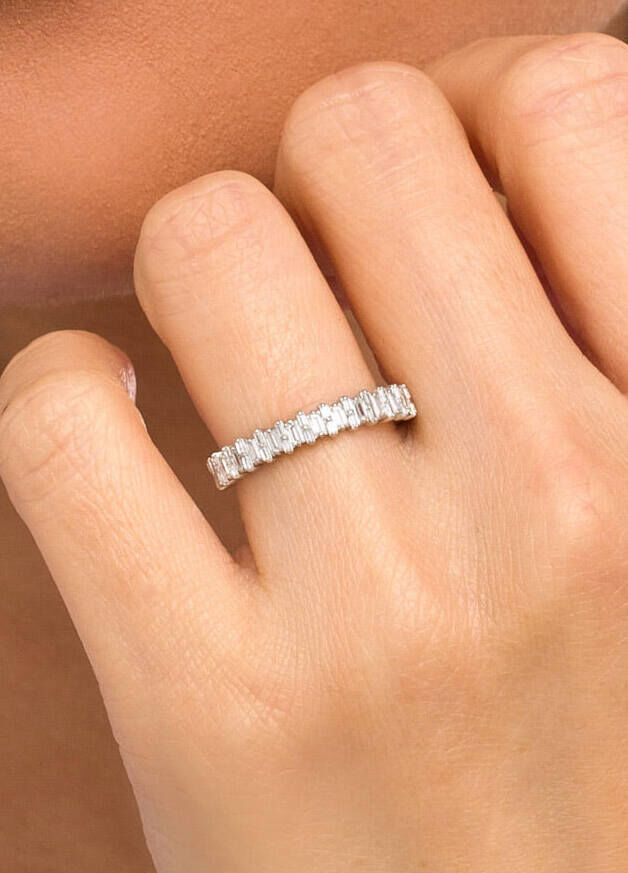
Wedding Ring Design: A baguette diamond wedding ring band on a ring finger.
c/o Zales

Baguette diamond wedding ring design

A baguette band includes one or more baguette diamonds, which (as you might have guessed based on the name) are long and rectangular in shape. They add some extra shine to your wedding band, and come in plenty of different variations. A solitaire-style engagement ring setting would look especially perfect with these beautiful wedding rings.

Some jewelers offer wedding bands designed to nest against a specific engagement ring, ensuring the stones align and there are no gaps between the two. Couples who want the rings permanently joined can also have them soldered together.

Whether to match your partner's band is entirely a personal call. Coordinating metals and styles is common, but mismatched bands are equally valid — the decision comes down to preference, not convention.

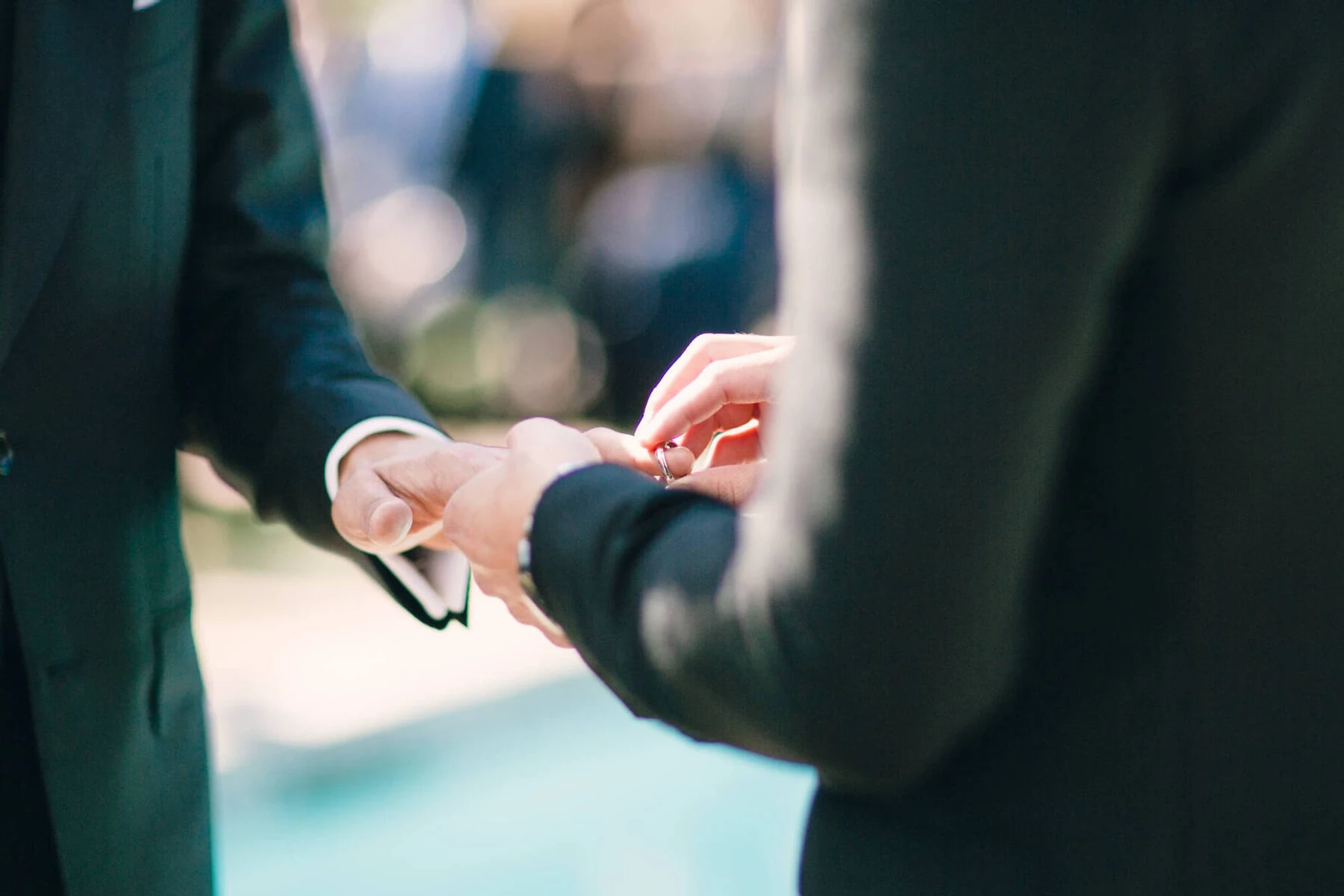
Wedding Ring Design: A groom placing a metal wedding band on another groom's finger.
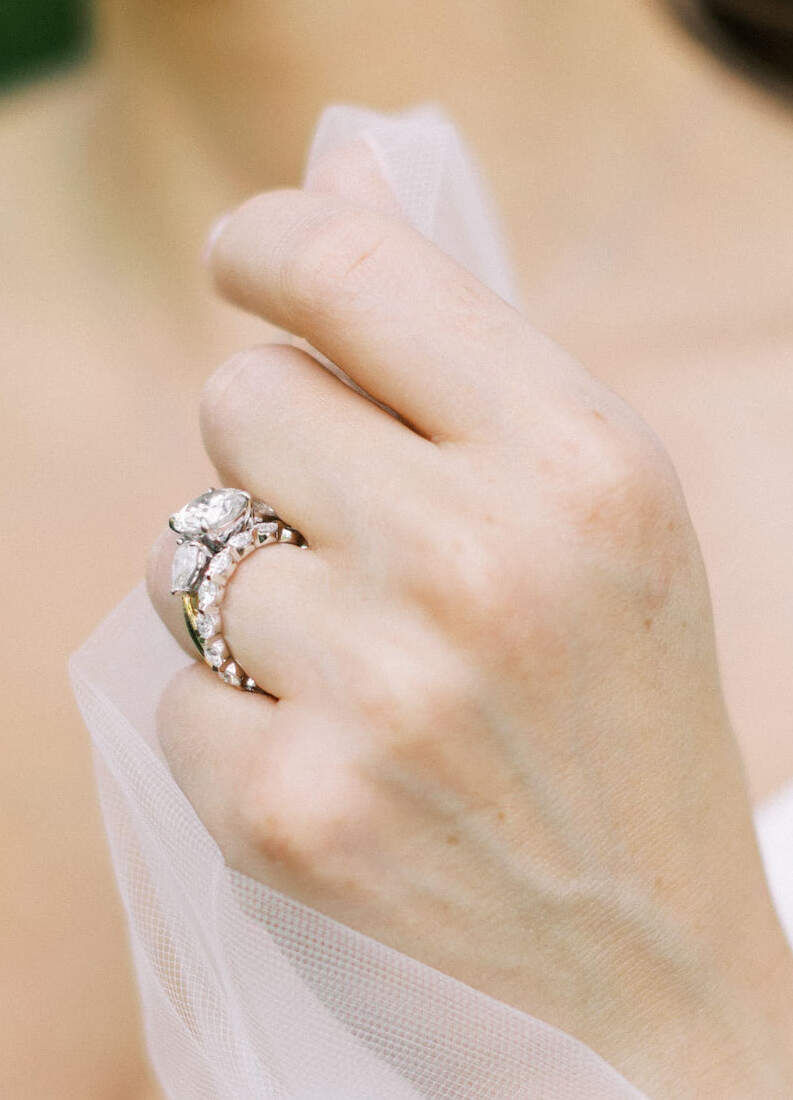
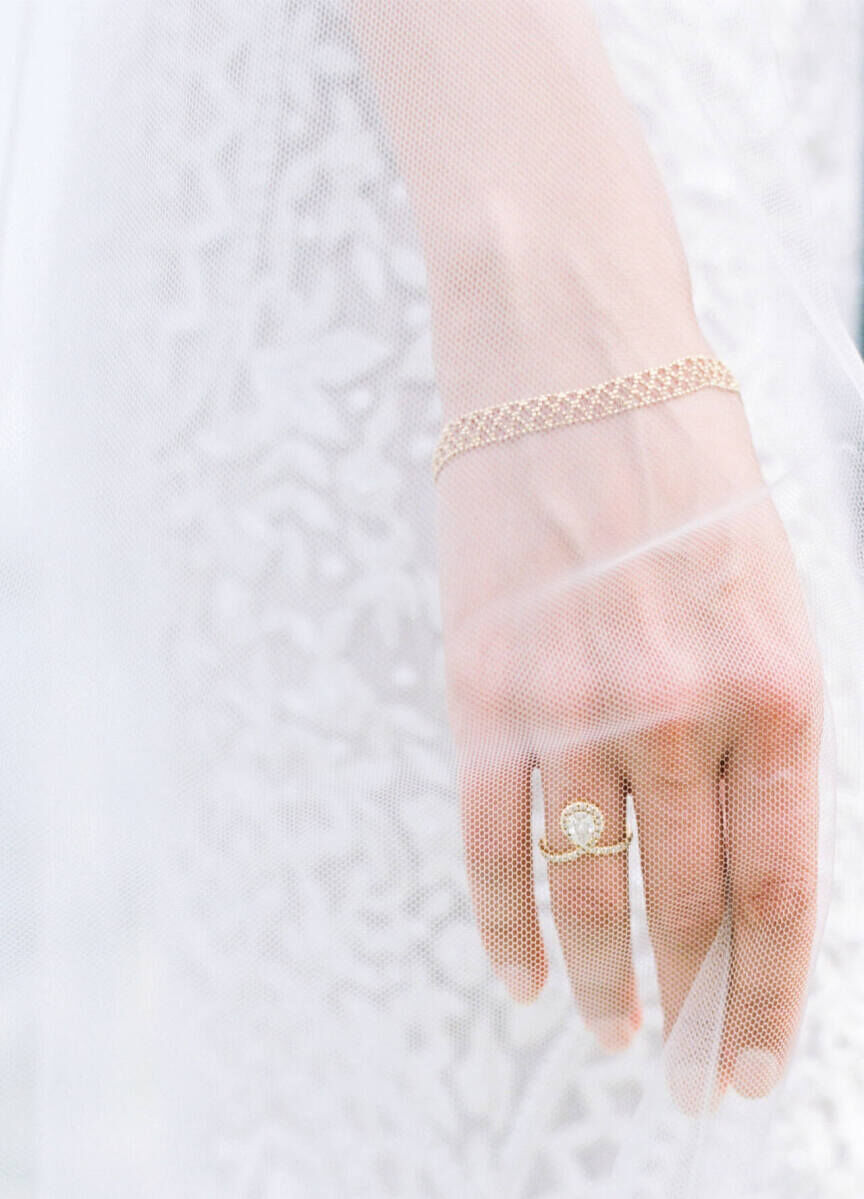
Wedding Ring Design: A bride's hand wearing a pear cut engagement ring seen through her veil.
Wedding Ring Design: Two hands holding one another with matching eternity and pavé wedding bands.

How to Choose an Engagement or Wedding Ring Design

Start with personal style
Ring choice is closely tied to how someone dresses and accessorizes day-to-day. An art-deco aesthetic points toward vintage cuts and unconventional settings. A classic sensibility points toward solitaires and clean metal bands. Band thickness is part of this too. "If you're edgier, then you can go for a thicker band, something quite bold," says Neuhaus.

Factor in lifestyle
A ring worn daily needs to hold up to daily life. For anyone who works with their hands, a low-profile setting with a closed band offers more protection than an elevated or open style. Metal matters here as well. "Platinum is a great alternative if you want to make sure nothing happens to your band in the long run," Neuhaus notes.

Prioritize the center stone
The setting can be changed later. The stone is harder to swap. "Make sure you love the diamond, because the setting can always be changed," advises Galgano.

Think about how the rings will wear together
How the engagement ring and wedding band sit together affects both comfort and appearance. "Deciding how you want your ring to sit — high or flush — will help you determine the best band to accompany your engagement ring," Galgano says. "Also think about how you will wear it: on its own or always as a pair? Will you want to stack in the future? Do you like to mix metals or is it important that you stick with platinum or yellow gold?"

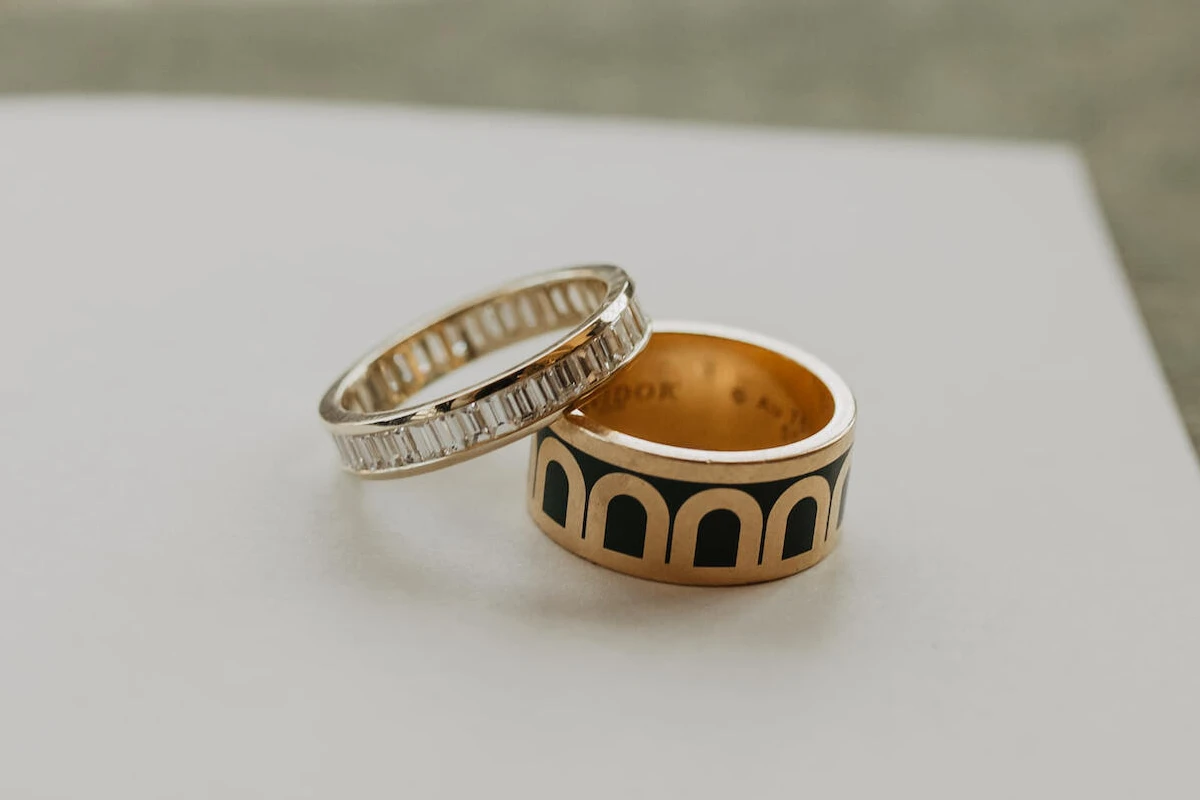
Wedding Ring Design: Channel diamond and art-deco wedding rings stacked on top of one another on a white setting.

Keep an open mind
Preferences shift once rings are actually on the hand. "Mixing shapes, carat sizes, and metal colors might pleasantly surprise you," says Wegman.

Allow enough time
Custom engagement rings take roughly eight to ten weeks from diamond selection through production. Wedding bands run four to six weeks. "We recommend starting the process about four months in advance," Wegman advises.

Work with a jeweler
The variables involved in ring selection — cut, setting, metal, band pairing — are easier to navigate with expert guidance. "Work with someone who can walk you through these scenarios so you can choose the best possible pairing," says Galgano.

The right ring is the one that holds up over time — in quality, in style, and in how it feels to wear every day.

Frequently Asked Questions

What is the most popular engagement ring cut?

Round brilliant is the most requested cut overall, prized for its symmetry and light performance. Oval has gained significant ground and is now among the most requested cuts at many jewelers, largely because its elongated shape reads larger than its carat weight.

What is the difference between a diamond's cut and its shape?

Cut refers to how a diamond's facets are arranged and how well they interact with light — it directly affects brilliance, sparkle, and the colors the stone displays. Shape refers to the outline of the stone as viewed from above: round, oval, pear, emerald, and so on. Two diamonds can share the same shape but have very different cuts, and therefore very different levels of sparkle.

What is the difference between an engagement ring setting and a band?

The setting is how the diamond or gemstone is secured to the ring — the prongs, bezel, halo, or other structure holding the stone in place. The band is the ring itself, the circular metal portion that sits on the finger. Many couples choose a setting and band together, but they are distinct components and can be selected independently.

Should your wedding band match your engagement ring?

It doesn't have to. Matching metals and styles is common, but mixing metals, profiles, and band styles is equally accepted. The more practical question is how the two rings sit together — whether they nest flush or create a gap — which affects comfort and appearance over years of daily wear.

What is a lab-grown diamond?

A lab-grown diamond is chemically and physically identical to a natural diamond — both are composed of tightly bonded carbon atoms and respond to light in the same way. The difference is origin: natural diamonds are mined from the earth, lab-grown diamonds are produced in a controlled environment. Lab-grown diamonds are a more sustainably sourced option and have become increasingly common in both engagement rings and wedding bands.

How far in advance should you shop for an engagement ring or wedding band?

For custom or bespoke engagement rings, allow eight to ten weeks from diamond selection through production. Wedding bands typically run four to six weeks. Starting the process at least four months before the wedding covers both, with room for adjustments.

Can you change an engagement ring setting later?

Yes. The setting can be replaced without changing the center stone. If you fall in love with a diamond but aren't certain about the setting, prioritizing the stone is the right call — the setting decision can come later or evolve over time.
Carats + Cake
Join the Community
Create An Account
Back to Login

By creating an account, you agree to our Terms of Use and have read and understood the Privacy Policy.
Back to Login
No problem! Reset your password via email.
Back to Login
Wedding Websites & Invitations