Choosing a California Wedding Florist
A florist shapes the color, scale, and feel of your wedding more than almost any other design vendor, so choose one whose portfolio matches the look you want and who works consistently across full events, not just single arrangements. California’s floral advantage is real: the state is one of the country’s major flower-growing regions, with Central Coast farms around Lompoc and Carpinteria supplying blooms that arrive fresher and last longer than shipped stems. Ask each florist how much they source locally.
Bring your palette, venue, and a few inspiration images to the first meeting, and ask how the florist handles substitutions if a specific bloom is unavailable. A good designer protects your color story even when nature does not cooperate, swapping like for like to keep the look intact. Coordinate florals with the California wedding decor and your California wedding venue so blooms and hard decor read as one cohesive design.
Seasonal Blooms Across California
California’s long growing season and mild climate give couples access to local blooms across much of the year, which keeps flowers fresher and more available than in colder states. Spring brings ranunculus, peonies, and garden roses, summer offers dahlias and zinnias, fall turns toward amaranth and late dahlias, and the state’s greenhouse and field production extends many varieties beyond their usual windows. Choosing in-season flowers means better quality and easier sourcing.
Climate still shapes the plan within the state. Coastal fog and ocean breeze keep delicate blooms happy, while desert heat in Palm Springs and the inland valleys stresses tender flowers and favors heat-tolerant varieties and shaded handling. Tell your florist the venue, season, and time of day so the design holds up from ceremony to last dance, and align the palette with your California bridesmaid dresses.
Floral Packages and Booking Timeline
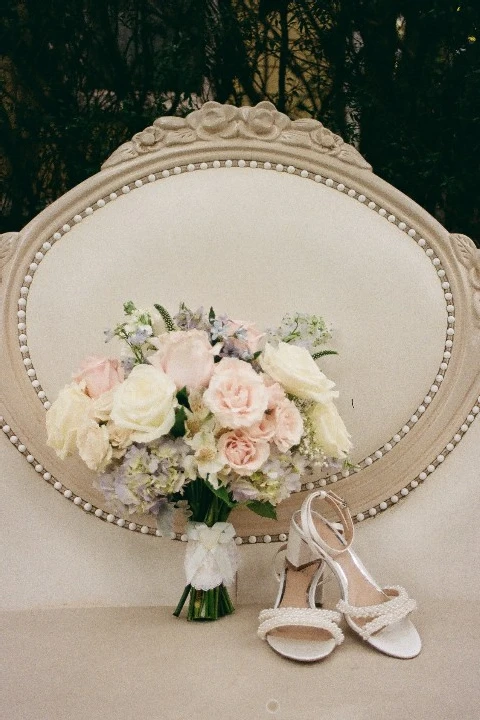
A full floral package covers more than the bouquet. Expect bridal and bridesmaid bouquets, boutonnieres and corsages, ceremony pieces like an arch or aisle arrangements, reception centerpieces, and the delivery, install, and strike that put it all in place. Ask whether ceremony flowers can be repurposed for the reception, a common way to stretch a single design across both spaces.
Book your florist six to twelve months before the wedding, and earlier for a peak spring or fall date when the best California designers fill quickly. Lock the florist after the venue so the design suits the space, and discuss a realistic plan that balances statement pieces with simpler arrangements. Concentrating budget on a few high-impact moments, like the ceremony arch and head table, while keeping guest tables simpler, stretches a floral plan further than spreading it thin everywhere. Coordinate delivery and setup timing with your California wedding planner and the venue’s schedule.
Frequently Asked Questions
When should we book a wedding florist?
Book six to twelve months before the wedding, and earlier for a peak spring or fall date. Lock the florist after the venue so the design suits the space, and discuss substitutions in case a specific bloom is unavailable.
What flowers are in season in California?
California’s long growing season offers local blooms across much of the year: ranunculus and peonies in spring, dahlias and zinnias in summer, and amaranth and late dahlias in fall. In-season, locally grown flowers are fresher and easier to source.
What does a floral package include?
A full package covers bridal and bridesmaid bouquets, boutonnieres and corsages, ceremony pieces, reception centerpieces, and delivery, install, and strike. Ask whether ceremony flowers can be repurposed for the reception to stretch the design.