Choosing a Connecticut Wedding Florist
Start with consistency and references. A florist’s portfolio shows their aesthetic, but references and full-event galleries reveal whether they execute reliably across an entire wedding, from bouquets to ceremony installations to reception centerpieces. Ask how they handle substitutions, since a bloom you love may not be available on your date, and a good florist will explain how they preserve your palette and shape if a flower has to change.
Bring your full visual story to the consultation. Share your palette, your dress, and photos of your venue, since a florist designs to the space as much as to your taste. A historic shoreline inn carries different architecture than a blank Litchfield barn. Coordinate flowers with your Connecticut wedding decor so the two read as one design rather than competing layers.
Seasonal Wedding Flowers in Connecticut
Connecticut’s four seasons shape what is fresh and affordable on your date, and working with the season is the single best way to get beautiful flowers without forcing hard-to-source imports. Late spring brings peonies, ranunculus, and tulips; summer offers garden roses, dahlias, and zinnias in abundance; autumn turns to dahlias, chrysanthemums, and the warm foliage the Litchfield Hills are known for; and winter leans on amaryllis, anemones, evergreens, and texture.
Match the bloom calendar to your wedding month and let it guide the palette. A peony-heavy design works in June but fights the calendar in October, when dahlias and foliage are at their peak. A florist who designs seasonally delivers fresher flowers that hold up better through a long wedding day.
What a Connecticut Floral Package Includes
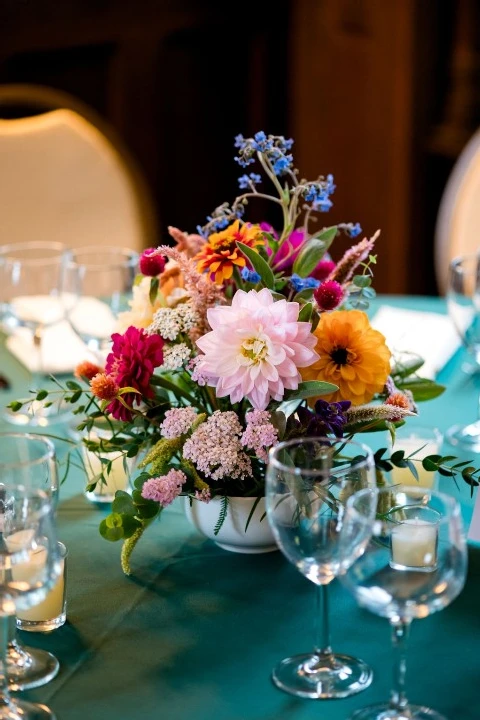
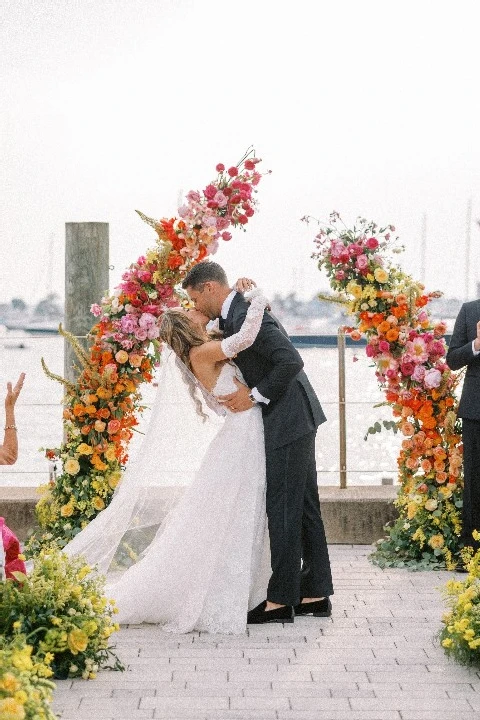
A full floral package covers more than the bridal bouquet. Expect bridesmaid bouquets, boutonnieres and corsages, ceremony pieces like an arch or aisle arrangements, reception centerpieces, and often the delivery, installation, and strike that get everything in place and cleared afterward. Many couples mix a few statement arrangements with simpler accents to balance impact and budget. Coordinate delivery timing with your Connecticut wedding venue so installations land in the setup window.
Ask about repurposing. Ceremony flowers can often move to the reception, stretching the design across the day, though it requires staff and timing to execute. Plan that handoff with your Connecticut wedding planner so nothing is left behind at the ceremony site.
When to Book Your Connecticut Florist
Book your florist six to twelve months ahead, and earlier for a peak late-spring through fall date when the best designers fill quickly. Connecticut’s wedding season concentrates demand into the warm months, and a sought-after florist may take a limited number of weddings per weekend. Once your venue, date, and palette are set, the florist is among the vendors to lock early so your design and the cake and decor all align.
Working With a Connecticut Florist on Substitutions and Climate
Flowers are a living product, so the best florists plan for variability rather than promising an exact stem. Ask how they handle substitutions if a bloom you love is unavailable or arrives below standard on your date, since a skilled designer preserves your palette, shape, and overall feel even when a specific flower has to change. Connecticut’s humid summers and cold winters also affect which flowers hold up: delicate blooms can wilt fast in August heat at an outdoor shoreline ceremony, while hardier varieties and greenery travel and last better. A florist who designs for the conditions builds arrangements that look as fresh at the last dance as they did at the ceremony.
Discuss the logistics that protect the flowers on the day, from cool transport to the timing of delivery and installation. Bouquets and personal flowers are often delivered to the getting-ready space, while ceremony and reception pieces are installed closer to start time, and a humid Connecticut afternoon makes that timing matter. If you want ceremony arrangements repurposed at the reception, confirm who moves them and when, since it takes staff and a tight window to pull off. Clarifying these details in the contract keeps the design intact across a long wedding day and avoids flowers fading before the celebration peaks. Putting the delivery and install schedule in the contract, with a named on-site contact, ensures the flowers arrive and are placed on time even on a busy summer Saturday.
Frequently Asked Questions
How far in advance should we book a Connecticut wedding florist?
Book six to twelve months out, and earlier for a peak late-spring through fall date. Connecticut’s season concentrates demand into the warm months, and sought-after florists take a limited number of weddings per weekend.
What wedding flowers are in season in Connecticut?
Late spring brings peonies, ranunculus, and tulips; summer offers garden roses, dahlias, and zinnias; autumn turns to dahlias, mums, and warm foliage; winter leans on amaryllis, anemones, and evergreens. Designing to the season yields fresher flowers.
What does a wedding floral package include?
Typically bridal and bridesmaid bouquets, boutonnieres and corsages, ceremony pieces, reception centerpieces, and often delivery, installation, and strike. Many couples mix statement arrangements with simpler accents to balance impact and budget.
Can our ceremony flowers be reused at the reception?
Often yes. Ceremony arrangements can move to the reception to stretch the design across the day, though it takes staff and timing to execute. Plan the handoff with your florist and planner so nothing is left behind.