Choosing a Wedding Venue in Florida
The right Florida wedding venue is set by three things at once: your guest count, your season, and the region you want. Start with capacity and an indoor backup, because Florida’s weather makes an all-outdoor plan a gamble, then narrow by location and the experience you want, sand underfoot, a garden, a historic city, or a hotel ballroom. Tour with your real headcount in mind, not an optimistic guess, and ask what is included versus rented so you can compare venues on true cost rather than a sticker rate. Confirm the venue’s rules on catering, alcohol, sound, and end times early, since a beautiful site with restrictive rules can undo your plans. Book popular venues twelve to eighteen months ahead, and earlier for a dry-season Saturday, because the most sought-after Florida venues release a limited number of peak dates and they go first. The venue decision anchors nearly every other choice, from vendors to guest travel, so it deserves the most research.
Book a venue tour at the same time of day as your planned ceremony, since a space that looks shaded and cool at a midday walkthrough can bake in late-afternoon sun, and a sunset ceremony spot depends entirely on which way the site faces. Ask to see the rain or heat backup space on the same visit, because the quality of the plan B often decides the venue for a Florida wedding. Bring your must-have list, guest count, and top dates, and confirm what deposit holds a date and how the contract handles a hurricane postponement, since those terms vary sharply between properties.
Florida Wedding Venues by Region
Florida is a collection of distinct wedding markets, and the region shapes everything from style to logistics. South Florida and the Palm Beaches bring waterfront hotels and modern ballrooms with a glamorous edge; the Florida Keys and Key West offer laid-back oceanfront resorts and sandbar ceremonies for couples who want a relaxed, tropical feel; and the Gulf Coast around Sarasota, Naples, and Sanibel is known for calm-water beaches and soft sunset light. Central Florida near Orlando adds garden estates and lakeside sites away from the coast, the Northeast around St. Augustine and Amelia Island brings historic charm and coquina-stone courtyards in the nation’s oldest city, and the Panhandle’s Emerald Coast around Destin and 30A has bright white-sand beaches. Each region carries its own vendors, permit rules, and travel patterns, so choosing the area early narrows the venue search fast and tells you a lot about how far guests will travel and what the weekend will feel like.
Travel and lodging shape the region choice as much as scenery does. The Keys and the Panhandle are scenic but a long drive from a major airport, which affects how many guests attend and how early they arrive, while Miami, Orlando, and Tampa put guests near large airports and abundant hotels. A destination-heavy guest list rewards a region with a range of lodging near the venue and an easy transfer from the airport. Factor in what guests will do between events, since a walkable district or a resort with amenities keeps a multi-day weekend easy, while a remote venue asks more planning of both you and your guests.
When to Get Married in Florida: Season, Heat, and Hurricanes
Timing is the biggest variable in a Florida wedding. The dry season from November through April is peak, with lower humidity, comfortable temperatures, and the smallest rain risk, which is exactly why those Saturdays book first and command the highest demand. Summer brings heat, humidity, and near-daily afternoon thunderstorms, and hurricane season runs June through November, so any wedding in that window needs a tent or indoor backup and a real weather contingency rather than optimism. Shoulder months like late April, May, and early November can balance thinner crowds with decent weather for couples willing to accept a little more risk. Pick the date to the climate you can tolerate, both for yourself and for guests standing outdoors, then plan the backup regardless of season, since even a dry-season afternoon can surprise you on the coast.
Permits and local rules catch outdoor Florida couples off guard, since many public beaches require a ceremony permit, cap guest counts, and restrict chairs, arches, and amplified sound, and coastal towns enforce noise curfews that end music earlier than a private venue would. A private beachfront resort folds these into its own rules, but a public-beach ceremony needs the permit sorted months ahead. Sea-turtle nesting season, roughly spring through fall on much of the coast, adds restrictions on lighting and beach setups in some areas. Ask the venue or your planner which rules apply, since sorting them late can force a change to the ceremony plan.
Indoor, Outdoor, and Waterfront Venue Types in Florida
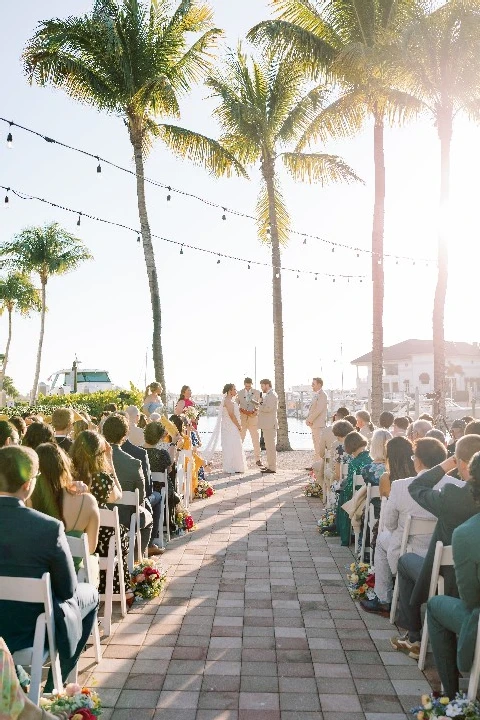
Florida venues fall into a few working categories, each trading a strength for a tradeoff. Beachfront and waterfront sites deliver the classic Florida ceremony but demand wind, sound, and permit planning plus a weather backup. Resort and hotel venues bundle lodging, catering, and coordination, which suits destination guests who want everything in one place and fewer moving parts. Garden and estate venues inland offer shade, greenery, and a private feel away from the coast, and historic venues in cities like St. Augustine bring architecture and character a blank ballroom cannot. Ballrooms give full climate control for a summer or formal evening event, removing weather from the equation entirely. Match the type to your priorities, since the couple who wants toes in the sand and the couple who wants guaranteed air conditioning are looking at very different venues, and knowing which you are saves a lot of touring.
Capacity, Guest Count, and What Florida Venues Include
Capacity is where planning gets real. Confirm the seated-dinner-with-dance-floor number, not just the standing cocktail capacity, since those figures differ sharply and a room that holds 200 standing may seat 130 with a dance floor. Ask what the venue includes: tables, chairs, linens, coordination, a preferred-vendor list, or an in-house caterer, because a resort may bundle most of it while a raw beachfront or estate site may require you to rent nearly everything, which changes both the budget and the rentals plan. Ask about noise ordinances and curfews, especially at residential-adjacent and beach sites where music must end early, and whether the venue holds a rain date or backup space. Coordinate your venue choice with yourFlorida wedding photographers, wedding planners, wedding caterers, and wedding florists.
Frequently Asked Questions
When is the best time to have a wedding in Florida?
The dry season from November through April is best, with lower humidity, comfortable temperatures, and the least rain, which is why those dates book first. Summer is hot and stormy, and hurricane season runs June through November, so those weddings need a tent or indoor backup.
How far in advance should we book a Florida wedding venue?
Book popular venues twelve to eighteen months ahead, and earlier for a dry-season Saturday. Peak-season dates in top regions like the Keys, Palm Beaches, and 30A go first.
Do we need a weather backup for an outdoor Florida wedding?
Yes. Summer storms and hurricane season make a tent or indoor backup essential for any outdoor date. Confirm the venue’s indoor option or tent plan and whether it holds a rain date before you book.
Which Florida region is right for our wedding?
It depends on the style and logistics you want: the Keys and Gulf Coast for beaches, South Florida and the Palm Beaches for waterfront glamour, Central Florida for gardens and lakes, St. Augustine and Amelia Island for history, and the Emerald Coast for white sand. Each region has its own vendors and travel patterns, so choose the area early.
What do Florida wedding venues typically include?
It varies widely. Resorts often bundle catering, lodging, tables, and coordination, while raw beachfront and estate sites may require you to rent nearly everything. Confirm the seated capacity with a dance floor, included items, catering rules, and curfews before booking.