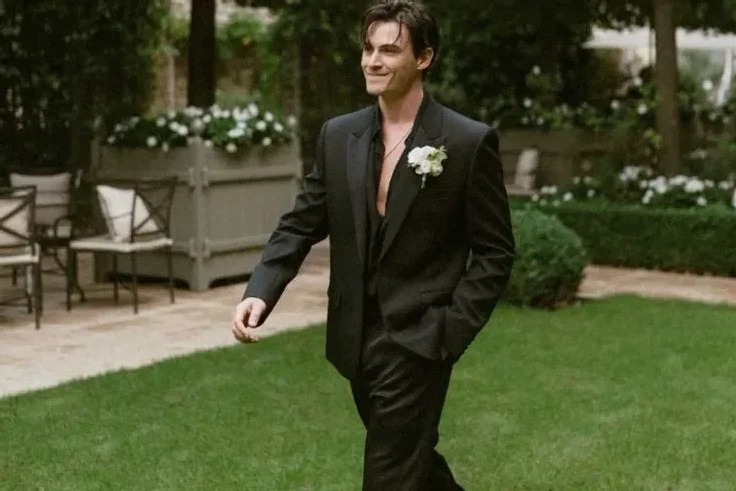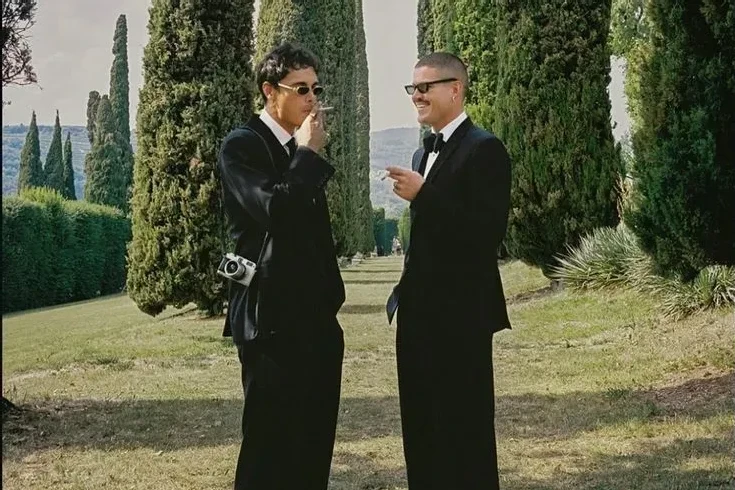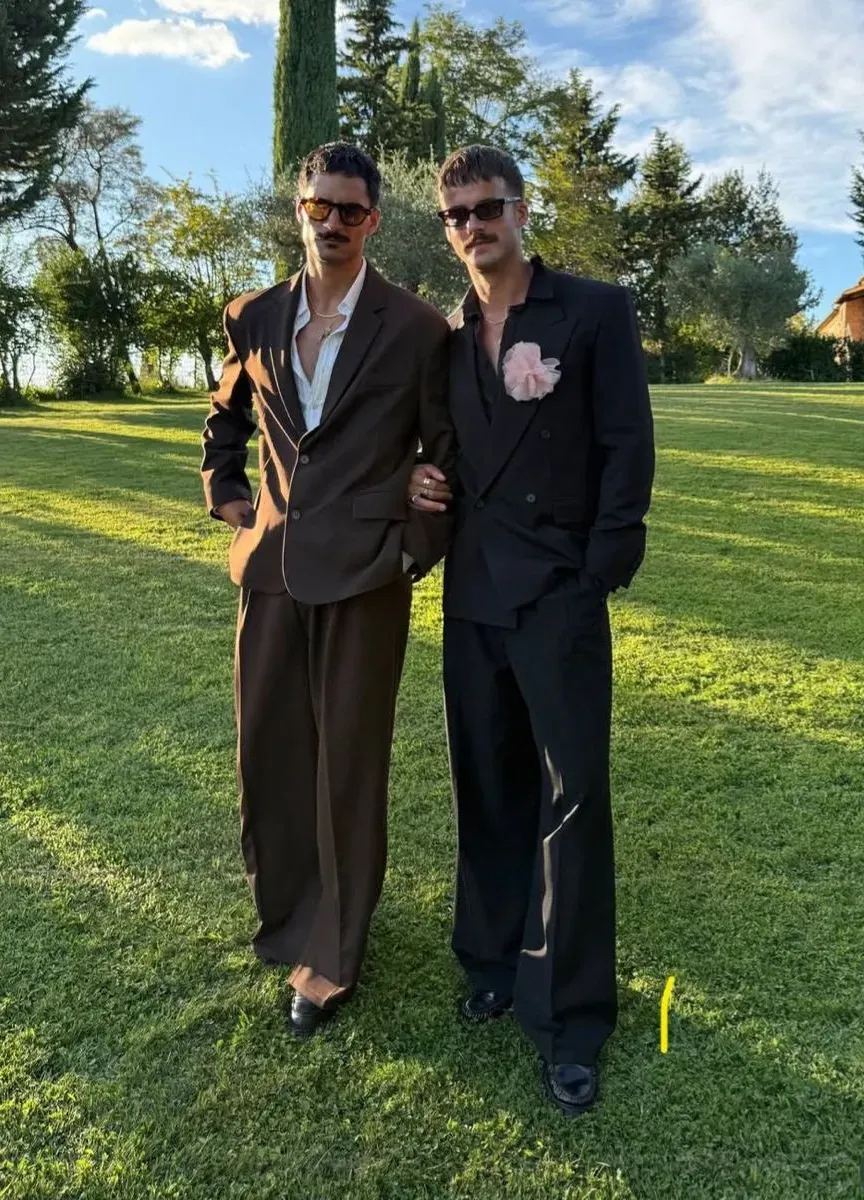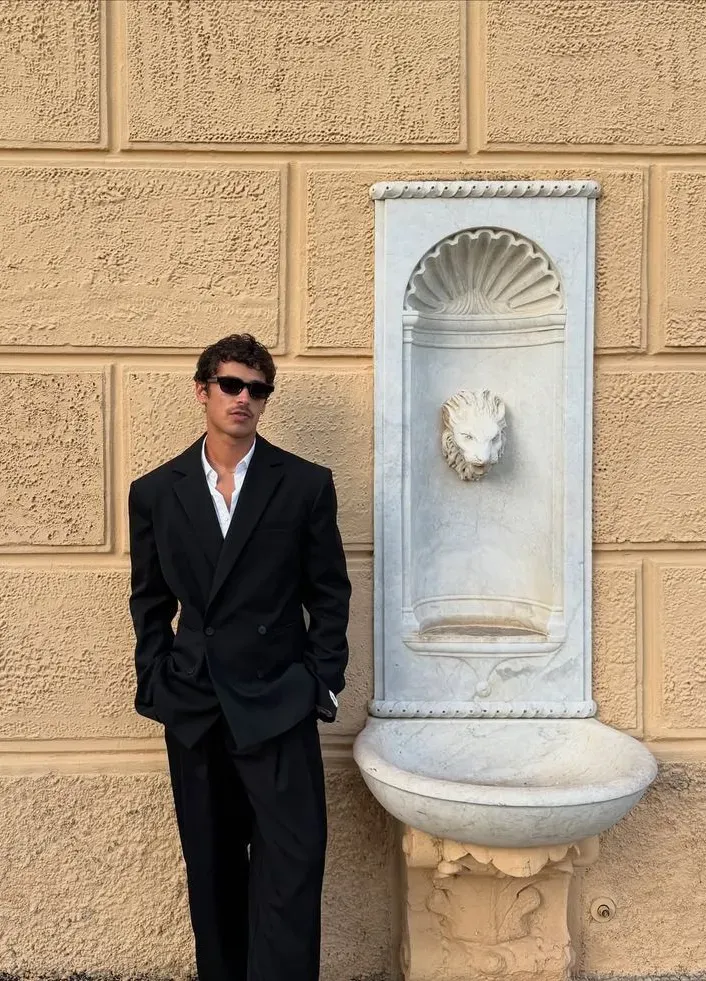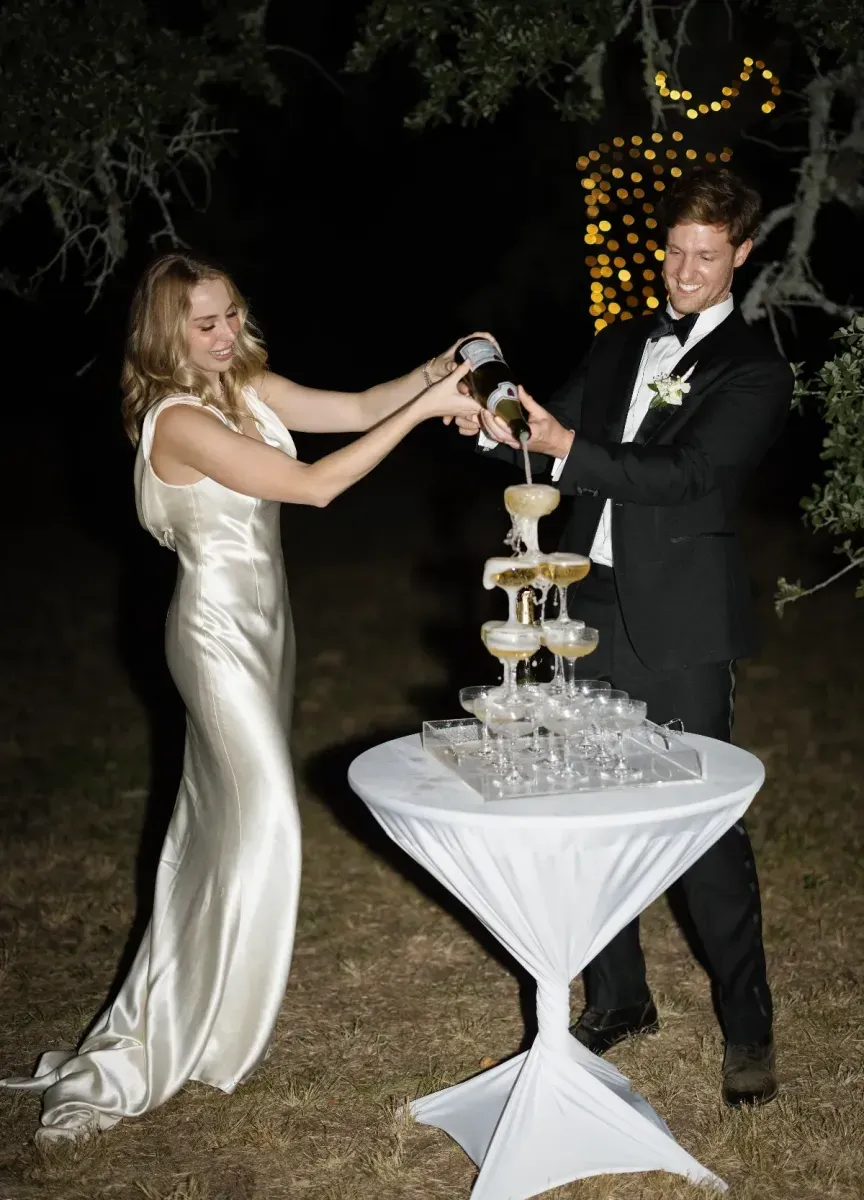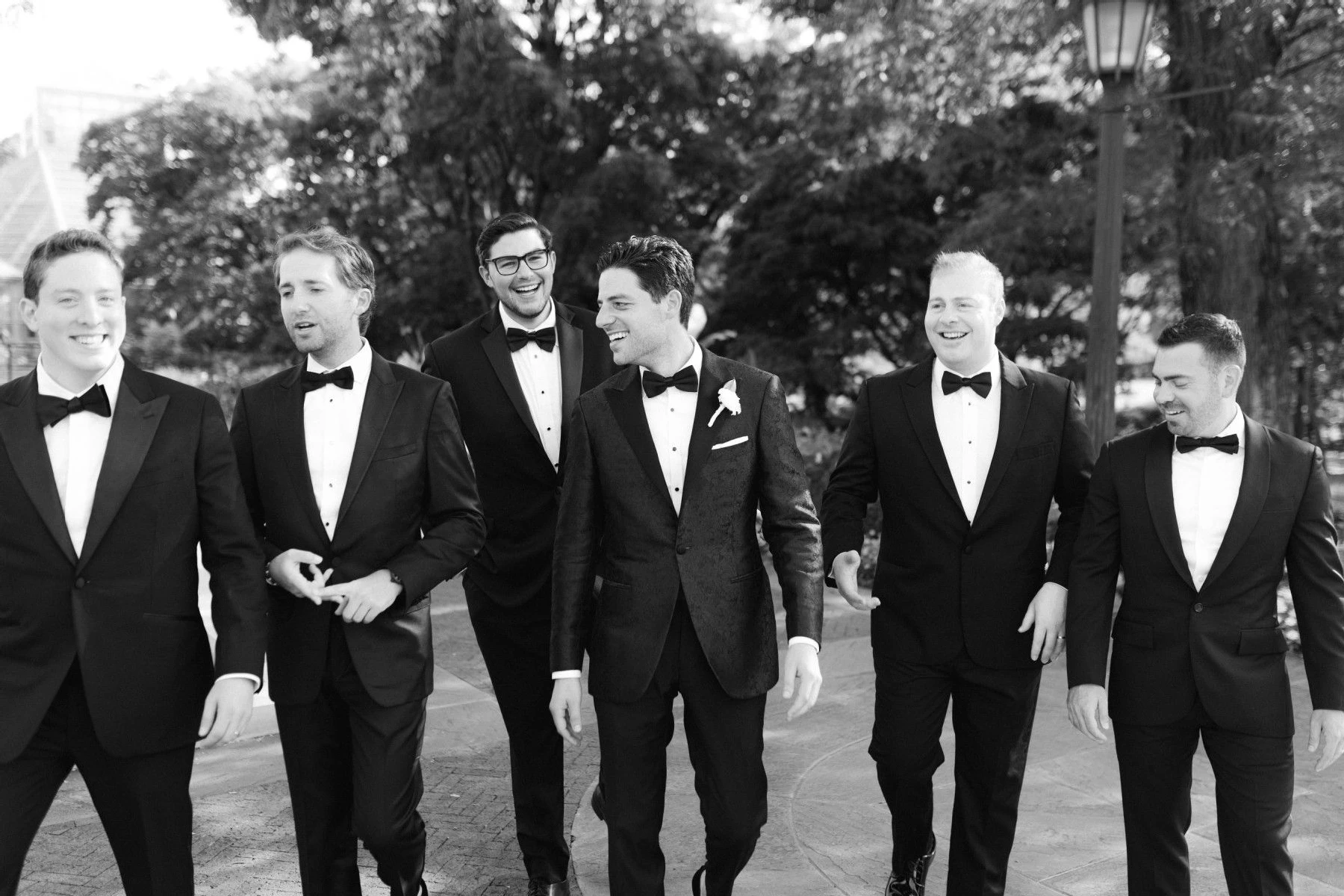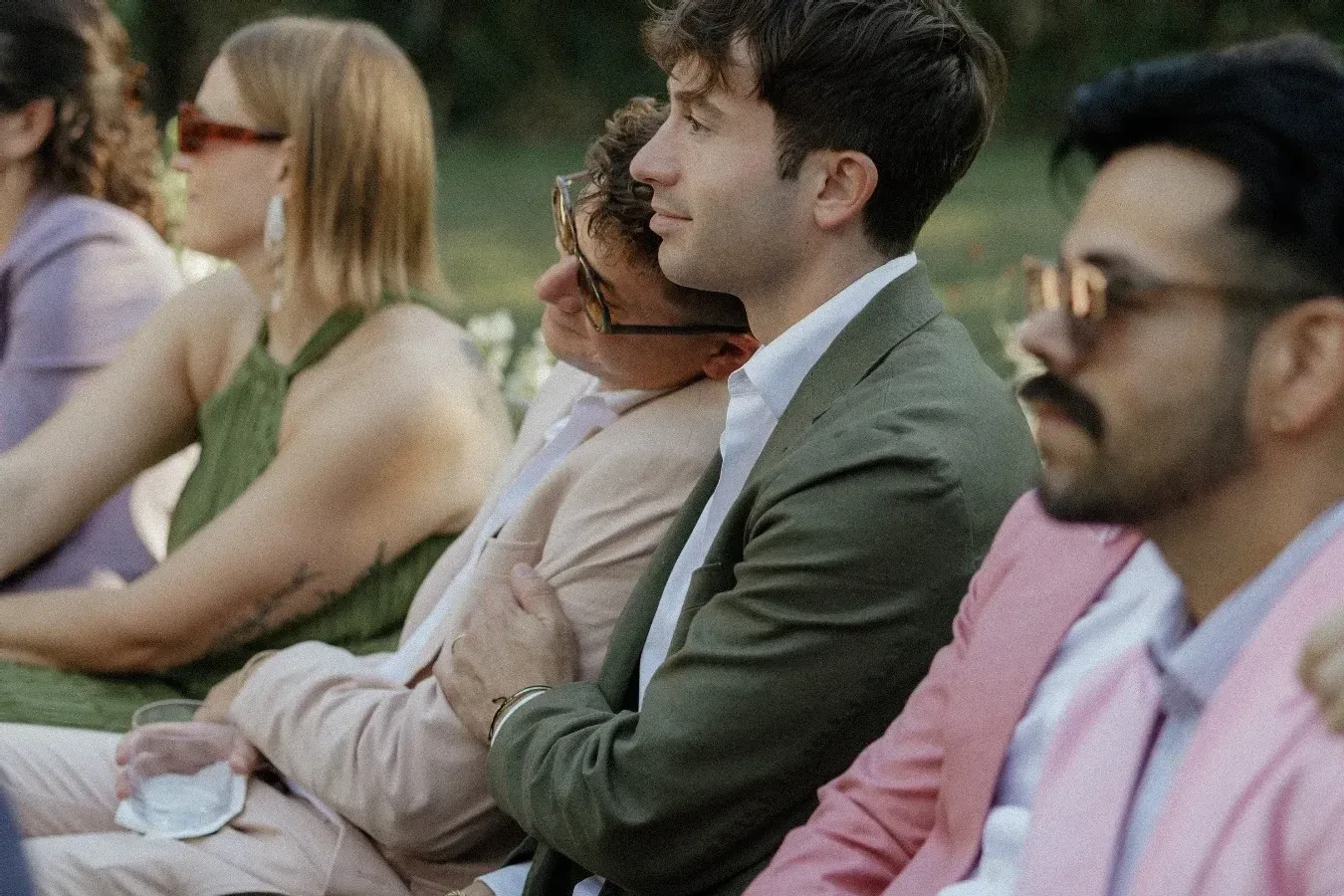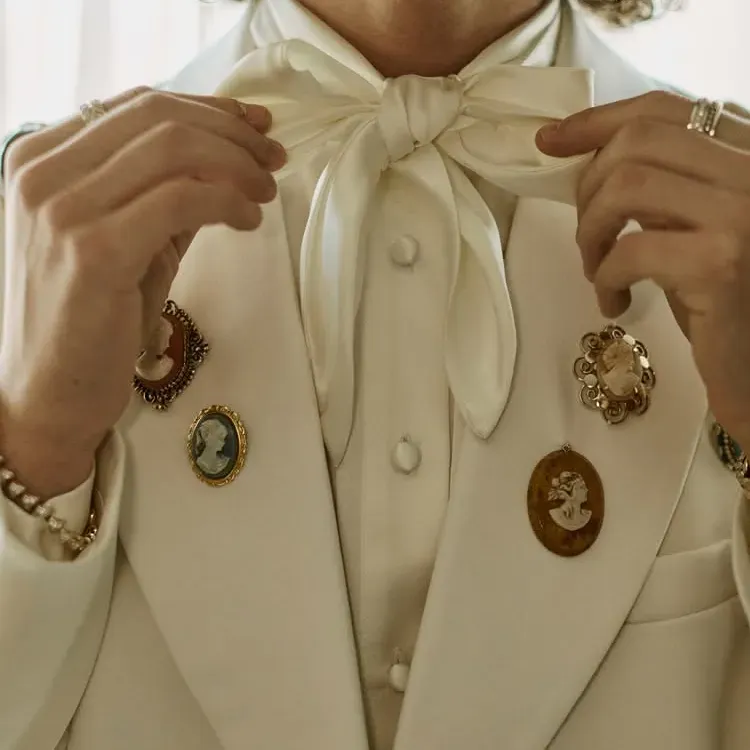
Men's wedding attire is set by three things, in this order: the dress code on the invitation, your role in the day, and the venue. Everything after that is styling.
The dress code is the only part that is not up for debate. Black tie means a tuxedo. Cocktail means a suit. A four o'clock ceremony on sand means neither. Role comes next, and it’s simpler than you’d probably think: The groom dresses one degree apart from every other man in the room, groomsmen coordinate without matching him exactly, and guests stay a step below the wedding party. Venue and season handle the remainder, which mostly comes down to fabric weight and color.
Here’s the part worth knowing before you spend anything, according to the 3,161 weddings in the Carats & Cake dataset. Rented menswear appears at roughly the same rate at every budget level: 10.9 percent of weddings under $100,000, 10.2 percent between $100,000 and $250,000, and 6.9 percent above $250,000. Couture gowns, meanwhile, range from 4.5 percent to 16.1 percent. The dress often reflects the budget, but that’s not exactly how the suit factors in. For instance, the groom at the $500,000 wedding is about as likely to be in a rental as the groom at the $75,000 one. Otherwise, you can select a suit to hold onto as a memento (or for all future special occasions).
What’s the moral here? The price of your suit is the least of your worries, but the priorities include fit, color, and details. Below, we’ve outlined everything you need to know about styling yourself for the big day.
How to read the dress code on a wedding invitation
The dress code is an instruction, not a suggestion. It tells you the formality ceiling and the floor, and every other decision happens inside that range. The following six categories cover essentially every wedding you’ll be invited to—including your own.
White tie
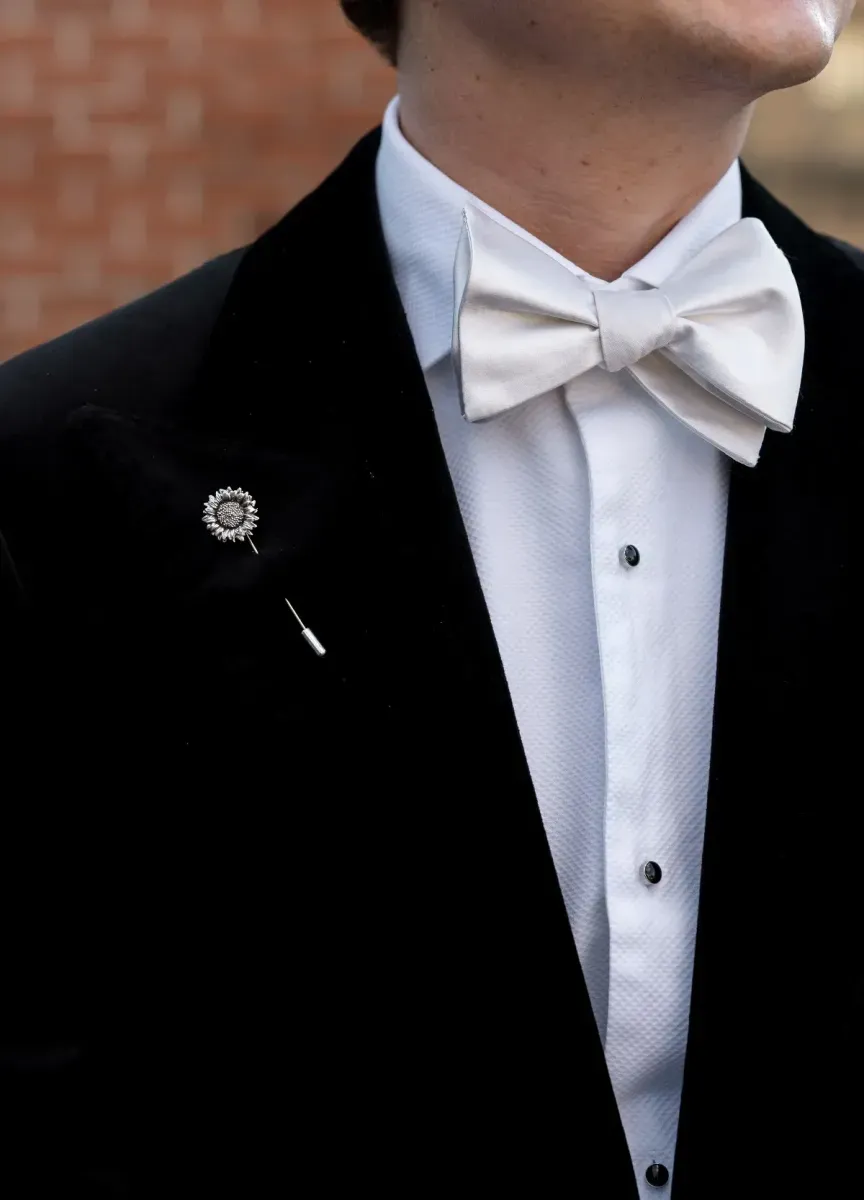
The rarest and strictest. A black tailcoat, black formal trousers with satin braid, a white piqué waistcoat, a white winged-collar shirt, a white bow tie, and black patent oxfords. No substitutions, no personal spin, no colored anything. If you receive a white tie invitation, rent or commission the full kit instead of assembling it, because the components have to match in fabric and finish, or the whole thing looks like a costume.
Black tie
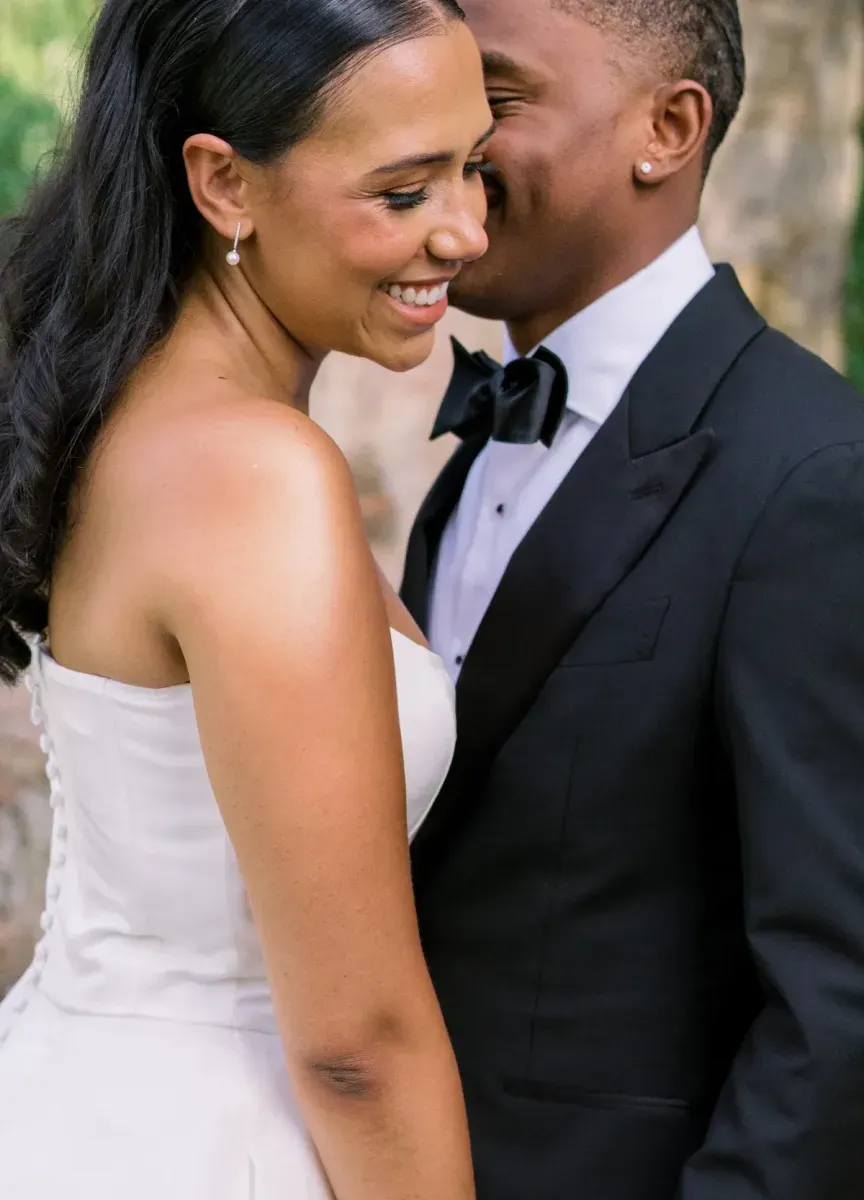
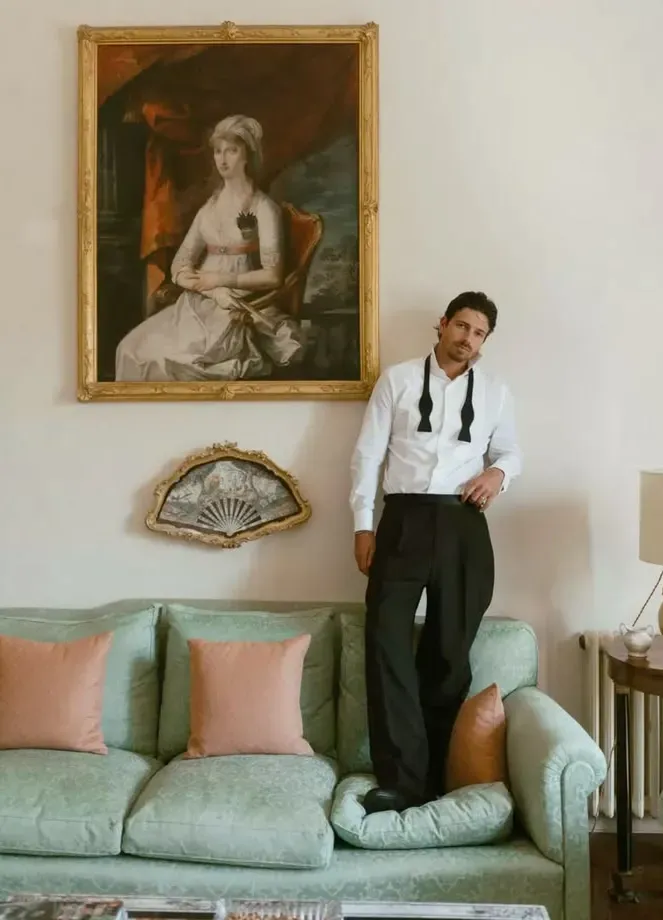
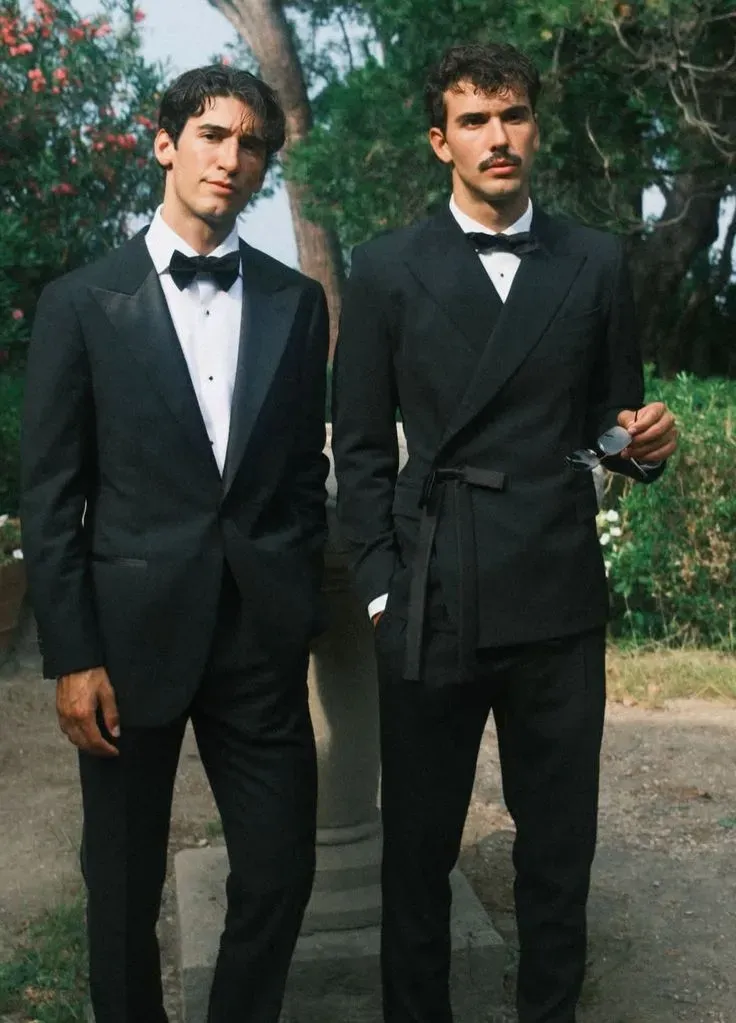
A black or midnight-blue tuxedo, a white dress shirt, a black bow tie, and black formal shoes. The jacket has satin or grosgrain facing on the lapels and a matching stripe down the trouser. Midnight blue goes deeper and richer than black under artificial light, which is why it’s slowly become the preferred choice at evening weddings. A cummerbund or low-cut waistcoat covers the waistband. And keep in mind a long tie is not black tie, no matter what the internet tells you.
Black tie optional
The host is signaling a formal evening and giving you a choice. A tuxedo is welcome, and a dark suit with a white shirt and a conservative tie is equally correct. Charcoal or midnight navy reads better here than mid-grey. If you are unsure which way the room will lean, the dark suit is the safer of the two, because being slightly under the most formal guest is invisible while being the only man in a tuxedo at a suit wedding is not.
Formal or cocktail attire
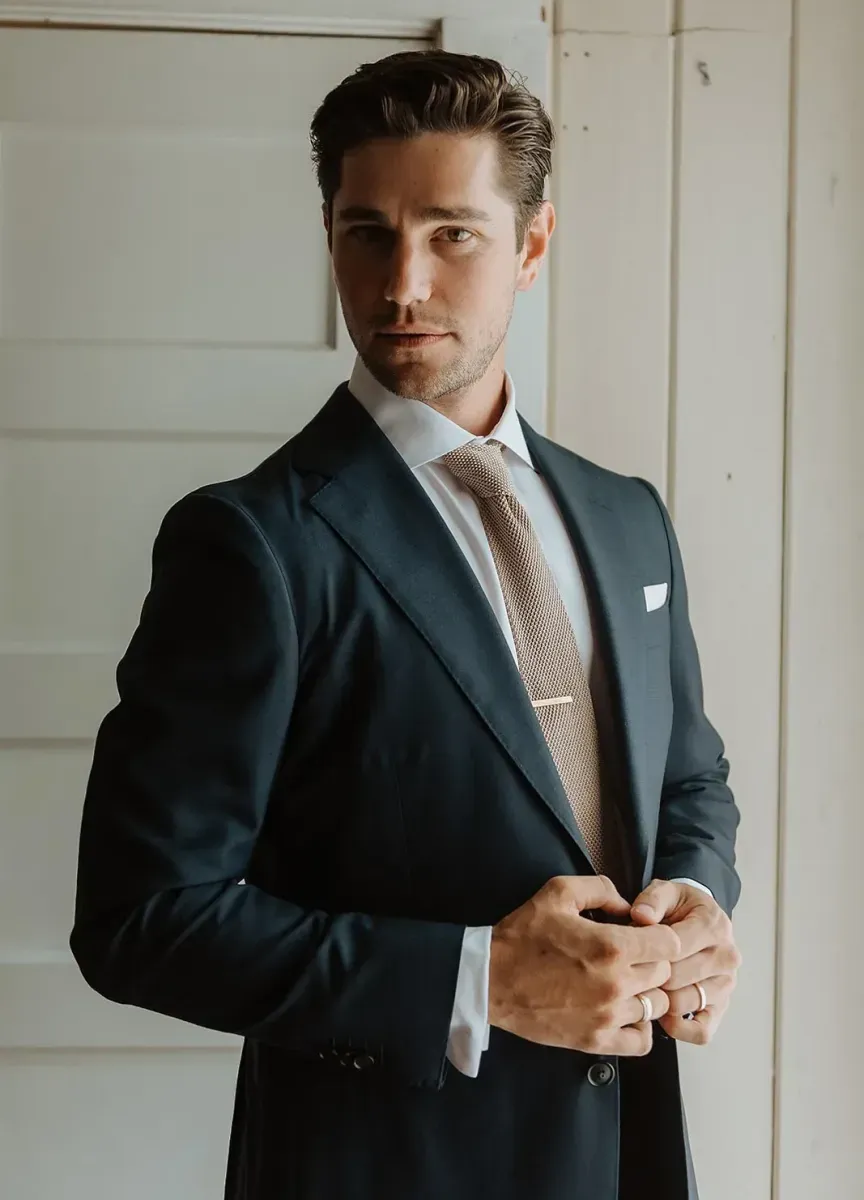
A suit, full stop. Dark for evening, and open to color and pattern for daytime. This is the most common dress code at weddings hosted in the United States, and the one with the most latitude. Fit carries the entire look at this level, since there is no tuxedo doing the work for you.
Semi-formal or dressy casual
A suit without the obligation of a tie, or a sport coat with tailored trousers, and loafers instead of oxfords. This is the register most daytime and garden weddings are actually operating in, even when the invitation says something more vague.
Casual, beach, and garden
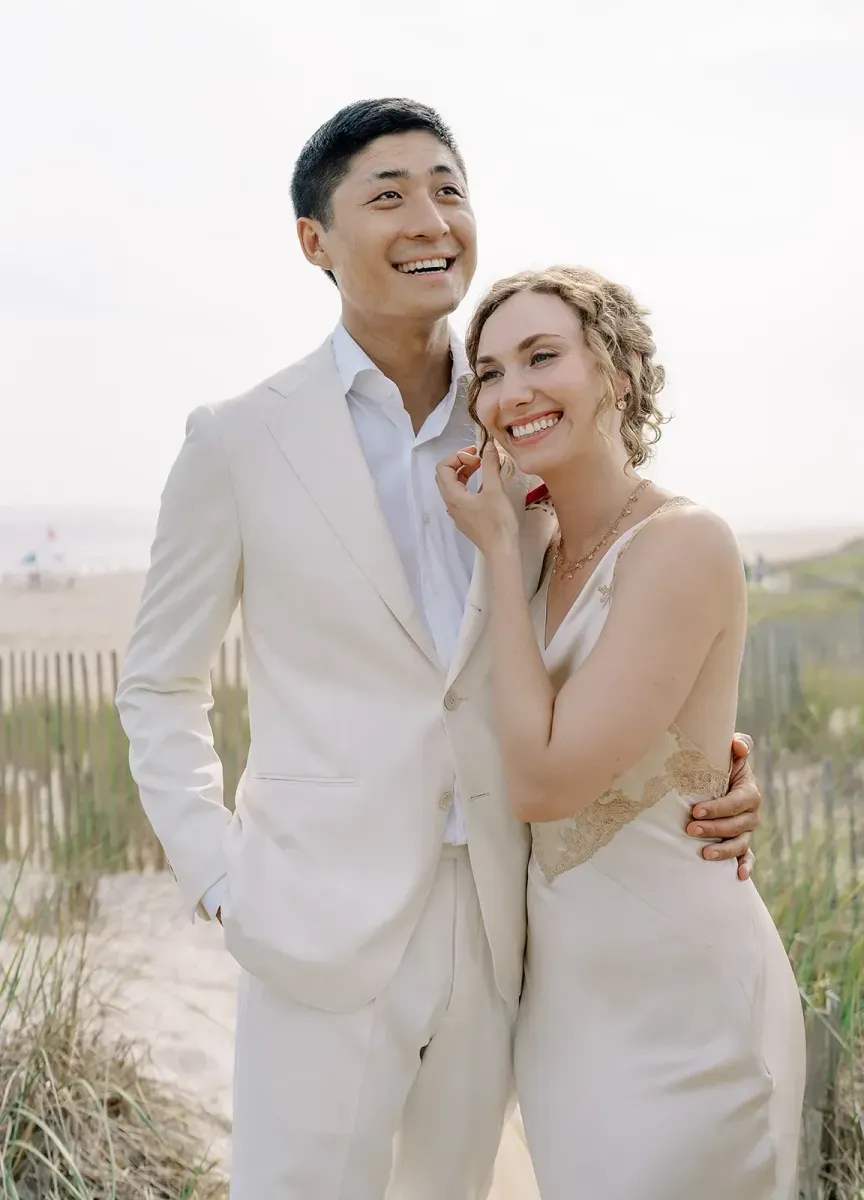
Tailored trousers with a linen or lightweight cotton shirt, and an optional jacket. Casual at a wedding never means what casual means anywhere else. It means no tie, breathable fabric, and shoes that can handle grass or sand. It does not mean shorts, and it does not mean the shirt you would wear to brunch.
When the invitation lists no dress code at all, take your cue from the venue and the start time. A ballroom at seven in the evening is a dark suit. A vineyard at three in the afternoon could welcome a slightly less formal and more colorful ensemble.