Account Login or Join Submit a Wedding
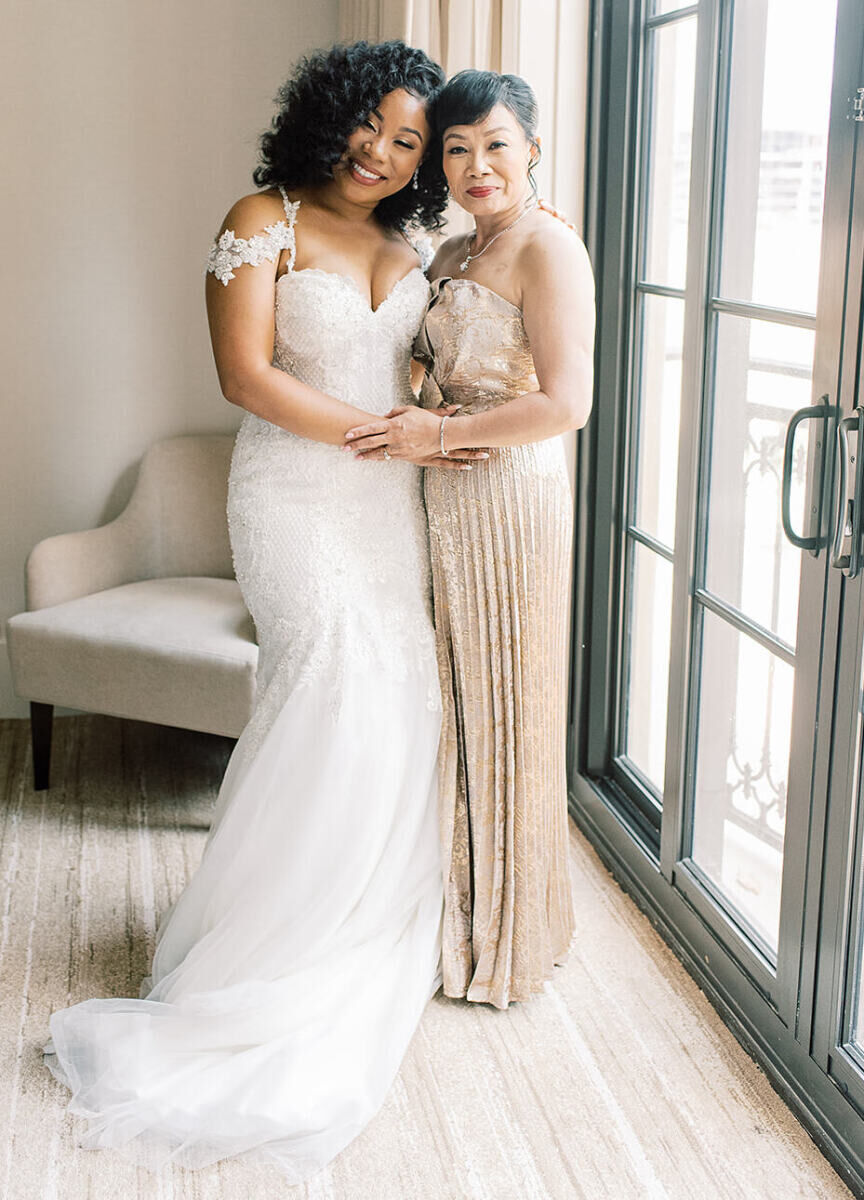
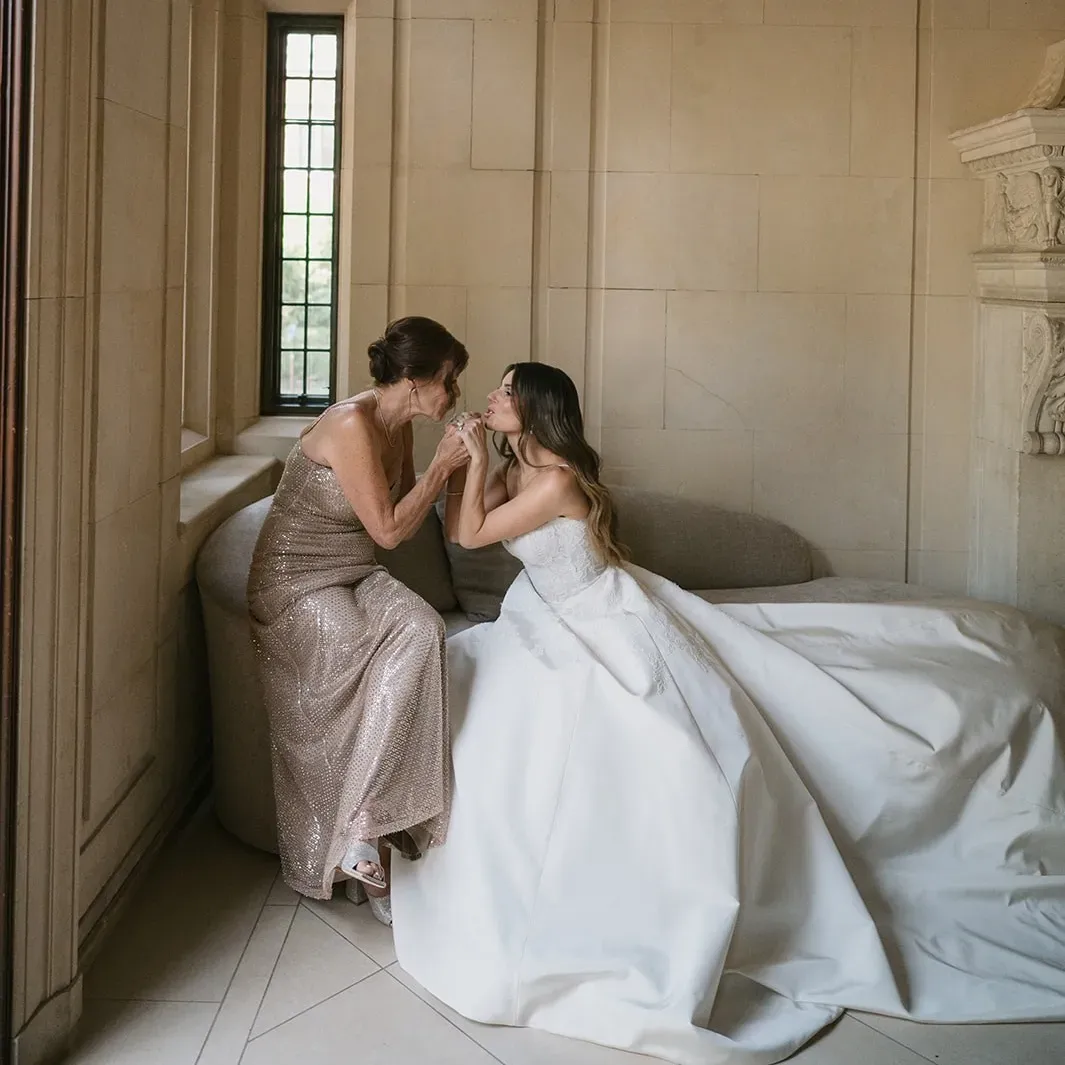
Mother of the bride in a metallic gown, holding hands with her daughter, photographed by Josie Brooks Photography
SPOTLIGHT

Mother of the Bride Dresses for Every Season, Venue, and Dress Code

Wedding Outfit Ideas for Your #1 Fan
BY ALLIX COTT / 08 20 26
Photo by Josie Brooks Photography

Four things decide the dress, in this order: the wedding's dress code, the season, the venue, and whether she can actually last eight hours in it. Color comes after all of them. Floor-length belongs at black-tie and evening weddings. Tea-length and midi belong at daytime, garden, and beach ceremonies. Ivory, white, and champagne stay off the table. Past that, most of the rules people repeat about this category are inherited anxiety rather than etiquette.

The timeline is worth knowing up front. Six to nine months is the standard window, and it exists because a special-order gown from a boutique carries eight to 12 weeks of lead time before a seamstress touches it. Off-the-rack shortens that. Custom stretches it to four months or more.

Below are 14 mothers of the bride and mothers of the groom photographed at real weddings, sorted the way she is actually shopping. Each one notes what the dress is doing, why it worked at that particular wedding, and what to take from it.

Mother of the Bride Dresses by Wedding Formality

Dress code is the first filter and the one most people skip. Dressing above or below the invitation is more noticeable in photographs than any color choice, and it is the easiest mistake to avoid: the invitation says what to do.

Formal and Black-Tie Mother of the Bride Dresses

Floor-length, structured fabric, real embellishment. Silk faille, mikado, crepe, and heavier satins hold their shape under evening light where a soft chiffon collapses. This is the one dress code where beading and metallic embroidery belong, and where a train or a slight sweep is appropriate rather than theatrical.

Evening light is warmer and dimmer than daylight, which changes what colors do. Saturated shades gain depth. Pastels drift toward grey.

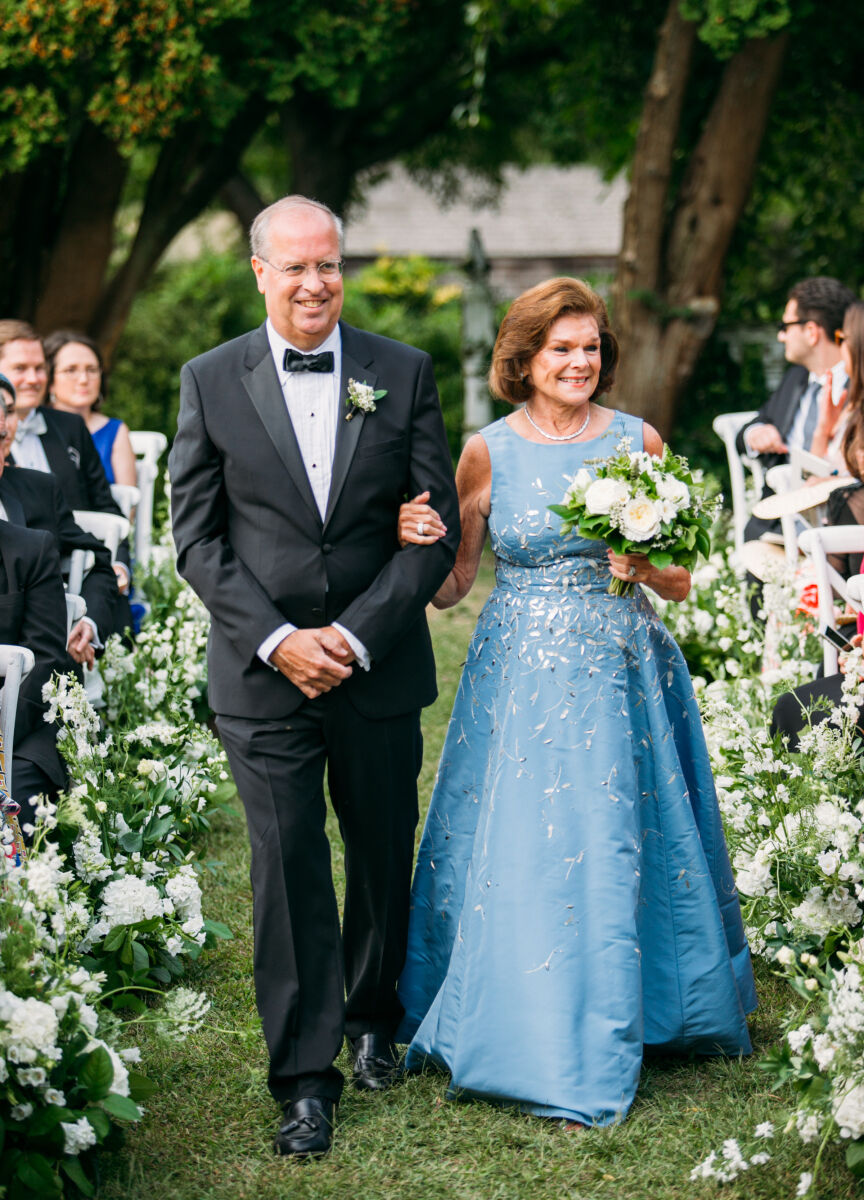
Mother of the bride in a cerulean blue gown with metallic appliqué embroidery at a black-tie wedding, photographed by Scott Clark Photo

Cornflower blue silk with silver leaf appliqué, worn to an outdoor black-tie ceremony. Blue at this saturation is the strongest alternative to black in the category, and the scattered metallic detail does the work jewelry would otherwise have to do, which is why the neckline can stay bare. The full skirt earns its volume here because the aisle is grass and the light is natural. Shopping the same idea, tonal appliqué ages better than contrast beading, which dates a silhouette the moment the trend turns.

Mother of the Bride Cocktail Dresses and Semi-Formal Looks

Semi-formal is the widest category and the least well served by the dress industry, which tends to offer either a gown or a work dress with nothing in between. Midi and tea-length both work. So do elevated separates and a well-cut jumpsuit. The test is whether the fabric has weight to it. A crepe midi looks deliberate; the same shape in a thin jersey looks like it came from a different afternoon.

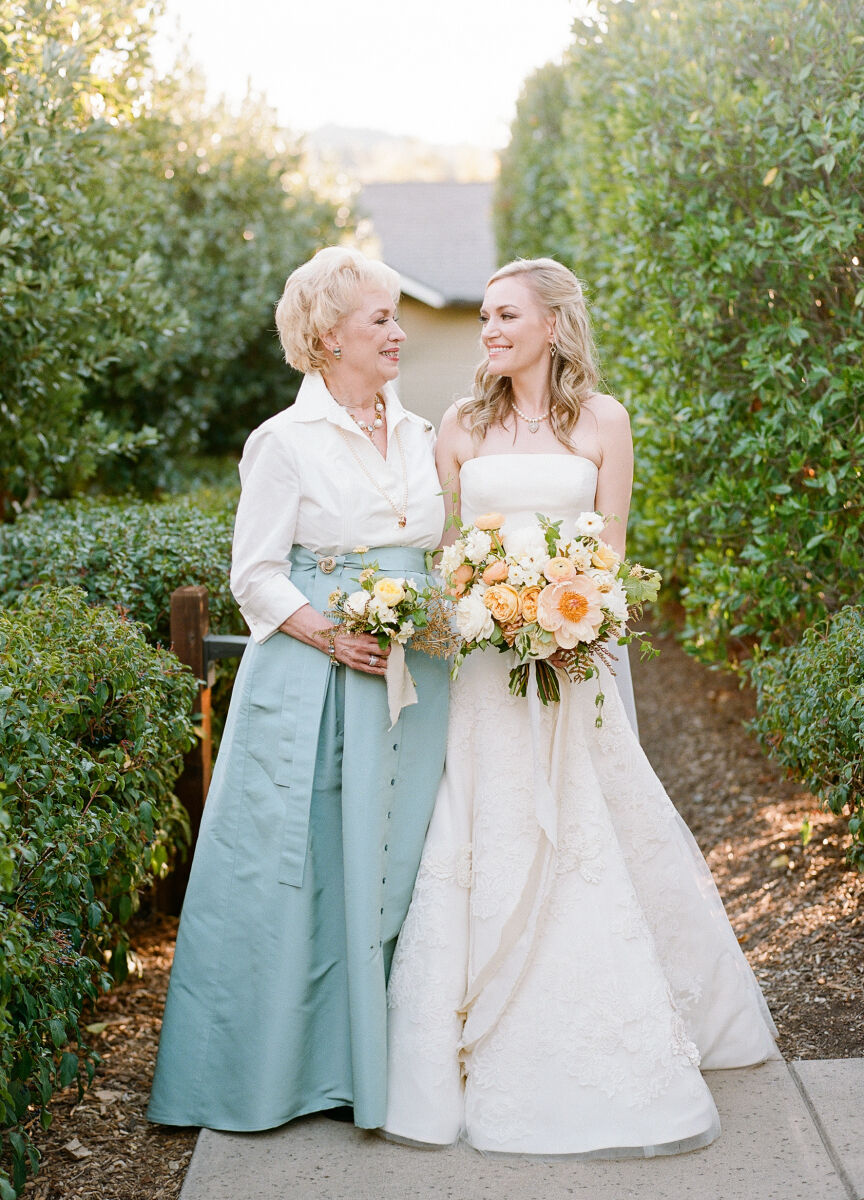
Mother of the bride in a white button-down shirt and pastel floor-length skirt at a semi-formal wedding, photographed by Rebecca Yale Photography

A crisp white button-down over a full sage-blue skirt, and the most underrated formula in this guide. Separates solve two problems at once: a body that falls between sizes, and the fact that most occasion dresses get worn exactly once. Proportion is what makes it work, with all the volume in the skirt and the shirt staying close to the body. A white shirt is not a white dress, and nobody standing next to the bride reads it as one.

Casual Mother of the Bride Dresses for Daytime Weddings

Lighter constructions belong here: chiffon, crepe de chine, linen blends, and prints. A casual wedding is the only setting where comfort can genuinely lead the decision, and it is also where the risk of underdressing is highest. A daytime wedding is still a wedding. The floor for "casual" is a dress she would wear to a nice lunch, not one she would wear to a barbecue.

Mother of the Bride Dresses by Season

Season governs fabric weight and color saturation more than it governs shape. A sheath works in every month of the year. A heavy mikado in August does not.

Spring Mother of the Bride Dresses

Spring is the best season in the calendar for print, and the trickiest for temperature. A 50-degree swing between a two o'clock ceremony and a 10 o'clock reception is normal in April. Mid-weight fabrics handle it; a wrap or light jacket handles the rest. Sizing up for warmth never works.

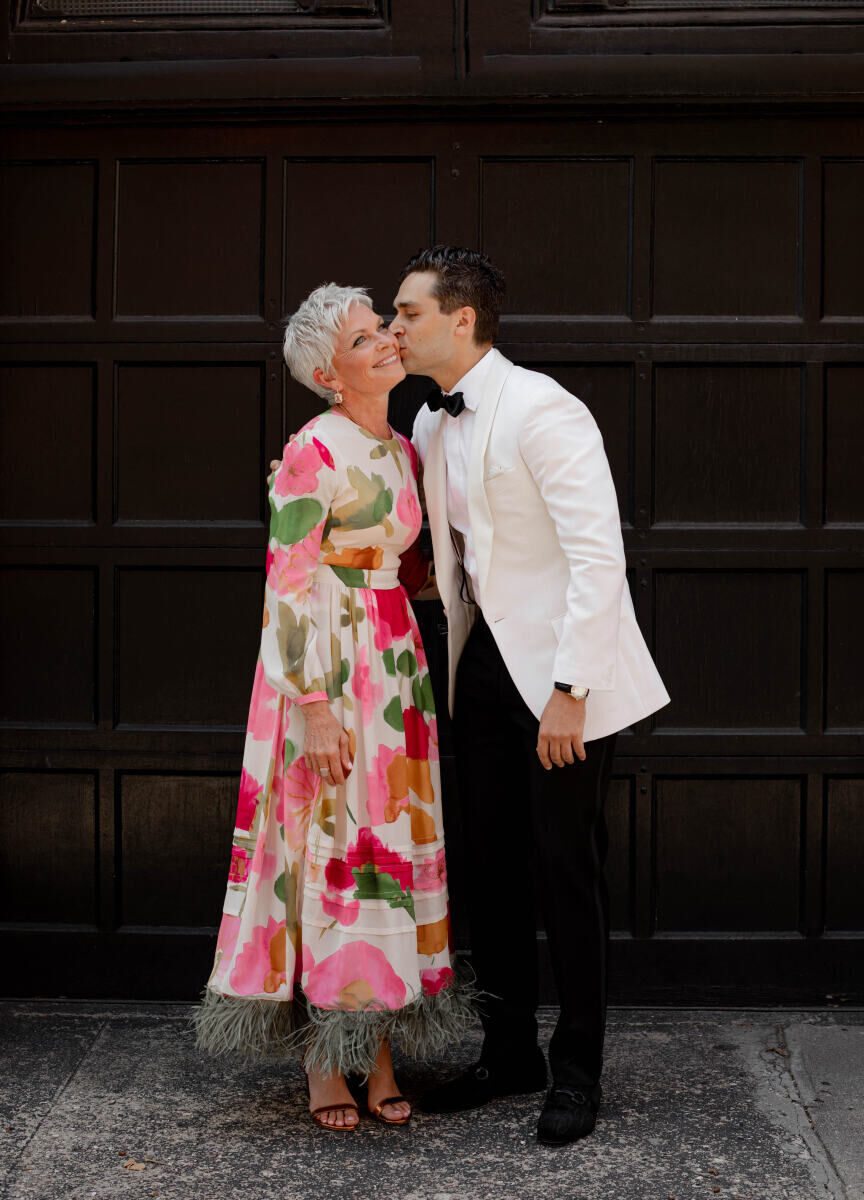
Mother of the bride in a vibrant all-over floral print dress with feather hem at a spring garden wedding, photographed by Kate Edwards Weddings

A watercolor floral in pink and green, finished with a feather hem that gives the skirt movement a plain hem never would. Prints work for the mother of the bride and groom in a way they rarely work for guests, because against a party in solid colors a print reads as a decision rather than an accident. Scale is the thing to get right: a large print on a simple silhouette, or a small print on a structured cut, but not both at once. Note how the feather trim picks up the white dinner jacket beside her, which is coordination without matching.

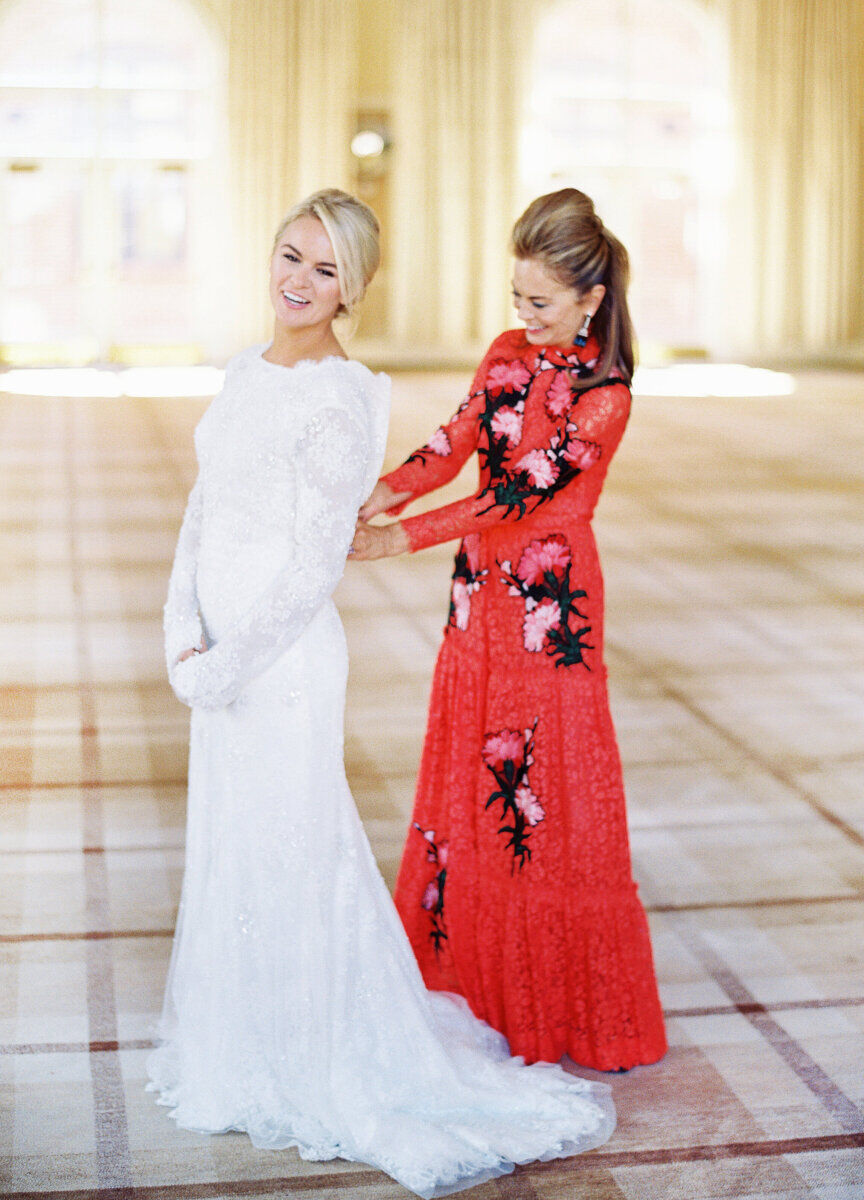
Mother of the bride in a bright red dress with dramatic floral detailing at a spring wedding, photographed by Kristen Kilpatrick

A red gown with pink and black floral appliqué, worn long-sleeved beside a bride in white lace. Red is the most underused color in this category: it has more depth on camera than pink, it flatters warm and cool complexions equally, and it never disappears into a background the way pastels do. The long sleeve is what keeps a saturated color from reading as loud, since the coverage balances the intensity. Anyone who finds red too strong gets most of the same effect from coral or a deep rose.

Summer Mother of the Bride Dresses

Summer is a fabric decision, full stop. Chiffon, crepe de chine, silk georgette, and linen blends move air. Satin, mikado, and heavy jacquard trap it. Lighter colors also run measurably cooler in direct sun, which matters at a July ceremony with no shade.

Coverage is still available to anyone who wants it. It just has to come from a sheer overlay or a flutter sleeve rather than a lined one, which turns a summer dress into an endurance test.

Fall Mother of the Bride Dresses

Autumn has the widest usable color range of any season and the most forgiving light. Jewel tones, rust, plum, forest, and bronze all read richer in October than they do in June, and a low afternoon sun does flattering things to warm shades that midday sun flattens.

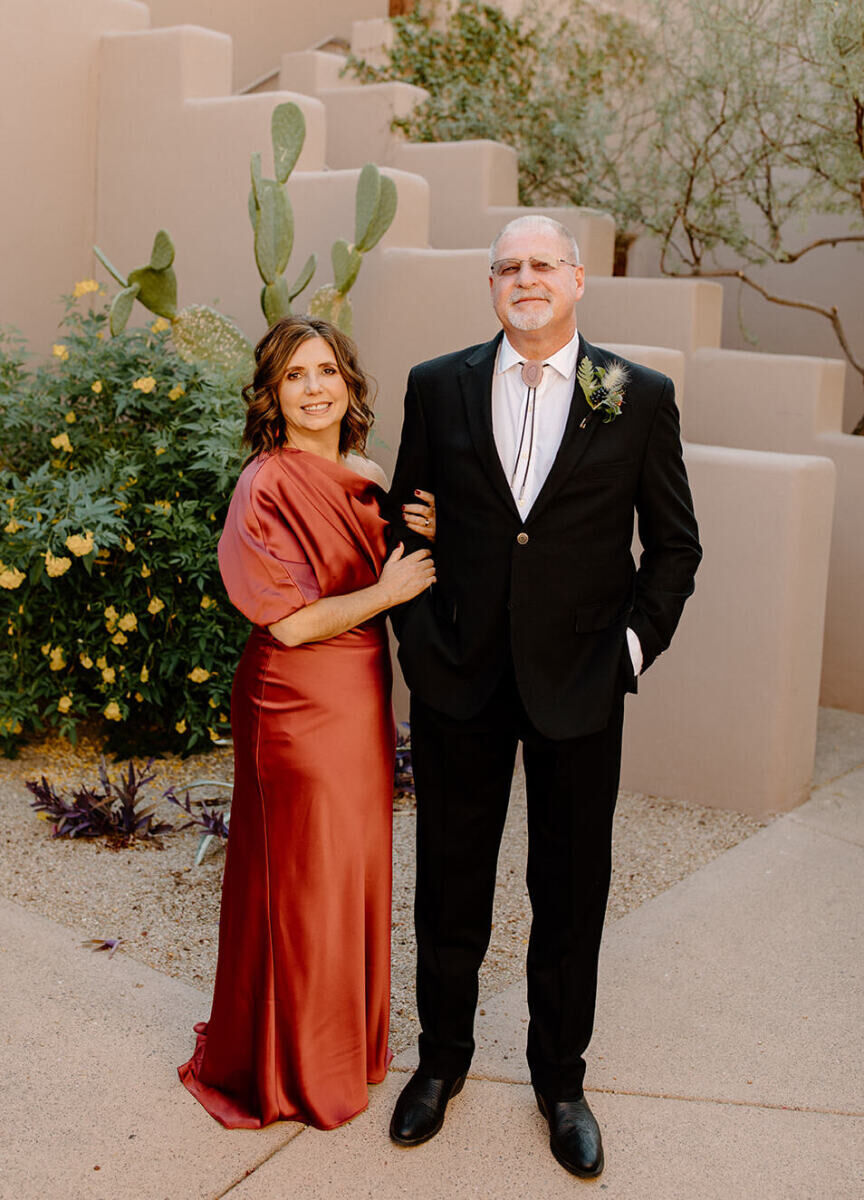
Mother of the bride in a jewel-toned silk gown at an autumn wedding, photographed by The Shepards

Rust silk with a softly draped sleeve, worn at a desert wedding. Fabric matters as much as color here, because silk and silk-blend charmeuse catch low autumn light and give a warm shade dimension that matte crepe swallows. Rust and terracotta are the most underrated fall colors in this category, sitting between a jewel tone and a neutral so they coordinate with almost any bridal party palette. The draped sleeve also solves coverage without adding a layer, which matters when the ceremony is outdoors and the evening turns cold.

Winter Mother of the Bride Dresses

Winter earns the heaviest fabrics and the most structure: velvet, brocade, heavy crepe, mikado. Long sleeves stop being an accommodation and become the obvious answer. Black is entirely appropriate at a winter evening wedding, and any texture or metallic thread in the fabric keeps it from looking somber. Pair it with a wrap or a proper evening coat. A cardigan undoes the whole outfit in one move.

Mother of the Bride Dresses by Venue Type

Venue settles two practical questions the dress code does not touch: what she will be standing on, and how much of the day happens outdoors. Both should be answered before the fabric is.

Garden Wedding Mother of the Bride Dresses

Gardens reward print, movement, and a hem that clears the grass. Stilettos sink. Block heels and wedges do not. Fabrics that wrinkle badly become a liability across a long outdoor reception, which rules out most unlined linen and cotton.

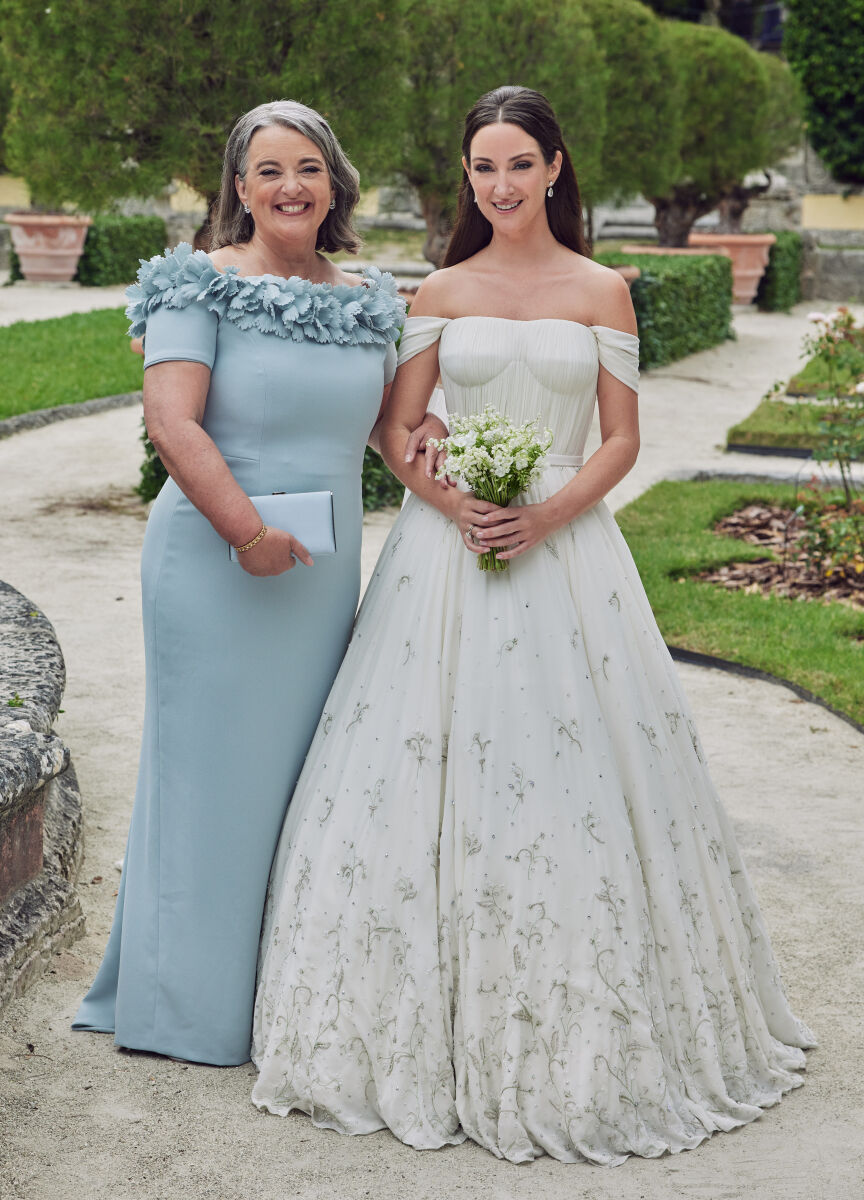
Mother of the bride in a sky-blue column gown with three-dimensional floral neckline detail at an Italian garden wedding, photographed by Christian Oth Studio

A sky-blue column with a three-dimensional floral neckline, worn at an Italian garden wedding. Sky blue is one of very few pale shades that survives outdoors, because the surrounding green supplies the contrast a ballroom cannot. The floral detail at the neckline is the entire look, which frees everything below it to stay quiet. One point of texture over a clean line is a formula that travels well past this specific gown.

Beach Wedding Mother of the Bride Dresses

Beach weddings need the lightest fabrics in this guide and a hem that will not drag through sand, which makes tea-length and midi more practical than floor-length. Wind is the variable everyone forgets. It argues for a fabric with a little weight rather than pure chiffon, and against a strapless neckline she will spend the ceremony adjusting.

Soft neutrals, seafoam, sky, and coral all photograph well against water and sand. Wedges or embellished flats beat heels on any surface that gives. For couples still choosing a setting, our guide to beach wedding venues covers the places these looks are built for.

Ballroom and Hotel Wedding Mother of the Bride Dresses

Ballrooms are the one venue that fully repays formality. Floor-length, structured fabric, and genuine embellishment all land here because the room is built to support them. Interior lighting runs warmer and lower than daylight, which favors saturated color and metallic thread. A coat check and a controlled climate also mean a heavier fabric stays comfortable all evening. Our roundup of ballroom wedding venues shows the rooms that carry this level of dressing.

Barn, Farm, and Vineyard Wedding Mother of the Bride Dresses

Rustic venues sit at semi-formal, and the mistake runs in both directions. Full black-tie looks out of place. A sundress looks underdressed. The target is an elevated midi or a fluid floor-length dress in a natural-toned palette, worn with a block heel or a dressy flat. Uneven ground, gravel drives, and hay on the floor are all real considerations. Our barn wedding ideas gallery shows how the formality level actually looks in the room.

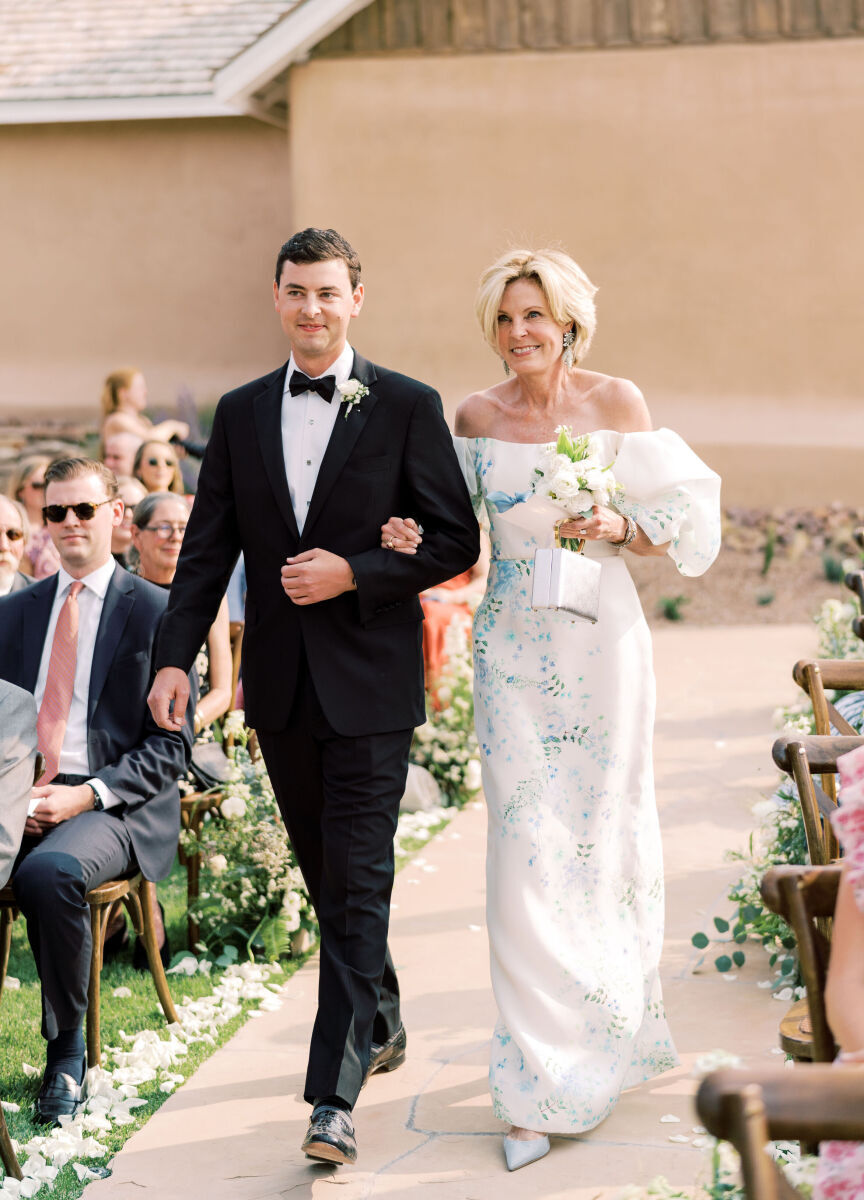
Mother of the groom in a floral-print gown with dramatic puff sleeves walking down the aisle at an outdoor desert wedding, photographed by Hannah Mayson

A soft floral print with dramatic balloon sleeves, worn down an outdoor aisle. The sleeve is doing something practical alongside the styling, since it delivers coverage without adding a layer in the heat. Pairing volume with a print is a lot of information in one dress, and it holds together only because the palette stays tight and the skirt stays narrow. A balloon sleeve also balances a fuller hip, which is why it suits far more people than its runway reputation suggests.

What Color Should the Mother of the Bride Wear?

Any color except white, ivory, and champagne. The best choice sits adjacent to the wedding palette without landing on the bridesmaids' exact shade.

Champagne deserves a specific warning, because it is the most common near-miss in the category. Under flash, champagne and light gold routinely photograph as ivory. Anyone attached to the shade should push a step warmer into bronze or a step deeper into antique gold.

Coordination works better as a family than as a match. If the bridal party is in navy bridesmaid dresses, she can go deeper, lighter, or step to a neighboring tone entirely and still look connected to them.

Green and Sage Mother of the Bride Dresses

Green is the highest-demand color in this category right now and the most adaptable in practice. Emerald carries formal and evening weddings. Sage is soft enough for a garden or a daytime ceremony and photographs beautifully against foliage. Forest handles fall and winter. Green also has the rare advantage of flattering across skin tones without much adjustment.

Navy and Blue Mother of the Bride Dresses

Navy is the safest formal color that is not black, and it flatters nearly everyone. Blues in general hold their character under artificial light where pastels fade. Cornflower, cerulean, and French blue all photograph with more life than a pale powder shade.

Gold, Champagne, and Metallic Mother of the Bride Dresses

Metallics belong at evening and black-tie weddings specifically. In daylight they tip toward costume fast. Gold in particular warms under candlelight and string lights in a way silver never does, which is what makes it the stronger evening metallic.

Mother of the bride in a strapless gold floor-length gown at a formal evening wedding reception, photographed by Elizabeth Austin Photography

A pleated champagne column with long sleeves, photographed before the ceremony. This is the exact shade the champagne warning above is about, and it works here for a specific reason: the pleating breaks up the surface so the fabric never flattens into a sheet of ivory the way a smooth satin would. Metallics belong at evening and formal weddings, and a matte or brushed finish photographs with depth where a high shine goes flat under flash. If she wants this shade, texture is what keeps it safely distinct from the bride.

Pink, Blush, and Mauve Mother of the Bride Dresses

Blush and mauve are the right answer for a mother who wants something pale without approaching bridal white. Both hold enough pigment to stay clearly distinct from ivory in photographs, which is the whole test. Full-saturation pink is a bolder and safer choice than it sounds, since it separates cleanly from a white gown in every frame they share.

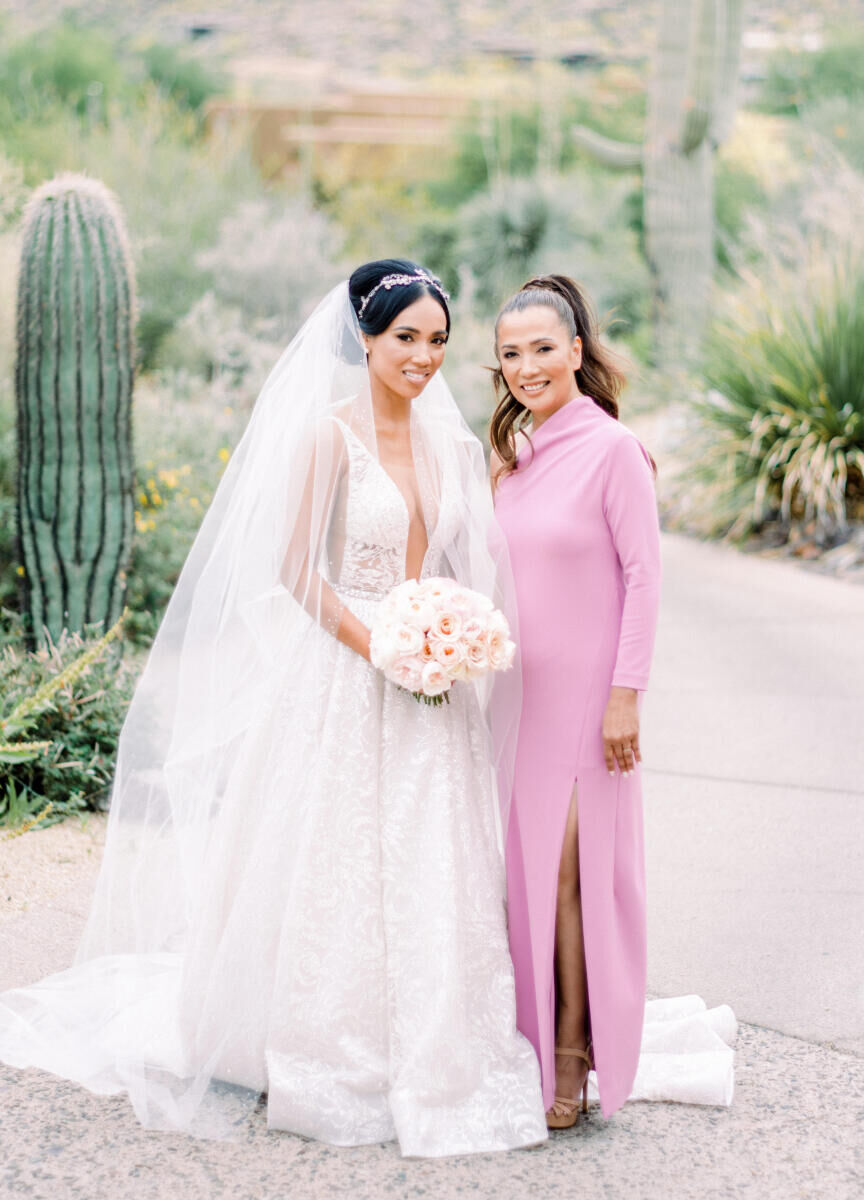
Mother of the bride in a sleek all-pink floor-length dress at a wedding ceremony, photographed by Elyse Hall Photography

A pink long-sleeve column with a high slit, standing next to an ivory lace ballgown. Contrast is why it works: at full saturation, pink separates cleanly from ivory where blush would blur into it. The long sleeve and the slit balance each other, so a simple column reads as considered rather than plain. Worth knowing, color photographs lighter than it looks in a fitting room, so the shade that feels one step too strong is usually the right one.

Burgundy and Jewel-Tone Mother of the Bride Dresses

These carry fall and winter weddings and photograph with genuine depth. Burgundy is more forgiving than red for anyone unsure about a strong color, and plum and berry both flatter cool complexions that a warm red can fight. In a fluid fabric they move well; in a stiff one they can turn heavy.

Black Mother of the Bride Dresses

Black is fully appropriate at formal and evening weddings, despite how persistently people claim otherwise. What matters is that it has something going on: texture, a metallic thread, an interesting neckline, a strong silhouette. Flat black crepe with no detail is where the somber reputation comes from.

Printed and Patterned Mother of the Bride Dresses

Print is the most personal choice available in this category and the most often talked out of. It photographs well in groups, it hides the creasing that solid fabrics announce, and it gives a simple silhouette something to say.

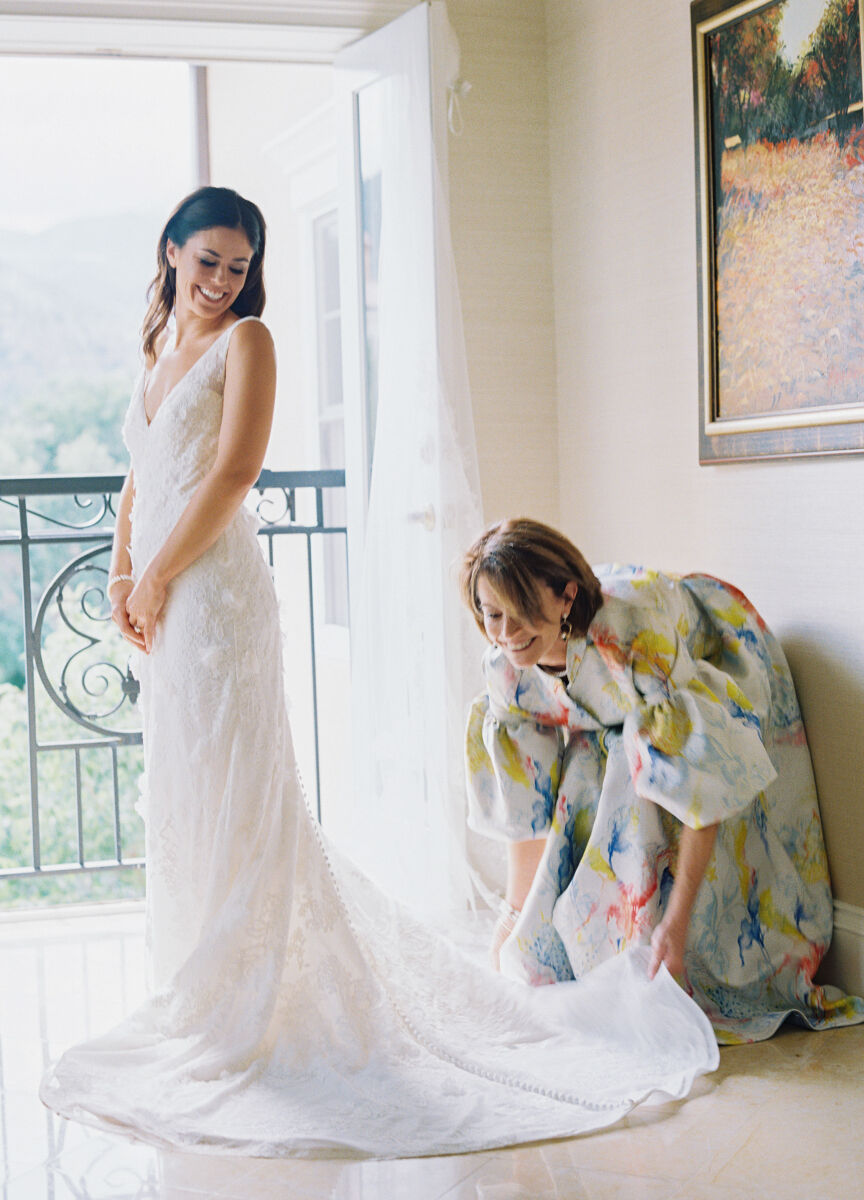
Mother of the bride in a Matisse-inspired artistic print gown at a wedding, photographed by Cassidy Brooke Photography

A painterly watercolor floral, worn by a mother kneeling to arrange her daughter's train. Print solves the anonymity problem most mother of the bride dressing runs into, since it holds the eye differently than a silhouette does and never competes with a white gown. The palette here is soft enough to sit inside the bridal-prep frame rather than dominate it, which is the balance a print has to strike. Artist-collaboration prints and hand-painted silks are where to look, with the cut kept simple enough that the print is the only event.

Mother of the Bride Dresses With Sleeves and Coverage Options

Sleeves are the most-requested feature in this category and the most badly executed. A poorly cut sleeve pulls at the shoulder every time she lifts her arms, and she will lift her arms for eight straight hours of hugging people. Armhole depth matters more than sleeve length.

Long Sleeve Mother of the Bride Dresses

A long sleeve in fluid fabric is the most flattering option for most arms and the most weather-adaptable across fall and winter. Sheer long sleeves deliver the same visual coverage without the heat, which is why they outperform lined sleeves at all but the coldest weddings. Three-quarter sleeves flatter more broadly than either full-length or cap, because they stop at the narrowest part of the forearm.

Cap sleeves cover the shoulder and almost nothing else. Choose them for the neckline they create, not for coverage they do not provide. Our wedding dresses with sleeves gallery shows how each of these shapes actually falls across dozens of real weddings.

Off-the-Shoulder and One-Shoulder Mother of the Bride Dresses

Off-the-shoulder gives a modern line without going strapless, and it is one of the most-searched necklines in this category. Everything depends on where the band sits: high enough and it stays put through a full day, too low and she spends the reception hauling it back into place. The same principles that govern off-the-shoulder wedding dresses apply directly here. One-shoulder is the more contemporary cousin and works especially well in a solid, saturated color where the asymmetry can be seen.

Mother of the Bride Dresses With Jackets and Boleros

A jacket is the most practical solution in this section, because it turns one dress into two looks. Covered for the ceremony, bare for the reception, no second outfit required. A matching jacket almost always outperforms a contrasting one, which tends to look like a separate purchase. Wraps and shawls handle temperature but not formality, since they stay an accessory rather than becoming part of the dress.

Sheer Overlays and Illusion Sleeves

A sheer overlay in place of sleeves or a strapless bodice, chosen for unpredictable between-season weather. This is the most useful construction in the whole category.

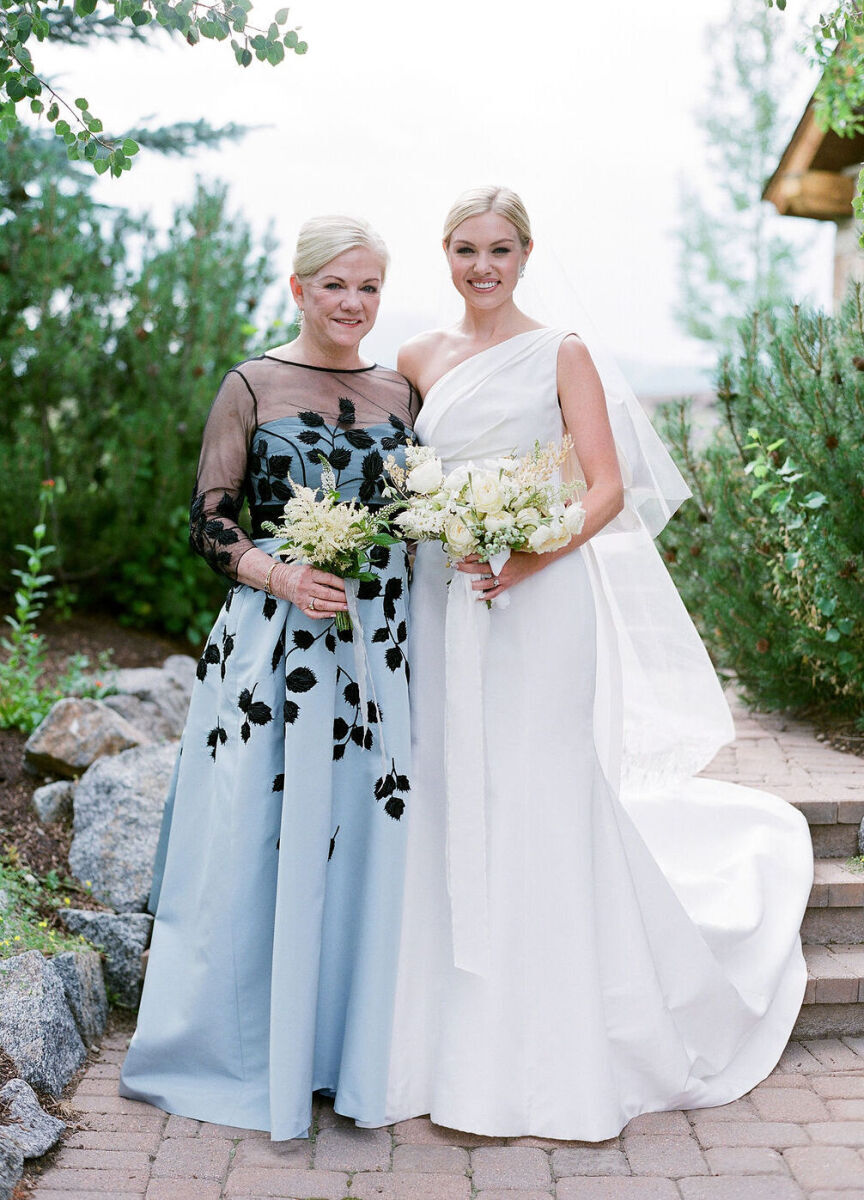
Mother of the bride in a gown with sheer illusion overlay sleeves at a between-seasons wedding, photographed by Jose Villa

Pale blue with black floral appliqué and a sheer illusion yoke through the shoulders and sleeves. This is the most useful construction in the category: it delivers the visual coverage of a sleeve with almost none of the warmth, which makes it right for a May or September wedding where the temperature drops thirty degrees after dark. Illusion tulle also has give where a lined sleeve has none, so the shoulder-fit problem disappears. The black appliqué is what makes the pale blue read as evening rather than daytime.

Mother of the Bride Dress Lengths and Silhouettes

Floor-Length Mother of the Bride Dresses

The traditional choice and the correct one for formal, black-tie, and evening weddings. It is also the safest default when an evening invitation leaves the dress code vague. Hem length should be finished to the exact shoe she will wear, not to a guess, and standard floor-length runs short above roughly five foot nine. Most designers offer an extra-length option that costs less than adding fabric after the fact.

Tea-Length Mother of the Bride Dresses

Tea-length falls between the knee and the ankle and is the most versatile length available. It suits daytime, garden, and semi-formal weddings, and it is considerably easier to walk in on grass or gravel. Midi reads more contemporary than tea-length and belongs at cocktail-code weddings. Knee-length is appropriate at casual and civil ceremonies and rarely anywhere else.

A-Line Mother of the Bride Dresses

The A-line is the most requested silhouette in this category and the most broadly flattering, because it defines the waist and skims everything beneath it. Fit-and-flare does the same job with slightly more shape through the hip. A ball gown is almost always too bridal for this role. Our short wedding dress gallery is a useful reference for how shorter hems behave on camera at a wedding.

Sheath and Column Mother of the Bride Dresses

A sheath or column suits a straighter frame and reads most modern of the four. It also asks the most of the fabric, since there is nothing else to look at.

Mother of the Bride Jumpsuits and Trouser Suits

Both are fully appropriate at a contemporary wedding and a real option for a mother who does not wear dresses. The one requirement is fabric with the weight of eveningwear rather than workwear. A crepe or silk jumpsuit in a saturated color is formal. The same shape in a suiting fabric is an office outfit at a wedding.

Mother of the Bride Dresses for Every Size, Height, and Age

Most of the advice circulating in this category is fear-based, and most of it is wrong. Nothing here requires covering up, minimizing, or dressing to an age.

Plus Size Mother of the Bride Dresses

This is a fit-and-fabric question rather than a silhouette question. Fabrics with structure and drape hold a line where thin chiffon clings, which makes crepe, mikado, and heavier jersey the reliable choices. An A-line or fit-and-flare with a defined waist outperforms a shift, which adds width without adding shape.

Sleeves in a fluid fabric with real armhole room matter more than sleeve length. And the standard advice still applies: buy for the widest measurement and have the rest taken in. That is what alterations exist to do.

Petite Mother of the Bride Dresses

Proportion is the whole game. Vertical seaming, a waist that sits at the natural waist rather than below it, and a hem finished to the actual shoe all do more work than any single style rule. A tea-length dress on a petite frame needs to clear the widest part of the calf, or it visually shortens the leg it was meant to flatter.

Mother of the Bride Dresses for Over 50s and Over 60s

Every rule about age-appropriate hemlines and sleeve lengths is invented, and none of it appears in any etiquette source worth citing. The considerations that actually matter are physical: shoes she can stand in for eight hours, fabric that breathes, and a neckline and armhole that stay where they were put. If she feels good in the fitting room, that is the signal. There is no other one.

Cultural and Traditional Mother of the Bride Attire

Traditional dress is one of the strongest choices available and consistently the least covered. When a celebration honors a specific heritage, traditional attire carries meaning no gown can stand in for.

Hanbok and Korean Traditional Wedding Attire

The hanbok is worn by mothers at the paebaek and, increasingly, through the Western ceremony as well. Families traditionally assign different colors to the bride's and the groom's mothers, though most couples now treat that as a starting point rather than a rule.

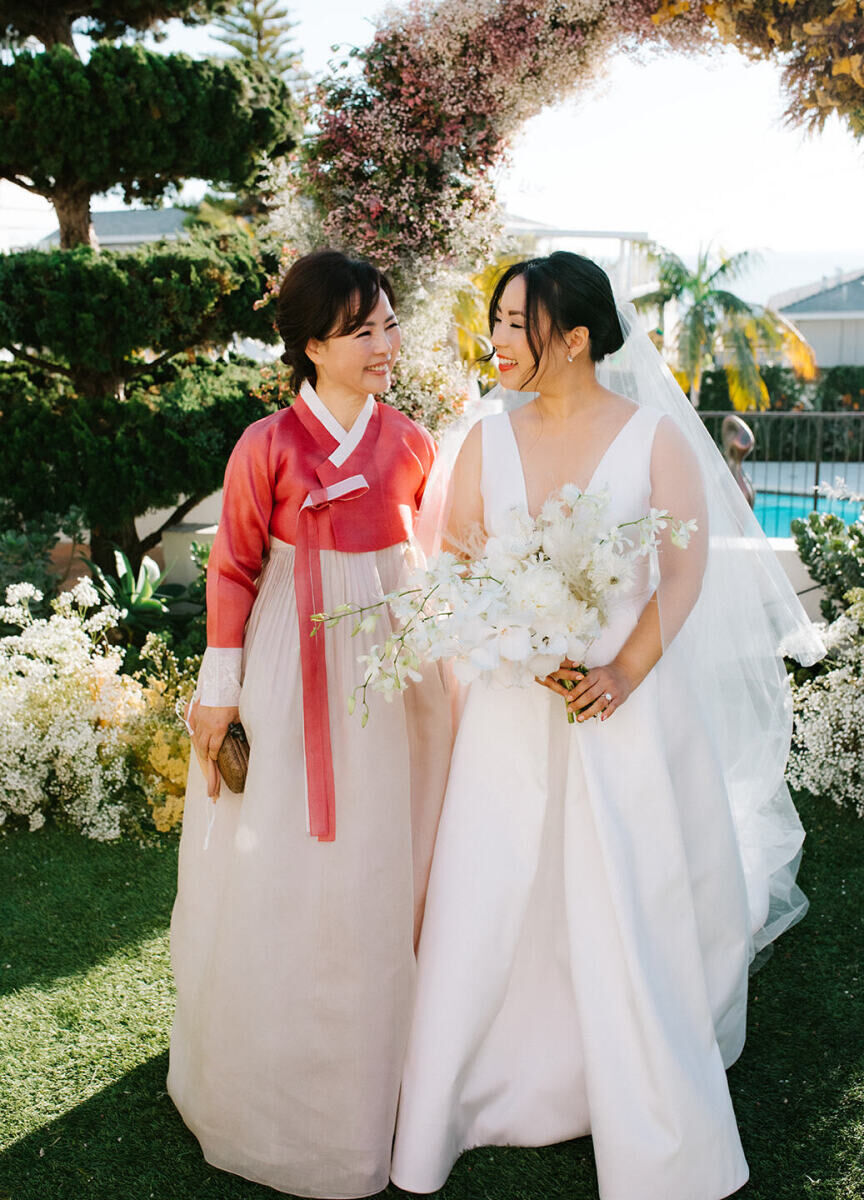
Mother of the bride in a blush-pink Korean hanbok with high-waisted chima skirt at a wedding, styled by The Mango Market

A hanbok with a coral jeogori jacket over an ivory chima skirt, worn by a mother honoring Korean tradition. The hanbok's structure, with its high waist and full skirt, creates a silhouette that photographs beautifully alongside Western wedding attire without competing with it. Coral is a lighter choice than the deeper ceremonial reds and coordinates more easily with a Western bridal party. Families commissioning a hanbok should allow more time than a standard gown order takes.

Saris and South Asian Mother of the Bride Attire

A sari, lehenga, or salwar suit is standard for South Asian mothers across a multi-day celebration, with a different look for each event. Silk weight and border work are what separate a ceremony sari from an everyday one.

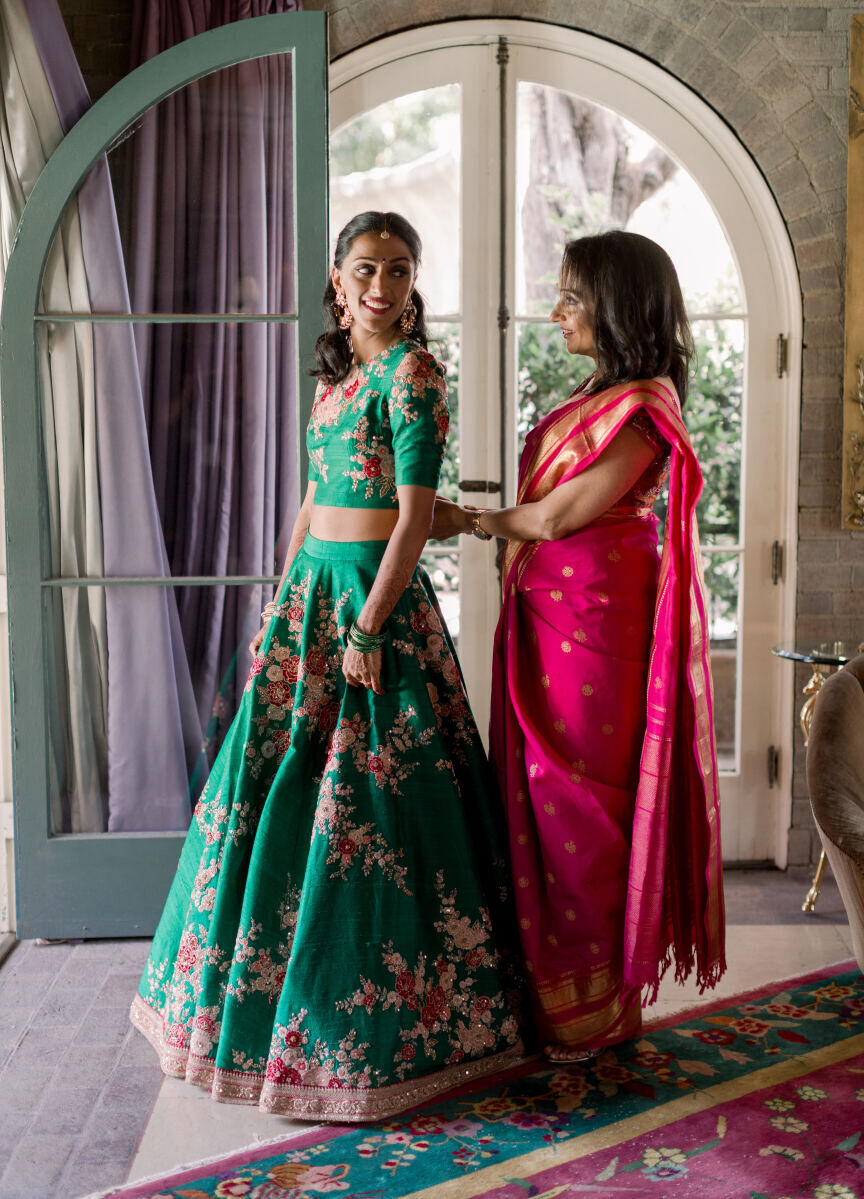
Mother of the bride in a classic column-silhouette gown at a wedding ceremony, photographed by Heather Kincaid

A magenta silk sari with a gold zari border, worn beside a daughter in emerald and gold. The two of them are the clearest argument in this guide against matching: contrasting jewel tones read as deliberate in every frame, where two versions of the same shade read as a near-miss. A sari also settles the coverage question without anyone having to discuss it, since the pallu does the work a jacket would do in a Western outfit. For families sourcing silk, the border and the pallu are where the money should go, and both take longer to commission than a store purchase.

Traditional Dress at a Blended-Culture Wedding

When a wedding brings two cultures together, the mothers often carry the tradition the ceremony itself does not. The question worth settling early is whether traditional dress belongs to one event, to both, or to the whole day.

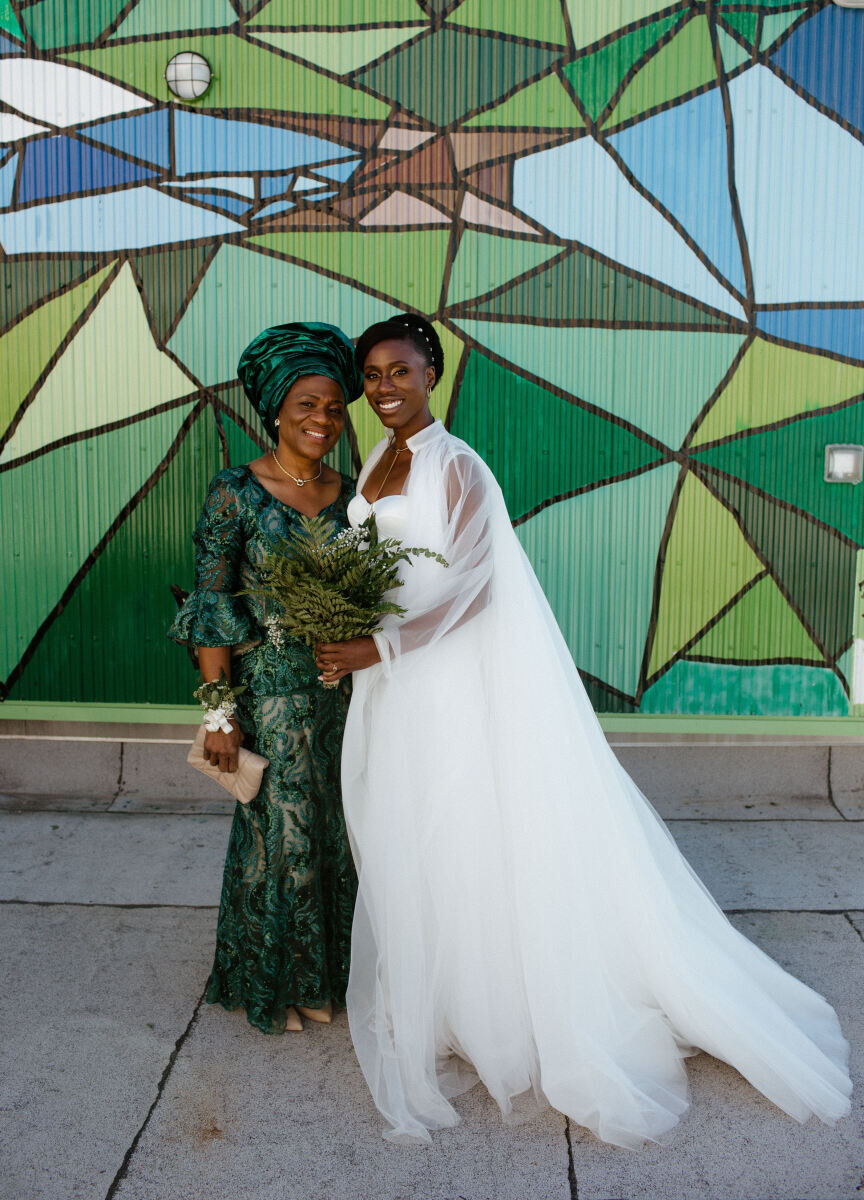
Mother of the bride in traditional cultural dress at a wedding ceremony, photographed by Weddings by Nato

Emerald West African dress with a matching gele, worn against a painted mural. Traditional attire lets a mother honor the heritage and express her own taste inside it, and the gele is the piece carrying the most personality here. The version of this that goes best is decided early, so both mothers, the couple, and the wider family agree on whether the day is traditional, Western, or a deliberate split across separate events. Traditional garments frequently need specialist tailoring, so build in more runway than a store purchase would require.

Where to Buy Mother of the Bride Dresses and What to Budget

This is the question the category answers worst. Here are real price bands and what each one actually buys.

Mother of the Bride Dress Price Bands

$100 to $350: department stores and direct-to-consumer. Macy's, Dillard's, Nordstrom sale racks, and DTC labels. Standardized fit, usually polyester-based fabric, alterations on her. Fine for a casual or daytime wedding, or for a second look.

$250 to $600: contemporary occasion labels. The largest and most competitive band, and where most mothers of the bride land. Better fabric, more considered construction, and real size ranges including petite and plus. Widely available off the rack.

$600 to $1,800: designer occasionwear. Silk and silk blends, genuine tailoring, hand-finished detail. Usually a special order carrying eight to 12 weeks of lead time. This is the band where a dress starts looking made for her rather than fitted to her.

$1,800 and up: bridal salon and couture. Made-to-order and custom, two to four fittings, four to six months. Worth the money for a black-tie wedding, a hard-to-fit frame, or a mother who will genuinely wear it again.

Budget separately for alterations. A standard hem, waist, and strap adjustment runs $75 to $300, and beaded fabric or a full re-cut costs considerably more. Almost no occasion gown fits correctly off the rack.

Where to Shop for Mother of the Bride Dresses Near You

Bridal salons are the most overlooked option in this category, and often the best one. Many carry a dedicated mother-of-the-bride section alongside their bridal collections, and the advantages are concrete: professional fitting, an in-house seamstress, and a stylist who can see how the whole party will look standing together. That last part is worth more than it sounds, since coordination is the problem most mothers are actually trying to solve.

Browse bridal salons and dress designers in the Carats & Cake directory to find shops in the market where the wedding is happening. For budget context across the rest of the party, our breakdown of the average cost of a wedding dress covers what everyone else typically spends.

When to Start Shopping for a Mother of the Bride Dress

Six to nine months out, and after the bride has chosen her dress rather than before.

"The mothers who end up happiest are the ones who shopped early enough to change their minds," says Cindy Skanderup, Editor-in-Chief at Carats & Cake. "Everyone who leaves it to six weeks out buys whatever fits, and it shows in the photographs."

Our wedding planning timeline places attire shopping against everything else that needs booking, which is useful for anyone trying to work out what is actually urgent.

Mother of the Groom Dresses and How to Coordinate

Tradition says the mother of the bride chooses first and the mother of the groom coordinates to complement rather than match. The useful version of that convention is a single phone call: agree on formality level and rough color direction, then shop separately.

The rules on color are identical, including the prohibition on white, ivory, and champagne. Formality is where coordination genuinely matters, because one mother in a floor-length gown standing beside another in a cocktail dress looks like an error in every photograph the two of them appear in.

Beyond sequence, nothing differs. Several of the looks in this guide, including the puff-sleeve floral and the jewel-toned silk, were worn by mothers of the groom.

What the Mother of the Bride Should Avoid Wearing

White, ivory, and champagne, unless the couple has specifically asked for them. Some do.

The bridesmaids' exact color. Complement the palette without joining it.

The wrong formality. Dressing above or below the invitation is more visible than any color choice.

Heavy beading at a daytime wedding. It photographs harshly in daylight and belongs to evening.

Shoes she has not broken in. The most common regret in this category and the easiest one to prevent.

A silhouette she has never worn. A wedding is a poor place to discover whether she likes a mermaid hem.

A dress bought with no room for alterations. Nearly every occasion gown needs them, and the ones needing the most are usually the ones that end up looking best.
Mother of the Bride Dress FAQs

What should the mother of the bride wear?

She should wear something that matches the wedding's formality, suits the season and venue, and avoids white, ivory, and champagne. Floor-length suits formal and evening weddings, while tea-length and midi suit daytime, garden, and beach ceremonies. A formal gown, a tailored jumpsuit, and traditional cultural dress are all equally correct, and lasting comfortably through an eight-hour day matters more than any style rule.

What color should the mother of the bride wear?

Any color except white, ivory, and champagne. Green, navy, burgundy, blush, and jewel tones all photograph well and coordinate easily with most wedding palettes. Black is fully appropriate at formal and evening weddings. The best approach is sitting adjacent to the bridal party's color family rather than matching it exactly.

How far in advance should the mother of the bride shop for her dress?

Six to nine months before the wedding, and after the bride has chosen her dress. Boutique and special-order gowns carry eight to 12 weeks of lead time before alterations begin, and custom pieces need four to six months. Off-the-rack shopping allows a shorter runway, but starting earlier means more options and time to change course.

What's the difference between mother of the bride and mother of the groom outfits?

Only sequence, and only by convention. The mother of the bride traditionally chooses first and the mother of the groom coordinates to complement rather than match. Both follow identical rules on color, and both should land at the same formality level, since a mismatch between the two shows in every photograph they share.

Should the mother of the bride match the bridesmaids?

No, she should complement them. The most cohesive results come from staying within the same color family or sharing an element such as fabric or formality. Wearing the exact bridesmaid shade makes her look like part of the lineup rather than a principal.

What length dress should the mother of the bride wear?

Floor-length for formal, black-tie, and evening weddings. Tea-length or midi for daytime, garden, beach, and semi-formal weddings. Knee-length works at casual and civil ceremonies. Venue and time of day should drive the decision more than any fixed rule about age or season.

What should the mother of the bride avoid wearing?

White, ivory, and champagne are the clear ones, and champagne matters most because it routinely photographs as ivory under flash. Beyond color, avoid matching the bridesmaids exactly, dressing above or below the invitation's formality, heavy beading at a daytime wedding, and shoes she has not broken in.

Where can she buy mother of the bride dresses?

Department stores and DTC labels cover the $100 to $350 band, contemporary occasion brands cover $250 to $600, and designer occasionwear runs $600 to $1,800. Bridal salons are the most overlooked option and often the best, since many carry a dedicated mother-of-the-bride section with in-house alterations and a stylist who can see the whole party together. Search the Carats & Cake vendor directory for bridal salons near the wedding.

Who pays for the mother of the bride's dress?

She does, in nearly every case. The convention that the bride's family covers wedding attire applies to the bride's dress and, in some families, the bridesmaids' dresses. Both mothers buy their own outfits, and neither should expect the couple to contribute.

Find the dress in person. Browse bridal salons and occasion-dress designers in the Carats & Cake vendor directory, filtered to the market where the wedding is taking place, and book a fitting while there is still time to change her mind.

Carats + Cake
Join the Community
Create An Account
Back to Login

By creating an account, you agree to our Terms of Use and have read and understood the Privacy Policy.

Back to Login
No problem! Reset your password via email.
Back to Login
Wedding Websites & Invitations