What You're Really Paying for in a Wedding Floral Installation
The flowers are the least of it. Six florists explain the clock, the ceiling and the meadow that looks easy and isn't.
Every florist knows the moment. A couple slides a phone across the table, and on the screen is an aisle swallowed by a wildflower meadow, or a reception with blooms dripping from the ceiling. Then comes the question of what it would cost. The answer tends to land hard, and plot twist, the flowers are rarely the reason.
A large wedding floral installation is closer to a build than an arrangement. Someone has to engineer how it will stand or hang, source and condition a startling number of stems, load a van or a truck, assemble the whole thing inside a window the venue controls, and come back at the end of the night to take it apart. How long the florist gets to build, how high the piece goes and how natural it's supposed to look decide the final number more than anything else. Six florists who make these for a living spilled exactly how. None of it means the look is out of reach. It just helps to know what you're actually paying for, and where there's room to play.
What counts as a floral installation?
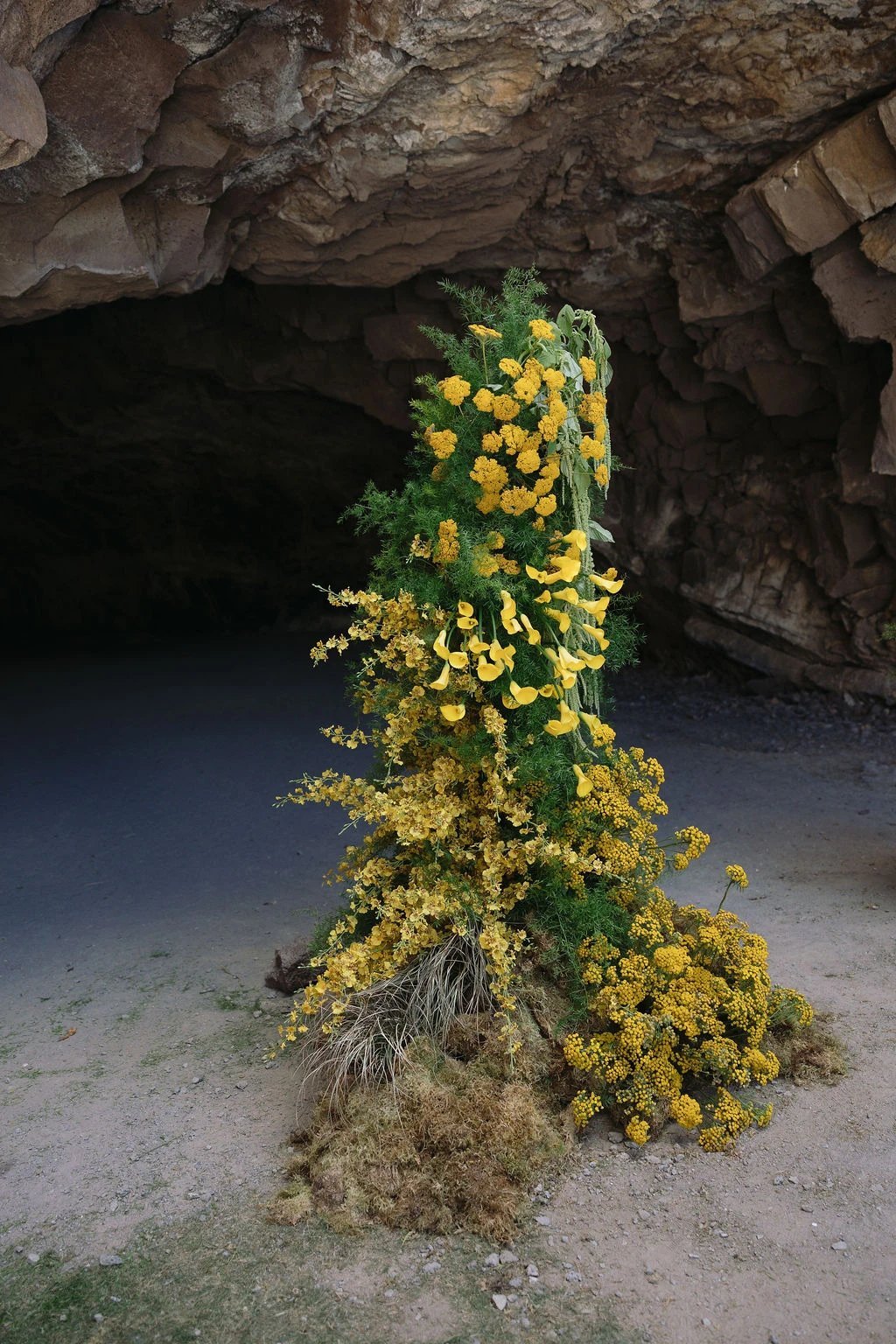
An arrangement sits in a vessel and usually arrives finished. A floral installation, sometimes called a flower installation, is built into the room itself, most often on site, and relies on a hidden structure to hold it together. It might be florals suspended from the ceiling, a ground installation or "meadow" that seems to grow up from the floor, blooms climbing an arch or pillar, a cloud floating over the dance floor. A little vocabulary goes a long way in a florist meeting.
- Mechanics: the frames, chicken wire and water sources you never see, holding everything in place and keeping it alive.
- Load-in and setup window: when the florist's team is allowed into the venue and how long they have before guests arrive.
- Rigging: attaching anything to a ceiling or beam, which many venues hand to a separate, insured company.
- Strike: taking it all down after the party.
- Flip or turnover: moving or rebuilding florals between the ceremony and the reception.
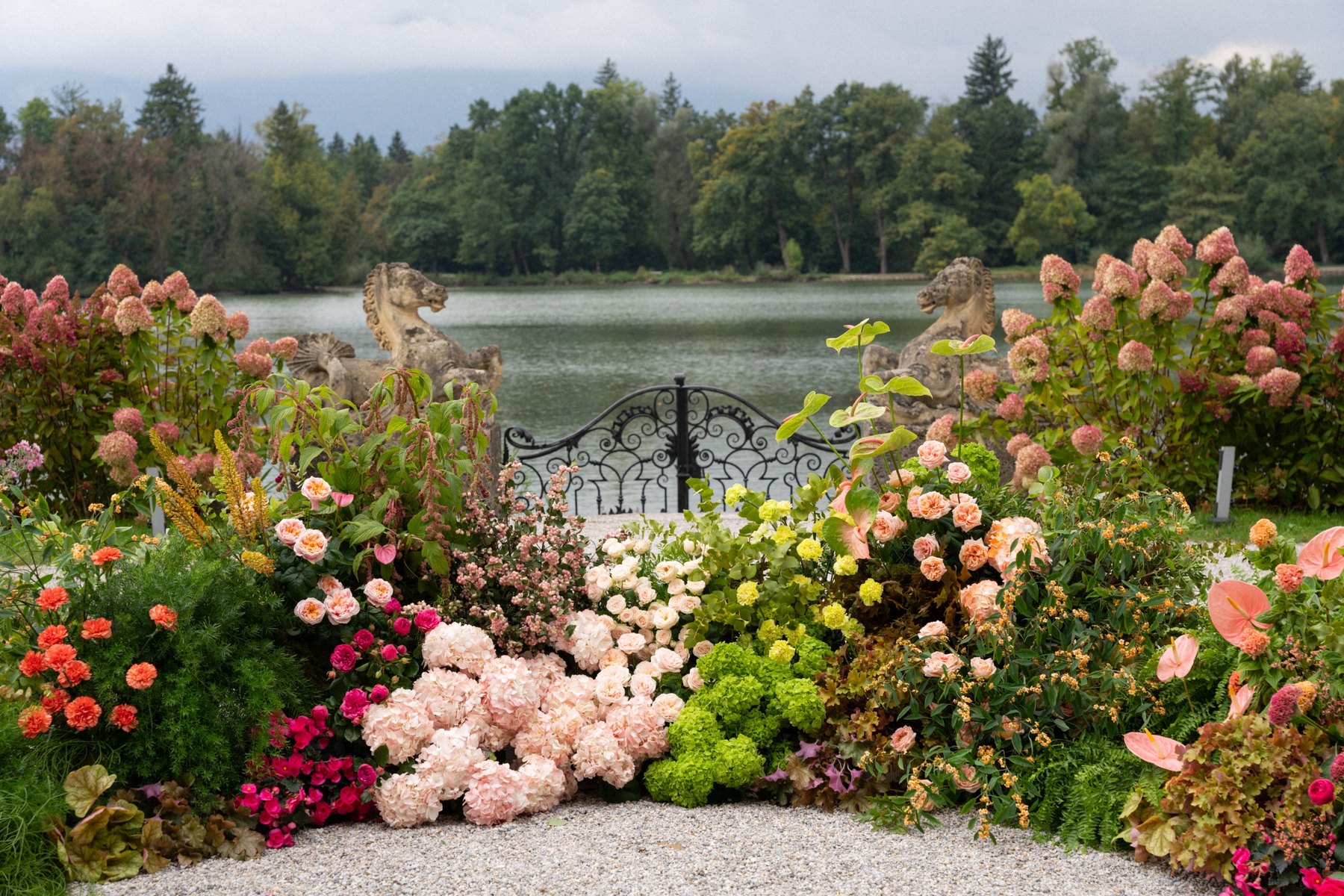
Why are wedding flowers so expensive, and where does the money go?
Florists hear the same assumption over and over, that the price of an installation is mostly the price of the flowers. It's an understandable guess, since the flowers are all you see. But by the time an installation is standing in a venue, it has been through hours of work that never make it into a photo. It has been designed and engineered so it will stand or hang safely. The flowers have been sourced, and every stem has been processed and conditioned to last through a long day. The structures have been prepped, everything has been packed and driven over, and a team has built it on site. At the end of the night, a crew comes back to take it all down. Nearly every one of those steps is someone's time, and time, as any florist will tell you, is not cheap.
Amor del Bueno(opens in a new tab) pulled back the curtain on how the price of its installations typically breaks down, and it's the clearest picture of where the money goes. Flowers make up around 30% of the total. Labor, meaning the people who design, prep, build and take down the piece, accounts for another 25 to 30%. The remaining 40 to 45% covers whatever that specific design needs to exist, from the structure and mechanics that hold it up to the vehicles and equipment that get it into the room. Amelie Botanical Studio sees the same pattern and notes that the share going to labor, mechanics, transport, equipment, setup and dismantling grows as installations get bigger and more complex.
- Flowers
- 30%
- Labor
- 25–30%
- Structure, mechanics, vehicles and equipment
- 40–45%
Source: Amor del Bueno's typical installation breakdown.
Using those proportions, an installation priced at $10,000 would put roughly $3,000 toward flowers and $2,500 to $3,000 toward labor, with $4,000 to $4,500 going to everything else it takes to produce. So the flowers? Closer to a third of the bill than the whole thing.
The flowers themselves are also getting more expensive. Amor del Bueno's own flower costs are up about 16% compared with last year.
Rising costs like that matter more for weddings than for almost any other flower purchase because of timing. Couples usually sign a floral proposal months before the wedding, sometimes more than a year ahead, but the flowers aren't bought until shortly before the day, and any price movement in between has to land somewhere. If your wedding is a year or more away, ask your florist how they handle price changes between the proposal and the purchase, whether a buffer is built into the quote, and what happens if a particular flower spikes. It's a completely normal question, and a good florist will have a clear answer.
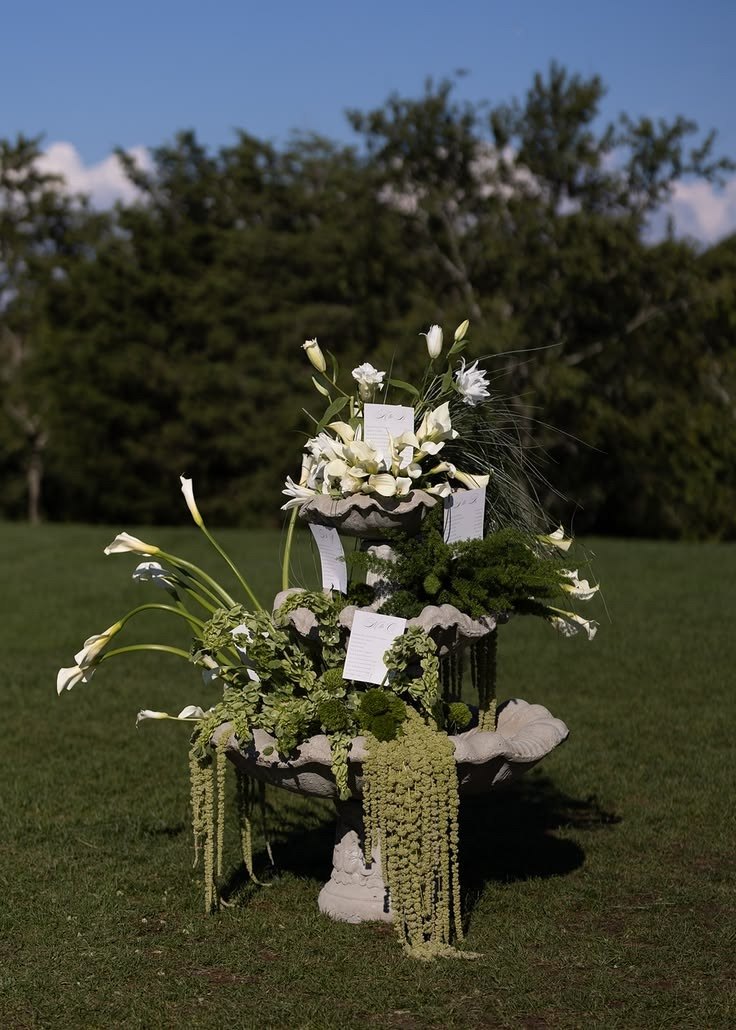
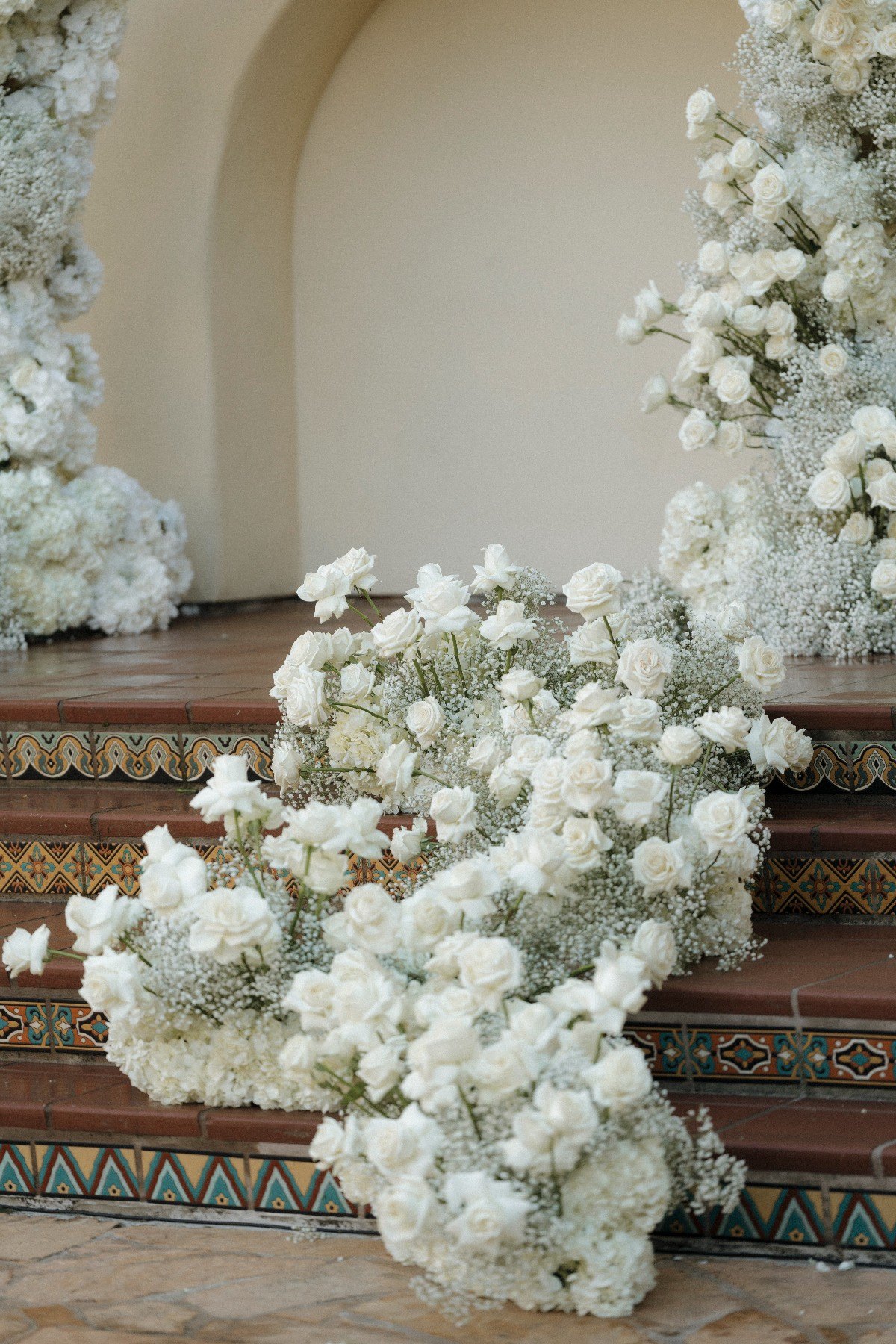
Why does setup time change the price so much?
Each of the six florists brought this up, and it has nothing to do with flowers. It's time.
Every venue sets a window between when vendors can load in and when guests arrive, and that window quietly shapes the price of an installation more than almost anything else. A large piece takes a certain number of working hours to build, and those hours don't shrink because the venue is strict. What changes is how many people it takes to fit them in. Six hours lets a small team work at a steady pace. Two hours means bringing in a much bigger crew to get the same thing done, and Audrey in the Garden(opens in a new tab) says that can mean doubling the team. Those extra hands go straight onto the invoice, which is also why the exact same design can be priced very differently at two different venues.
Hanging pieces squeeze that window even further. Christine, who founded Plant Girl Floral and leads its design, explains that many venues don't let florists hang installations themselves. They require a separate, insured rigging company to do it, and that crew needs its own time in the room. Because both teams share the same setup window, every hour the riggers spend up on the ceiling is an hour the florists aren't building, and many venues also put strict limits on when vendors can load in at all. As she puts it, "The less time we have, the more florists we need on site, and that labor is a real part of the price." She suggests asking about it on your venue tours, before you've fallen for anything.
Christine, Plant Girl Floral“A large installation is a numbers game: flowers, time, and hands.”
A tight window can also change the piece itself. Fern Botanica, which works at many of the same venues again and again, explains that when there isn't enough time to design on site, more of the installation gets made in the studio ahead of time and brought in finished.
That sounds efficient, but it changes what's possible. Designing in the room lets a florist build to the actual space, filling a gap they can only see once the piece is up, shaping it around the architecture and the light, and adding the loose, finishing stems that make an installation look like it grew there. A piece made in the studio is built away from all of that, and it has to be sturdy enough to survive packing, a truck ride and unloading, which favors tighter, more contained work. According to Fern Botanica, a short window doesn't always shrink how big an installation can be, but it does take a toll on the fine details, which are often exactly what made a couple fall for the photo in the first place. A good florist should be upfront about what can realistically be built in the time the venue allows, and it's worth asking yours how much of the design would happen on site and how much would arrive ready-made.
The team at Violets of the Valley put the gap between what couples see and what florists see best.
Violets of the Valley“You're seeing the finished flowers in the photo. We're also seeing the loading dock, the crew, and the clock.”
Why does a hanging floral installation cost more?
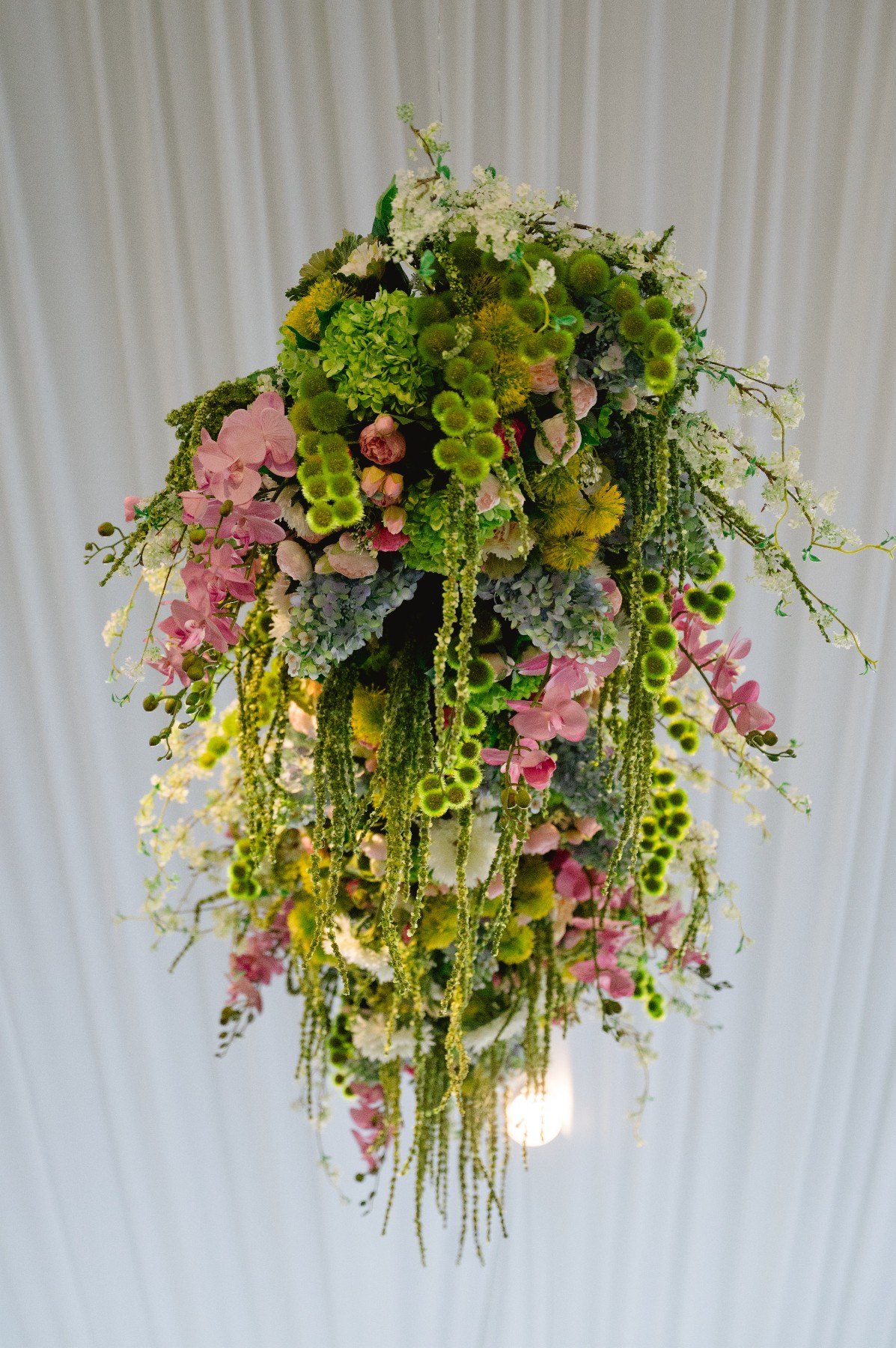
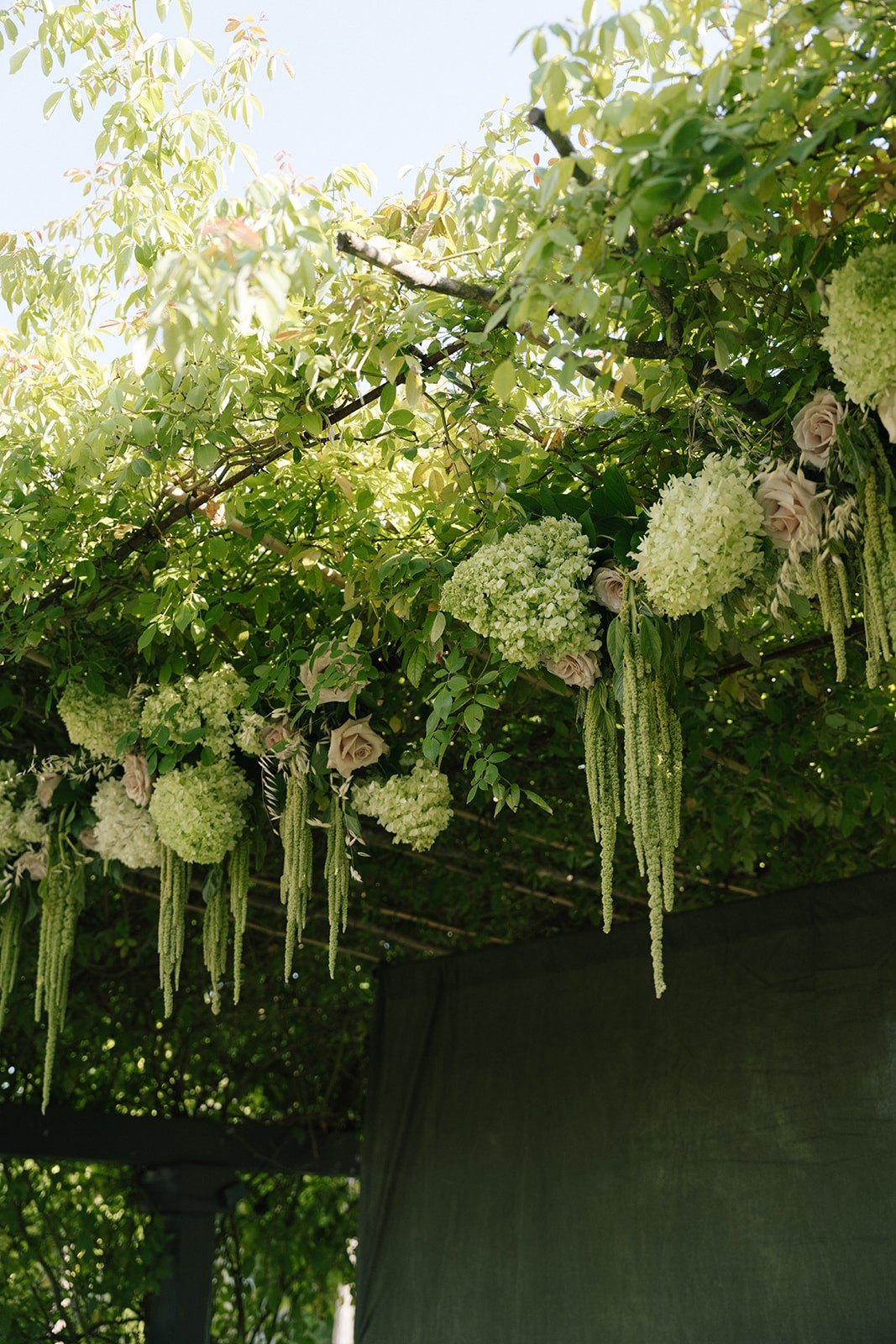
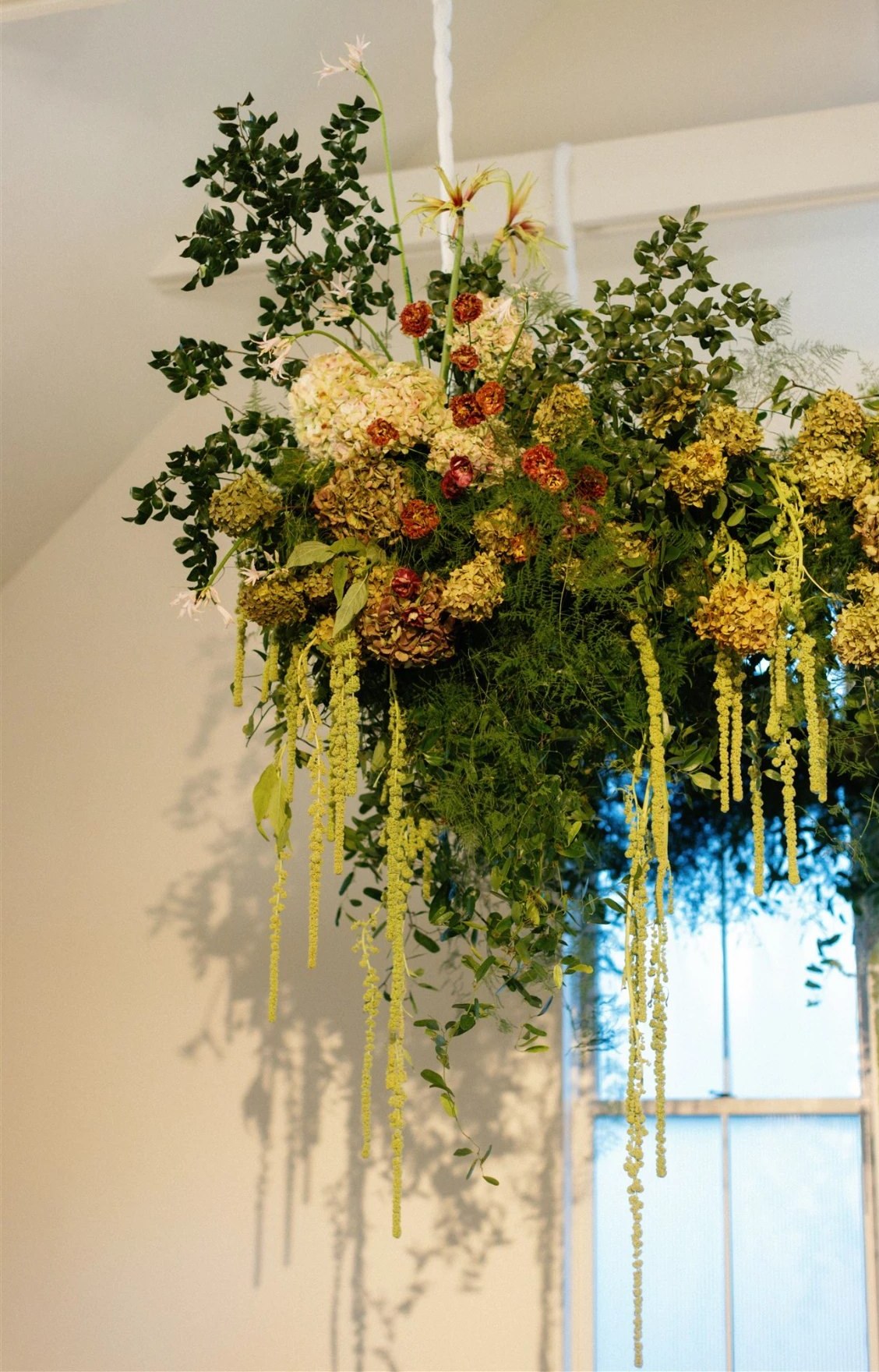
A hanging installation is the diva of the floral world, and it's priced like one, for two reasons.
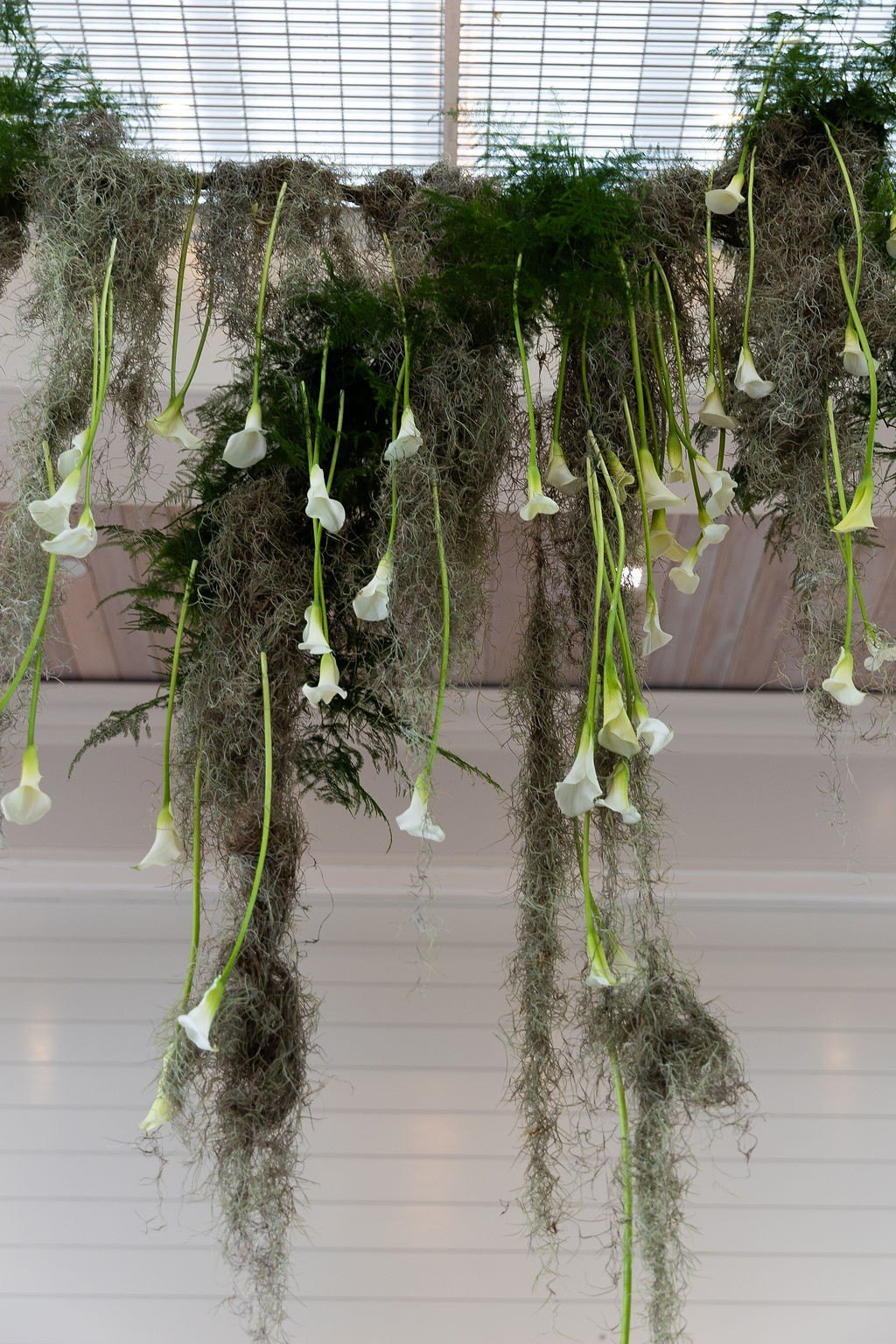
The first is simply getting it up there. A suspended floral installation, or anything built high, needs a safe way to be attached, which can mean lifts, extra crew, specialized mechanics, approved rigging points, a rigging company and additional insurance, all before a single flower goes up. When asked which small-looking detail changes a price the most, more than one florist answered height. As Audrey in the Garden puts it, the second a piece goes overhead, "you're adding an entirely different level of work."
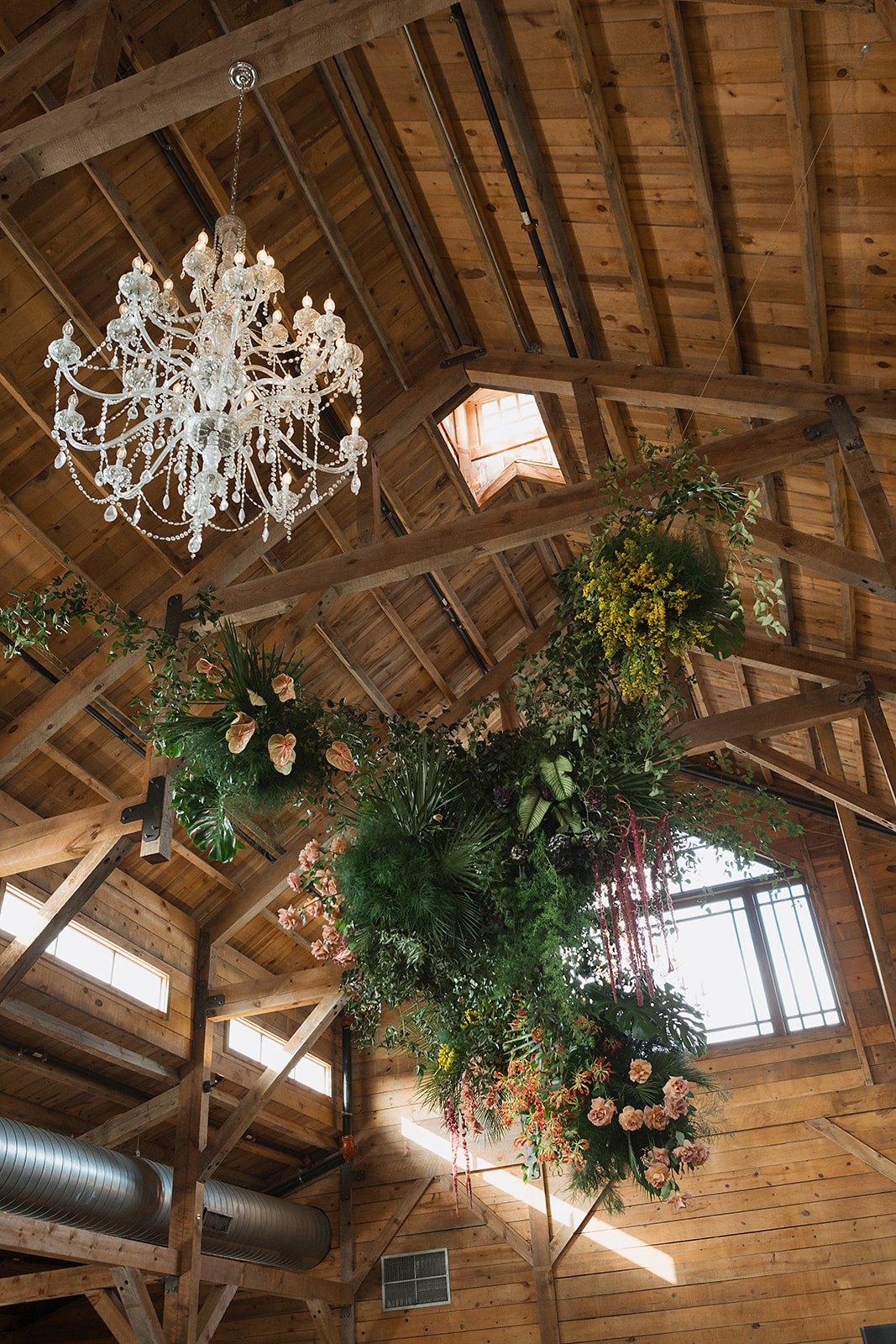
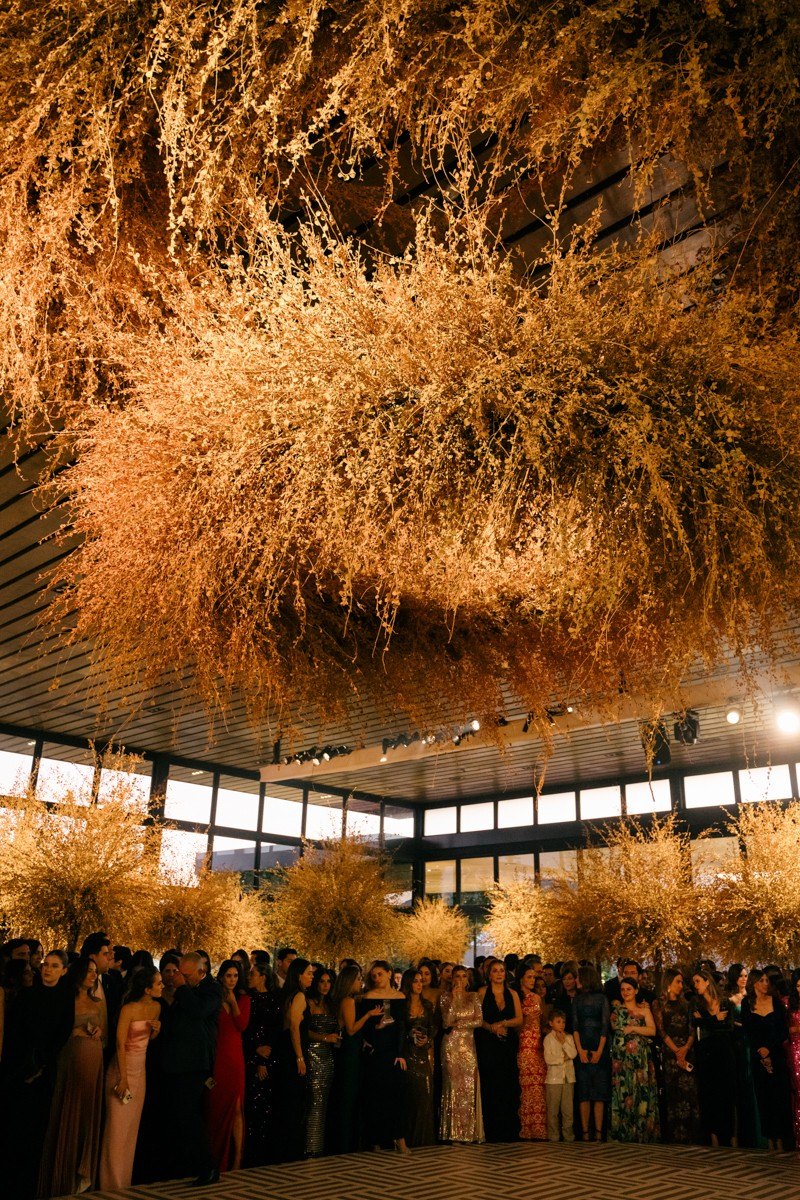
The second is the angle. Guests see a ceiling floral installation from directly underneath, which is the least forgiving view in the room (think of it as the floral version of a photo taken from below). Christine at Plant Girl Floral explains that filling a big space so it looks lush from every angle takes far more stems than most couples expect, "because from below, every gap shows."
What about a grounded floral arch or a floral meadow?
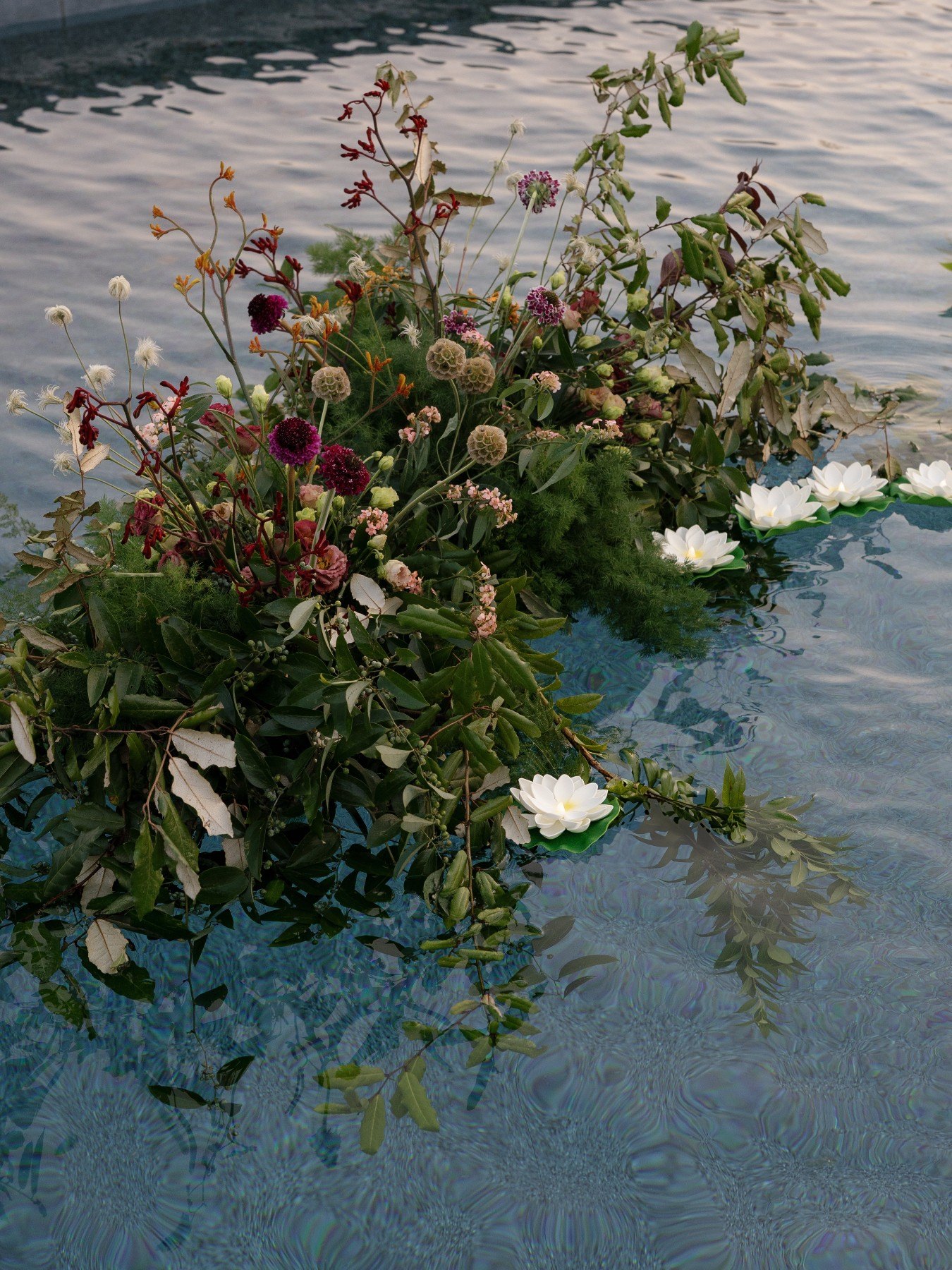
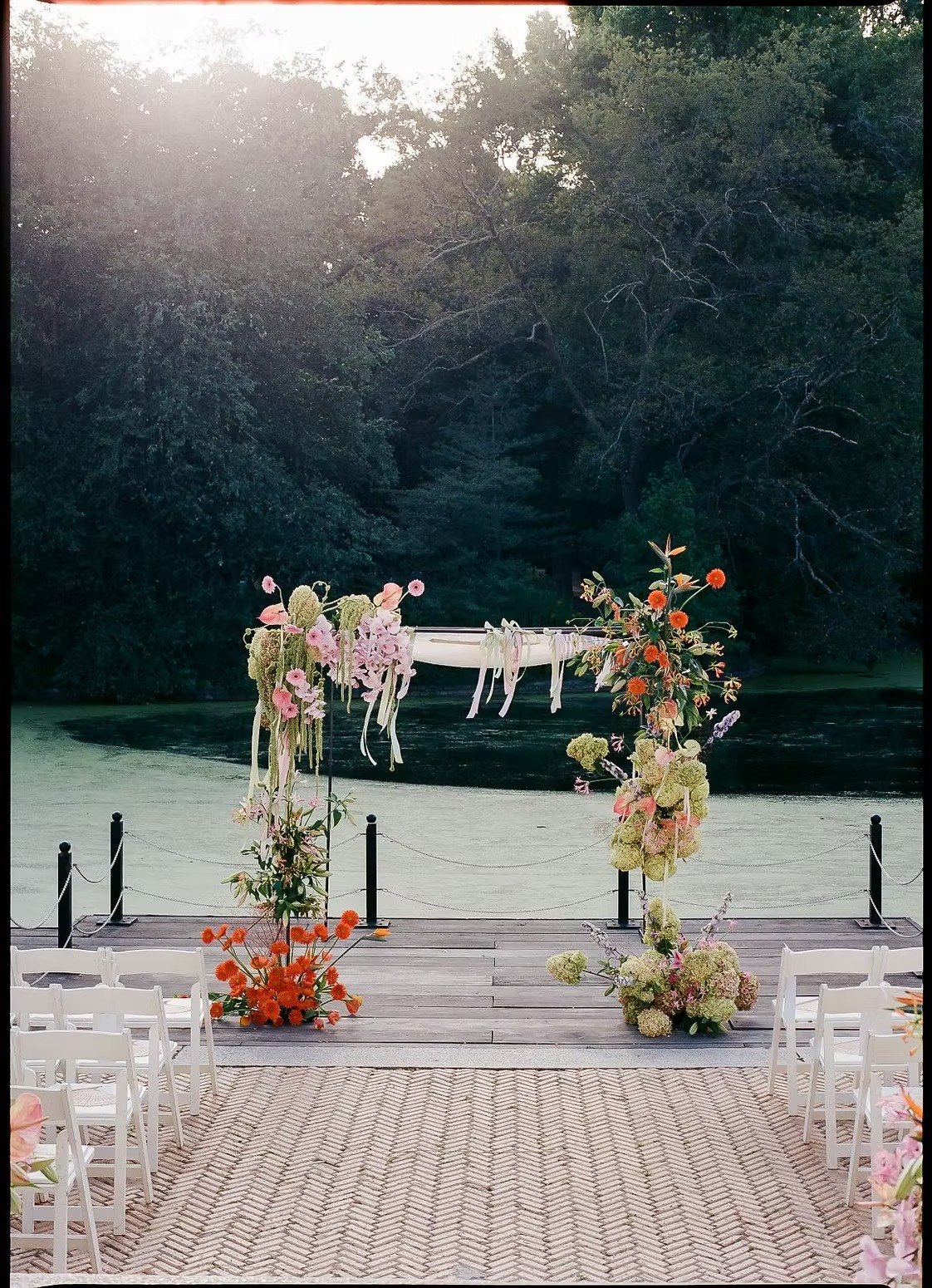
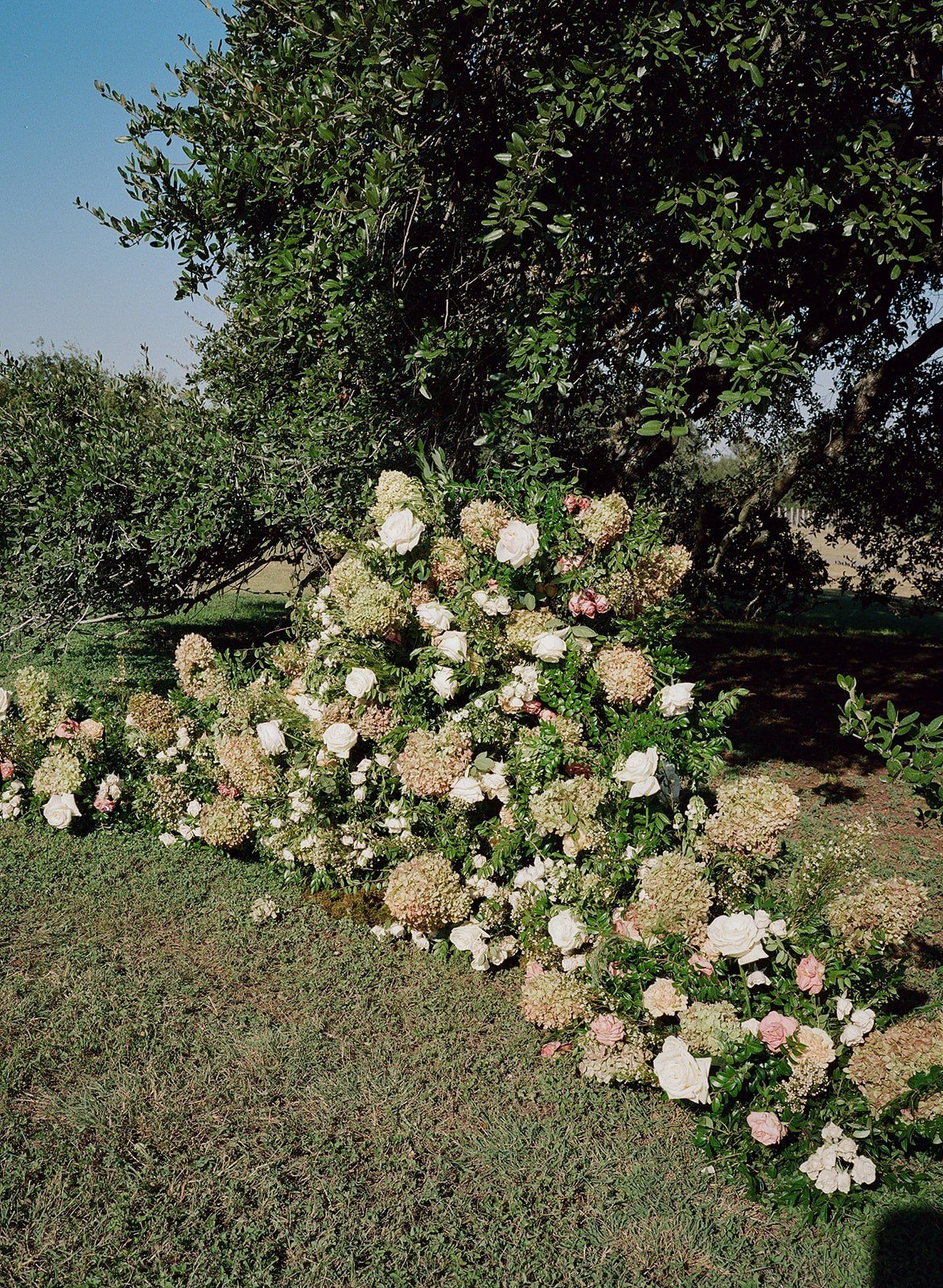
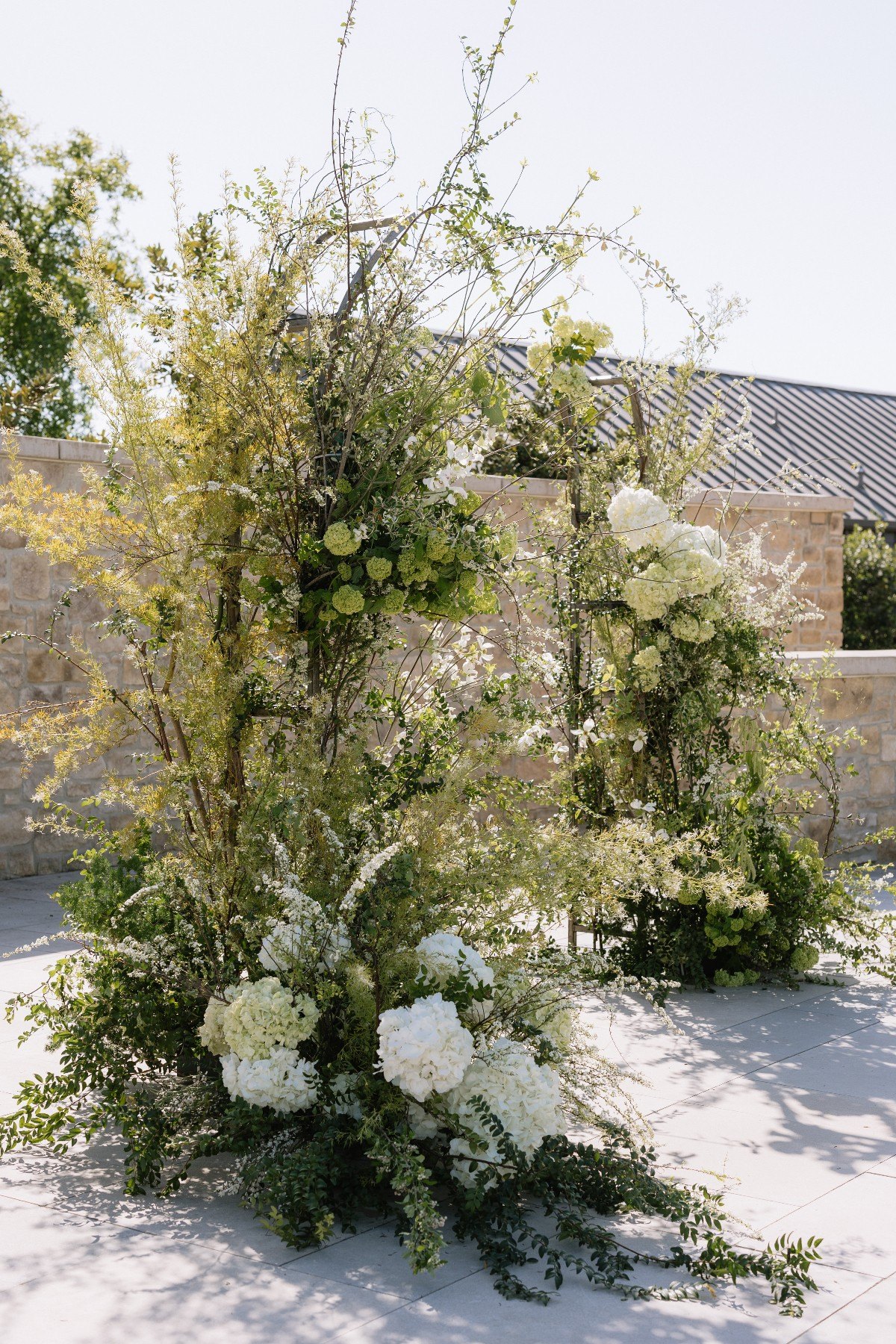
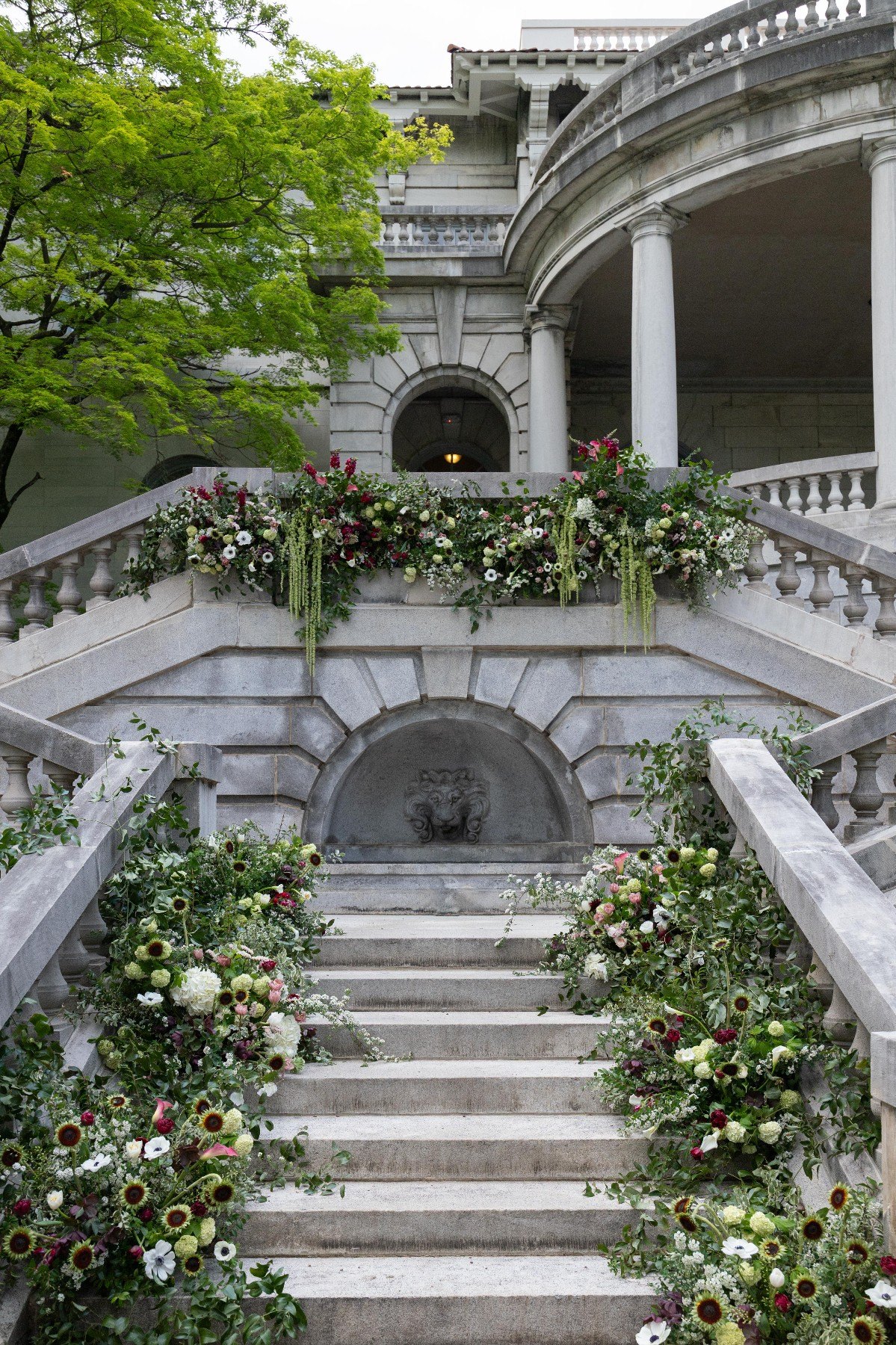
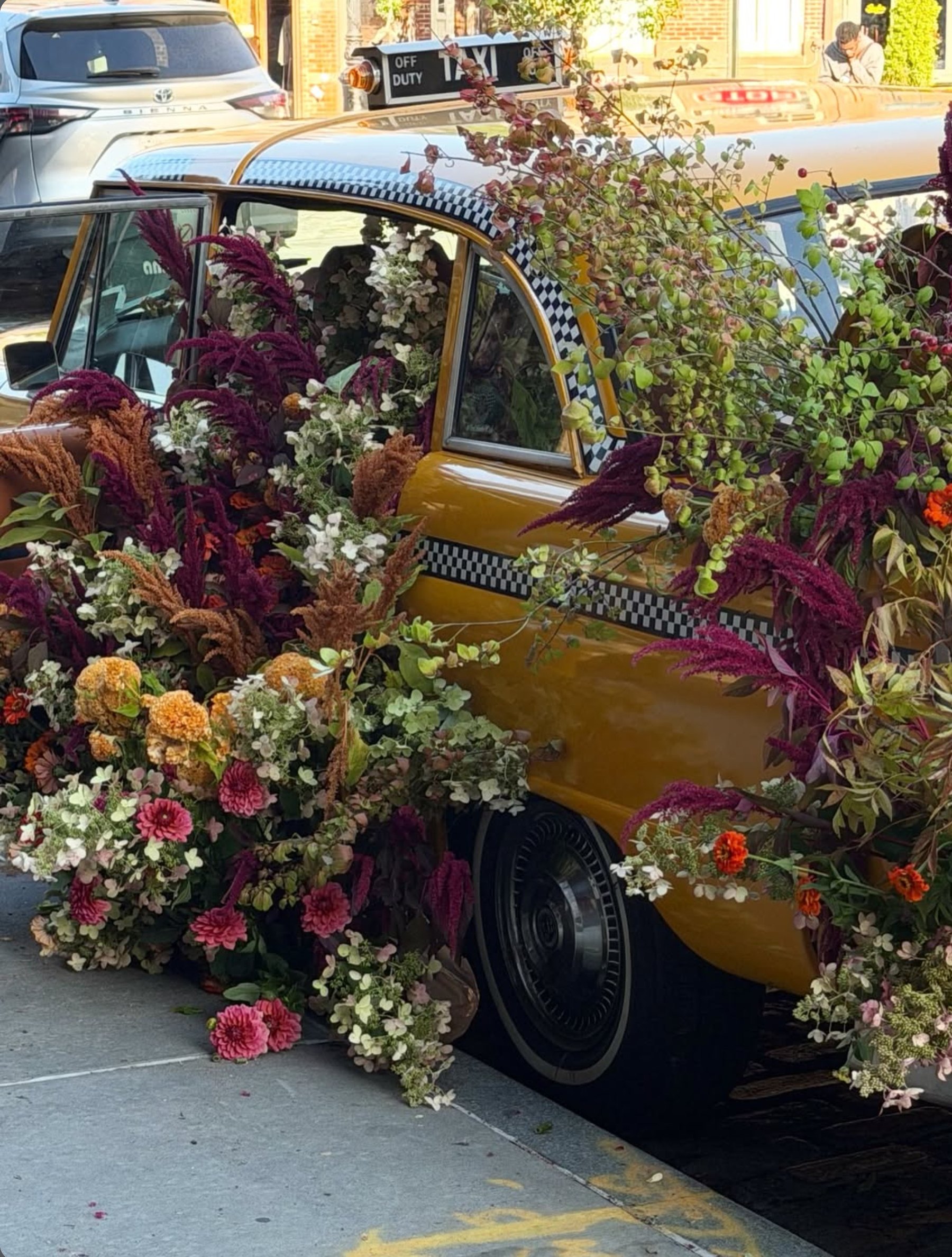
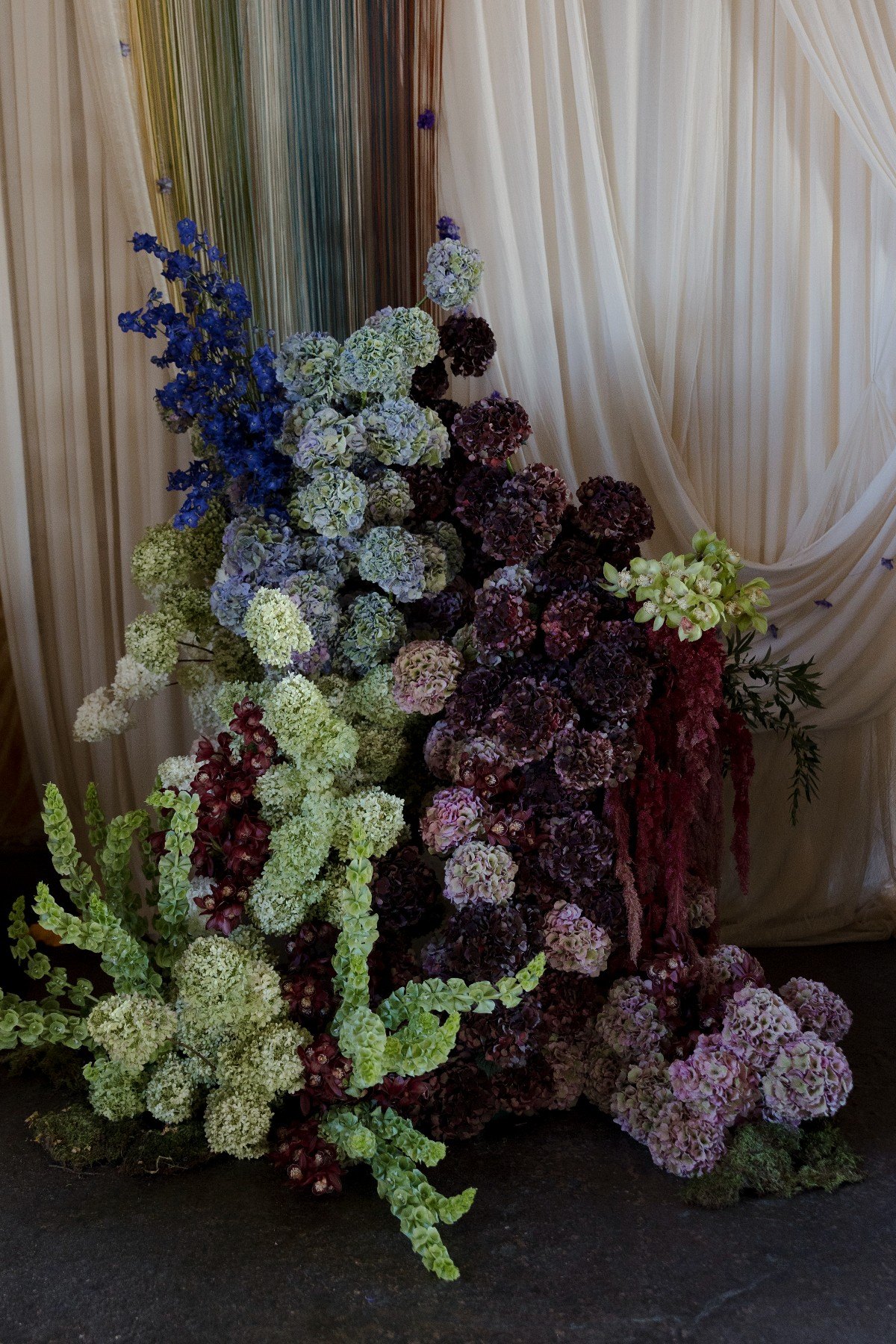
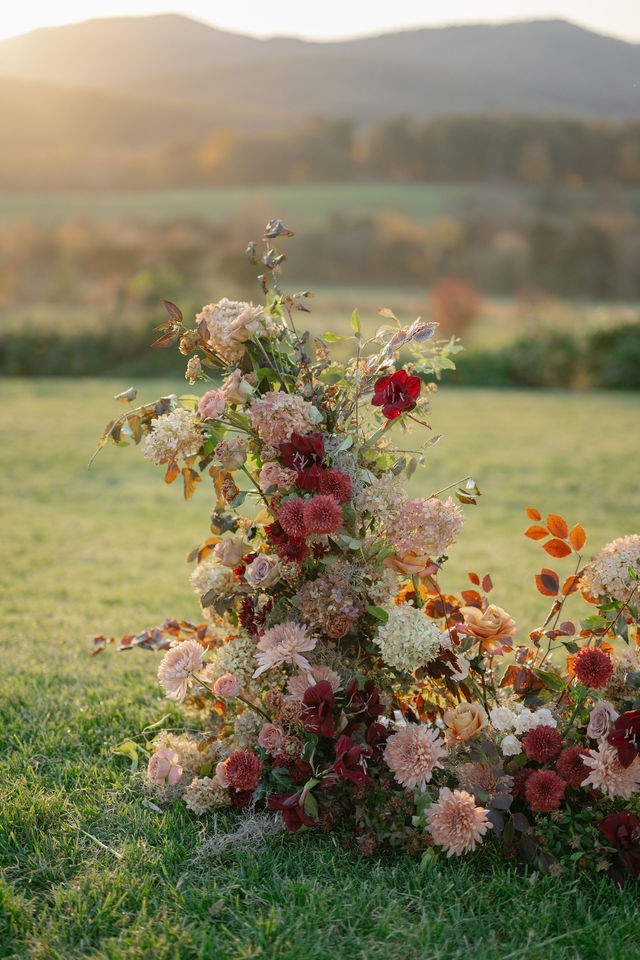
Ground installations, like a grounded floral arch or a floral meadow, avoid the rigging, though they're no bargain either. They still take a lot of flowers, and the loose, garden-style versions tend to cost more than tidier designs. What they offer instead is flexibility. Unlike a hanging piece, they can often move, which matters a great deal once the ceremony ends.
Christine at Plant Girl Floral sees ground floral arrangements as a way to get the same drama without going overhead. A meadow lining the aisle, framing the ceremony or sitting in front of the band can deliver it in a different way.
Christine, Plant Girl Floral“Not every wow moment has to hang from the ceiling.”
Isn't the natural, wild look the cheaper option?
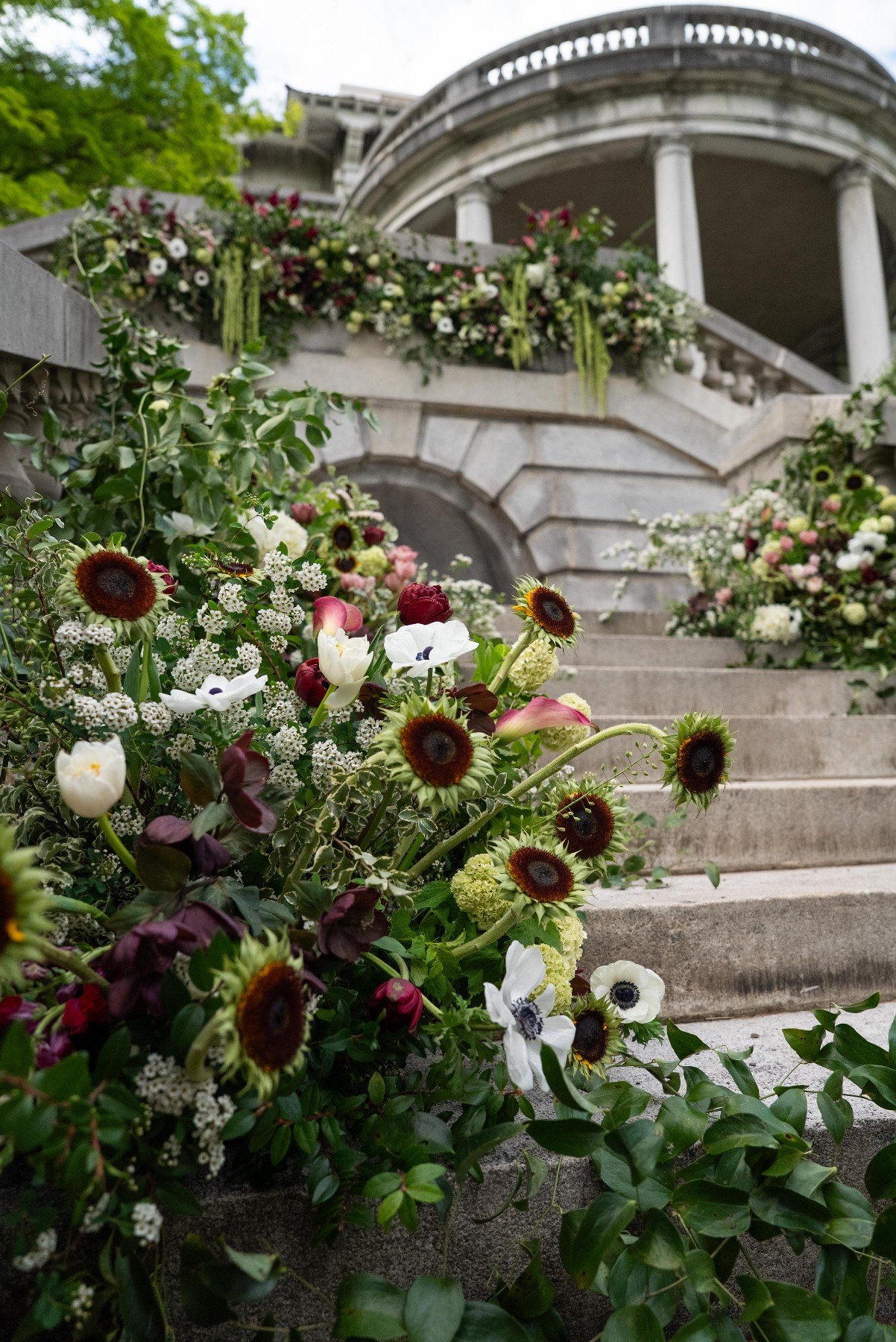
Ask florists what couples get wrong most often, and this one comes up again and again. The overgrown, wandered-in-from-a-field look reads as easy, and that's exactly the trick. Like no-makeup makeup, it takes serious work to look like no work at all. Making flowers look like nobody arranged them is one of the hardest things a florist does.
Part of it is sourcing. Violets of the Valley described building installations from grasses and living plants, which sounds simple until you hear what it involves. The team can spend hours visiting greenhouses and farms to find plants with the right shape, size and movement, then works in cut grasses to soften the design and add texture. "The result may look wonderfully wild," the team says, "but that look isn't necessarily less expensive than traditional flowers."
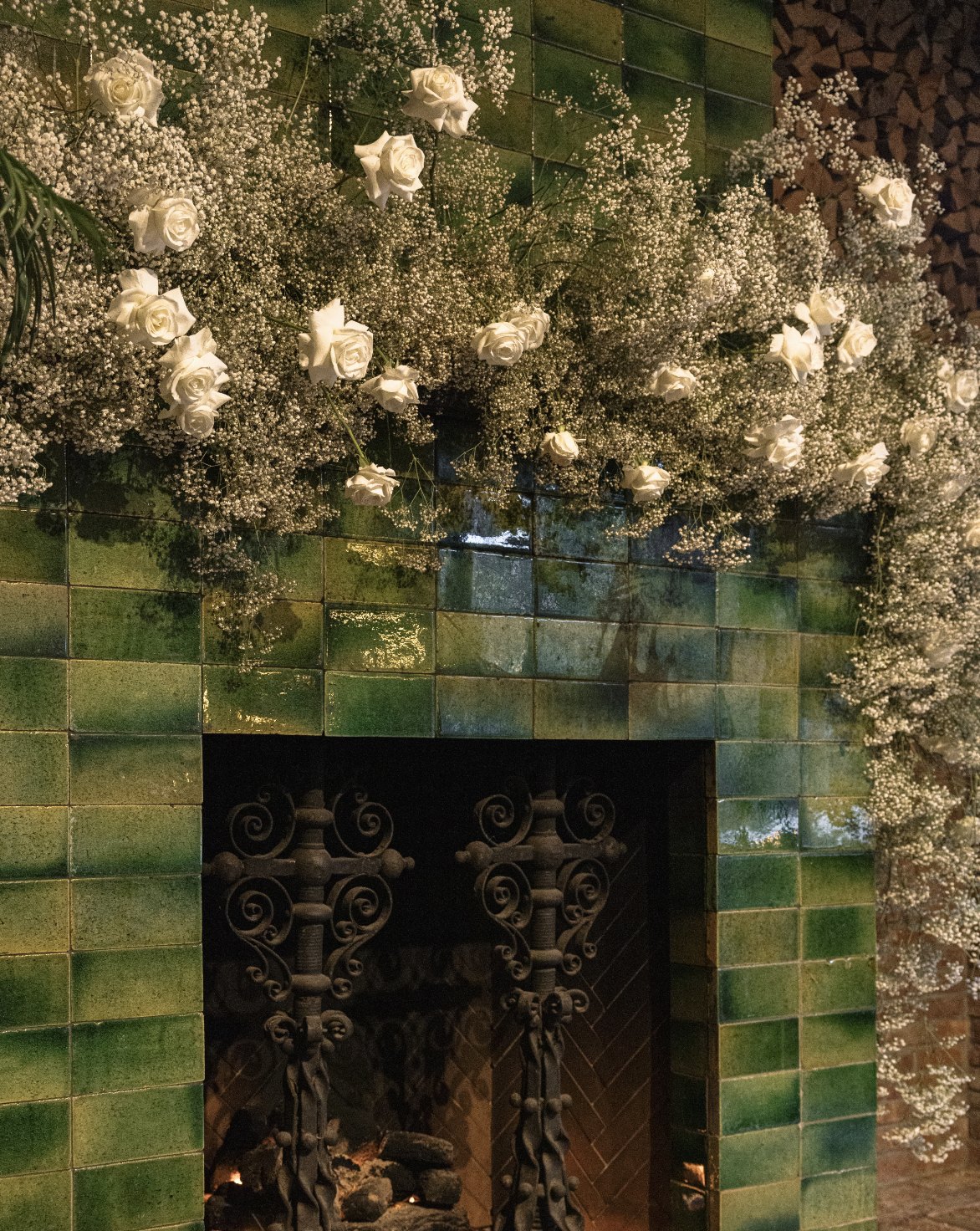
Part of it is volume. Lush greenery has a reputation as the budget-friendly choice, but layered, textural designs can call for several varieties and far more material than people imagine, and Amor del Bueno says the cost can match or even pass a design made mostly of flowers. Those airy clouds of baby's breath work the same way. They look weightless and take a startling number of stems to get full.
And part of it is placement. Every stem in a wild design has to be set so the whole thing feels like it grew there while still holding a clear shape. "Sometimes the simplest-looking installation is actually the most complicated to build," says Audrey in the Garden.
The flip side is good news for anyone watching their budget. Audrey is a firm believer in editing and thinks one well-placed branch can do more for a room than hundreds of flowers. Knowing what to leave out, she says, is just as important as knowing what to put in.
Audrey in the Garden“It's not always about how many flowers you have. It's about what you do with them.”
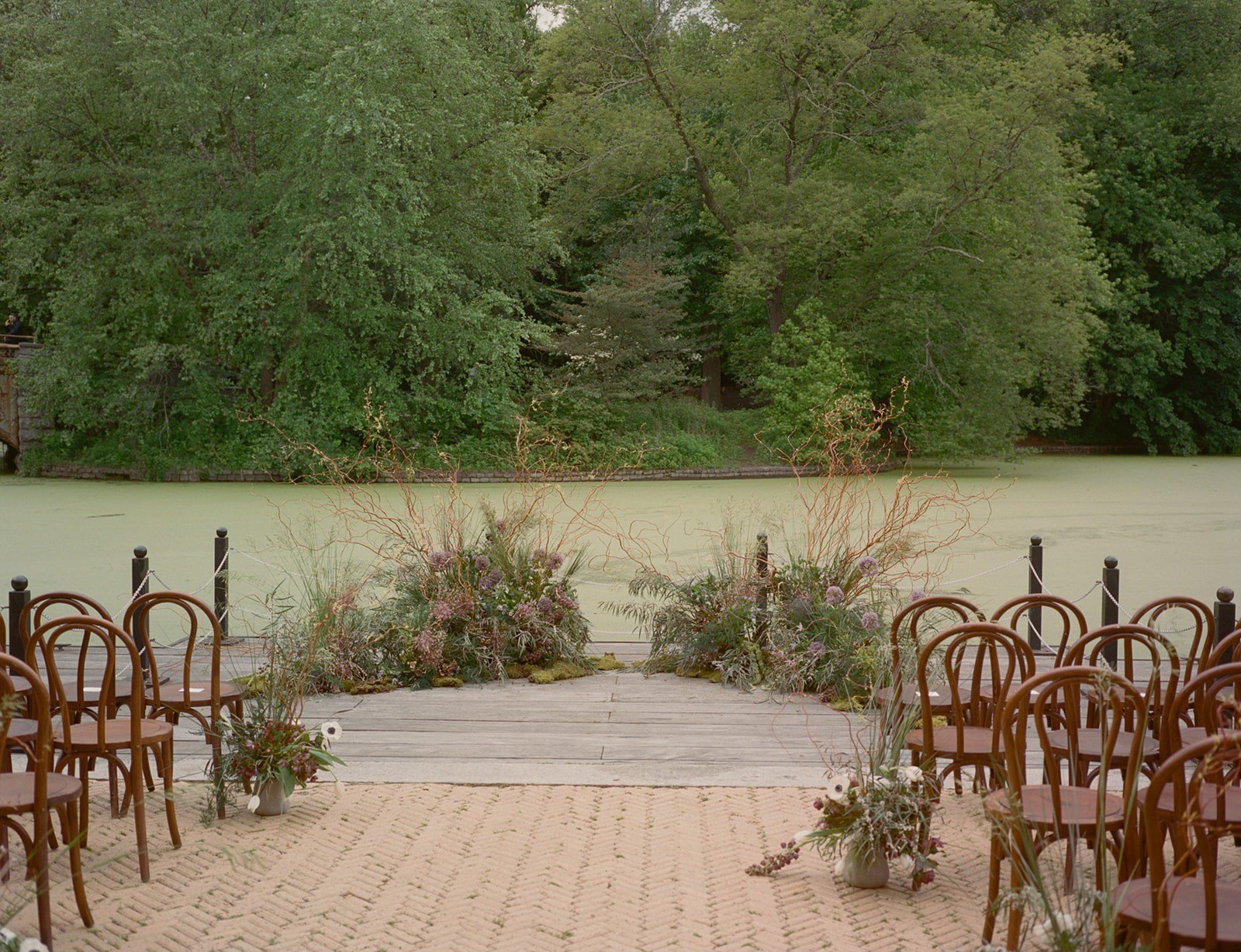
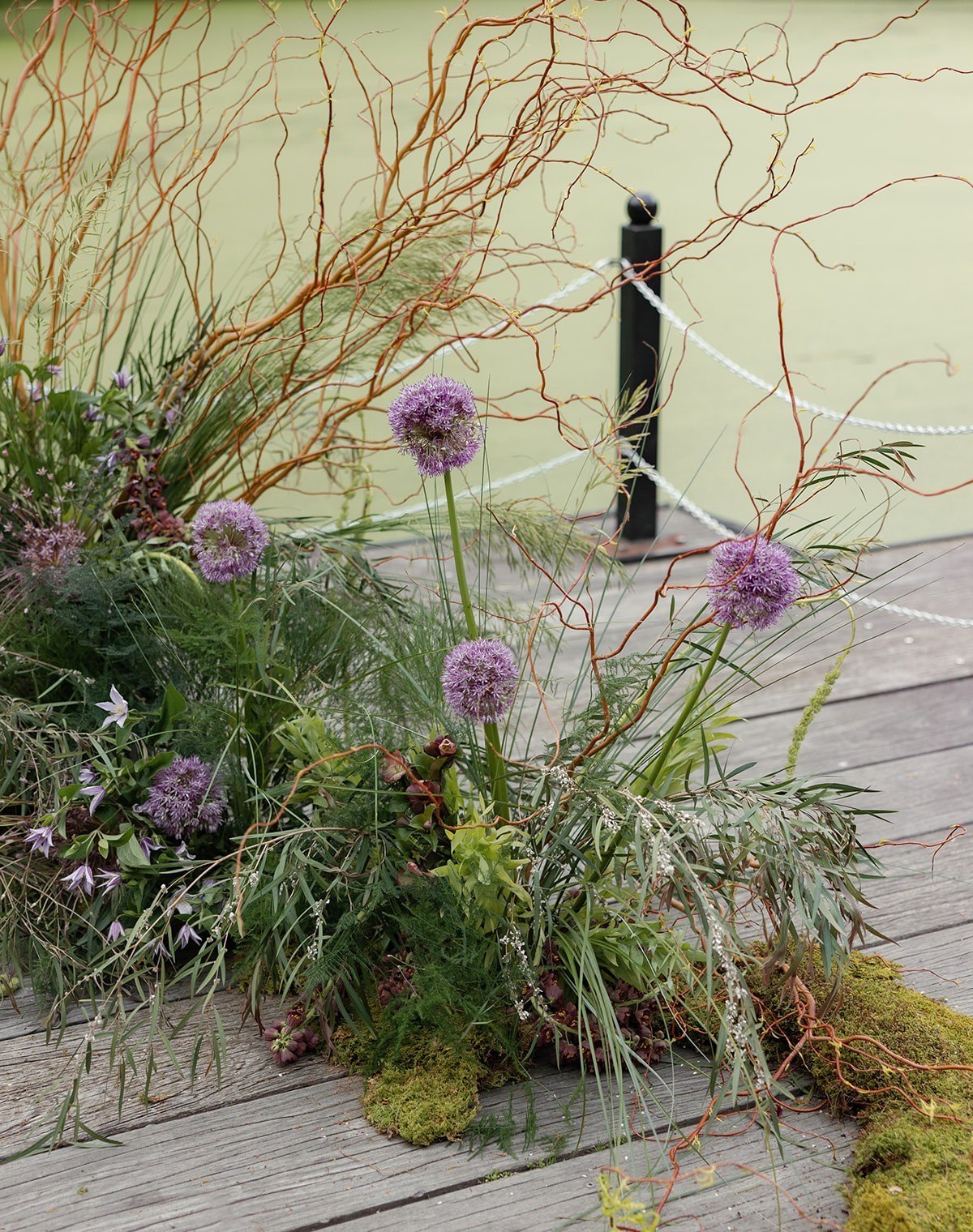
Sculptural florals prove the same point from the other direction. Where the wild look is abundance made to seem accidental, sculptural designs are all about shape, like an asymmetrical line, a few strong stems, a lot of negative space. Couples often assume they're the splurge, because they look so deliberate and so unlike a standard arrangement. Amor del Bueno says that isn't necessarily true. A sculptural or asymmetrical centerpiece doesn't always cost more than a traditional large arrangement, and it can often sit within a similar budget while bringing far more personality to the table. Between the meadow that costs more than it looks and the sculpture that costs less than it looks, appearance turns out to be a pretty unreliable price tag.
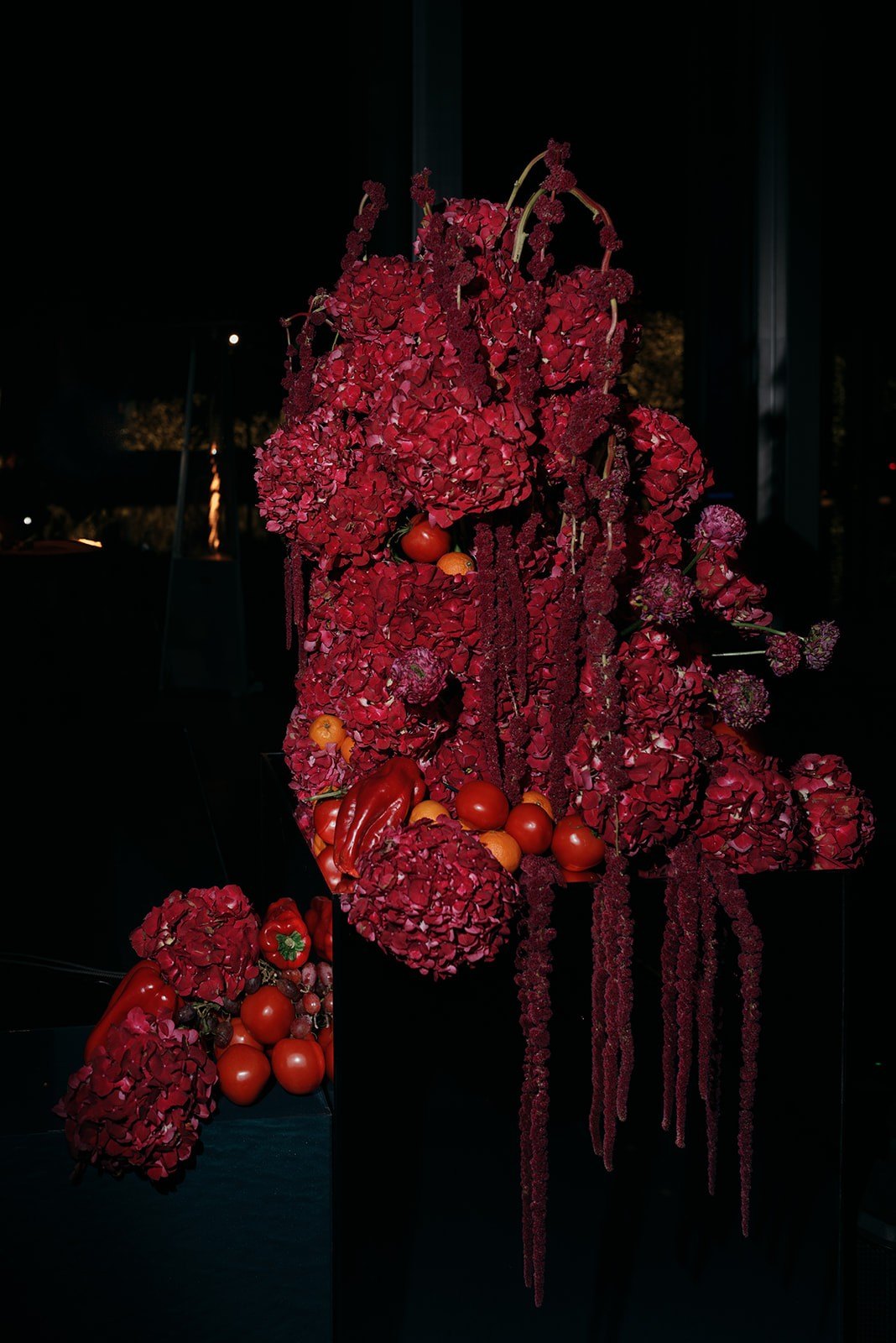
Do trendy flowers cost more?
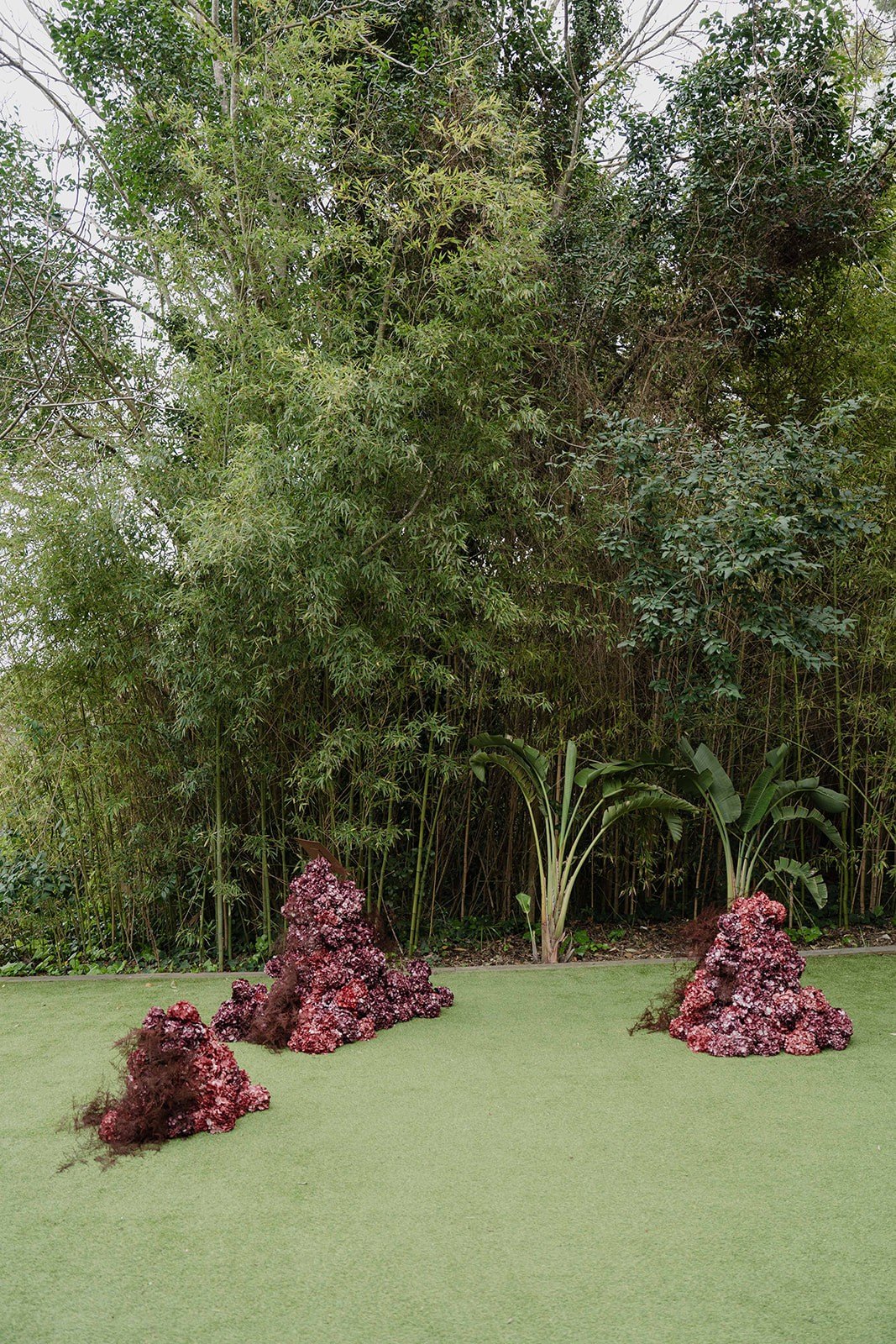
Flowers have It girls too, and fame comes with a markup. When one flower has a moment, demand can rise faster than farms can grow it, so prices climb or quality drops, sometimes both. Fern Botanica has watched callas and anthurium triple in price per stem because they became popular.
The workaround is to fall for the feeling rather than the flower. If it's a calla's clean, sculptural shape you love, other flowers have that same architecture. If you love a cascade, a wild vine or a branchy stem can create it just as well. Peonies are the reigning example. Amor del Bueno hears about them a lot, and if what a couple really loves is their softness and romance, there are plenty of other ways to get there.
The simplest move of all is to ask your florist what they're excited to work with right now. It often turns up something unexpected that captures the look you were after anyway, without the trend markup.
Does a smaller wedding mean a smaller floral budget?
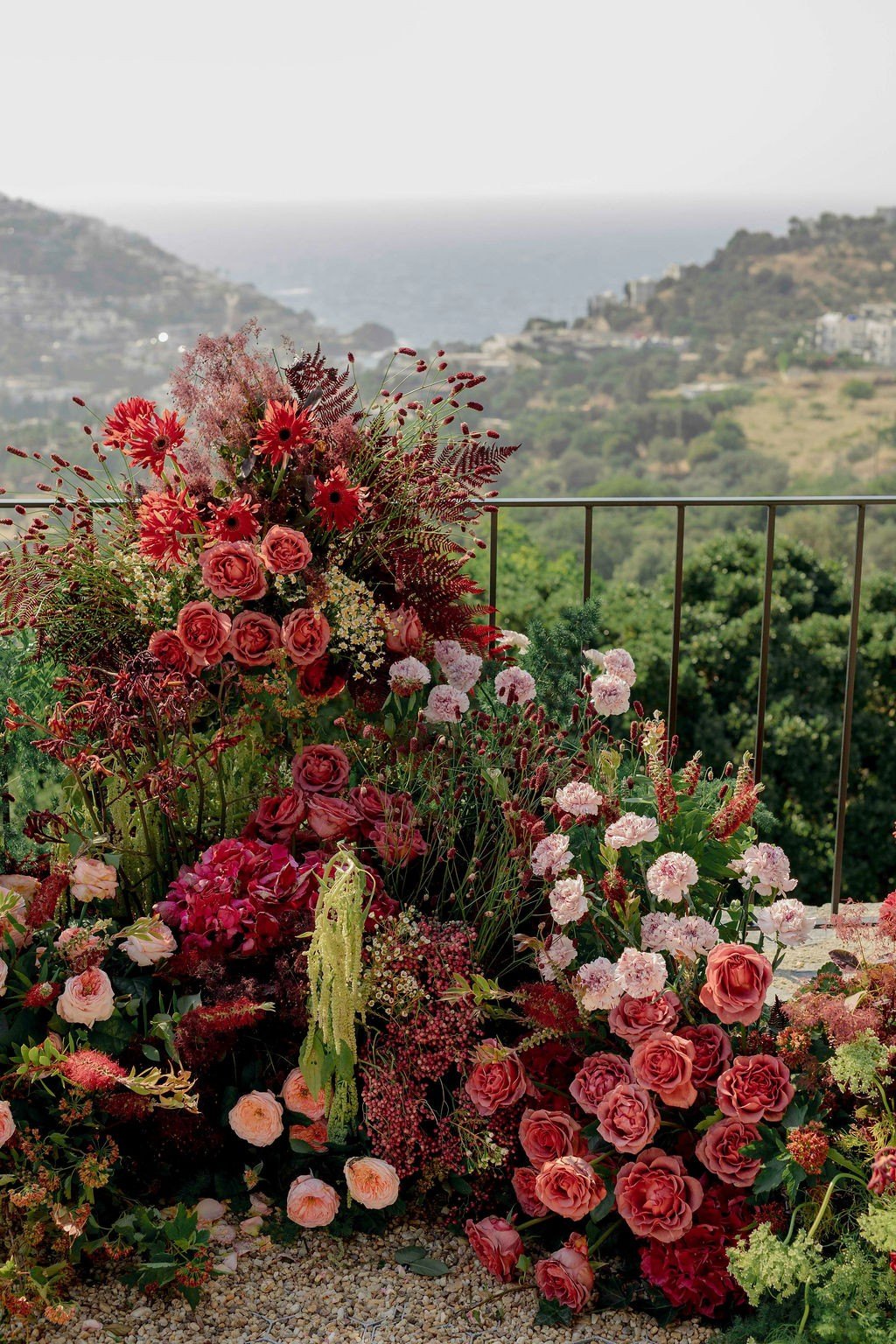
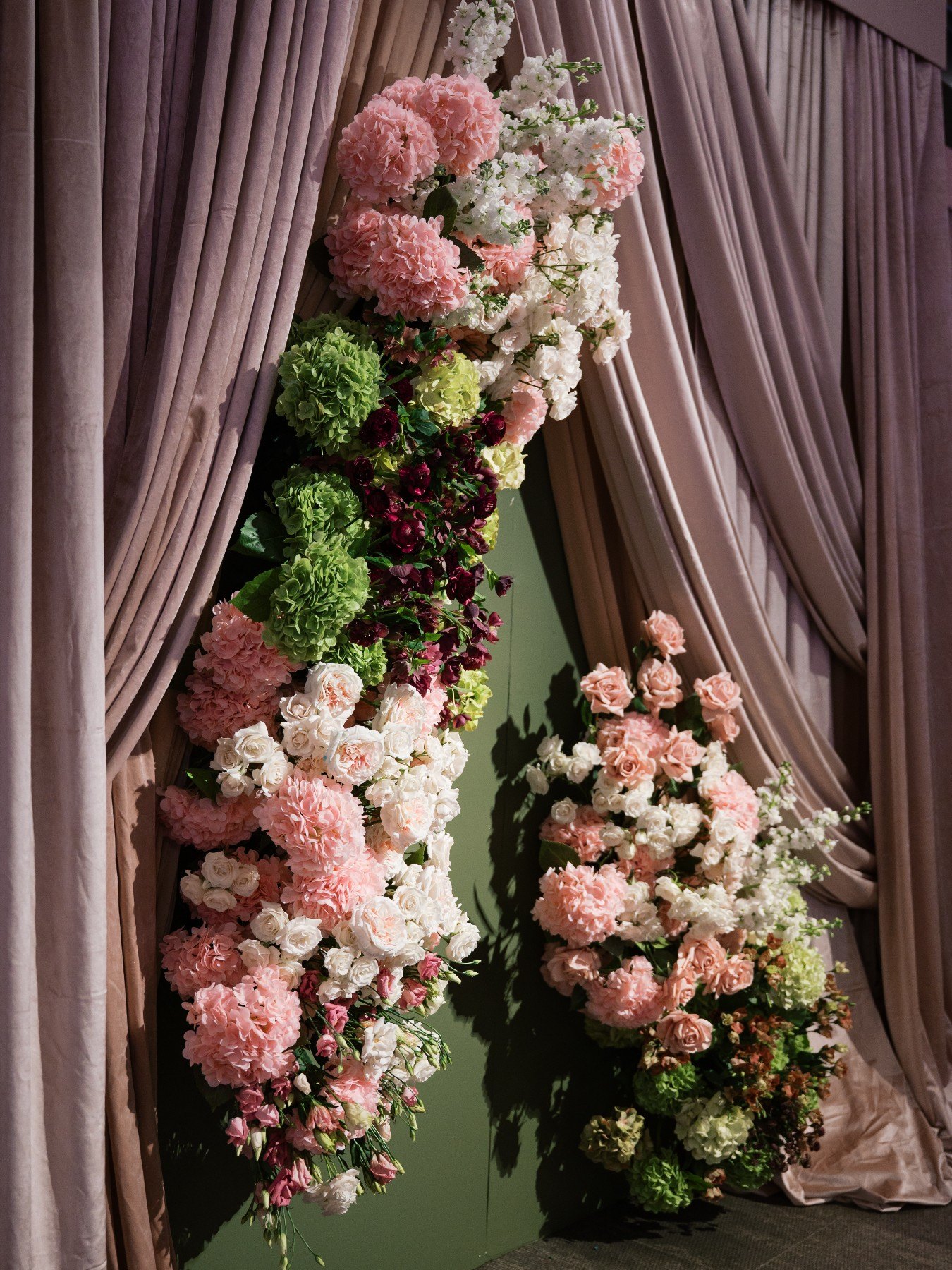
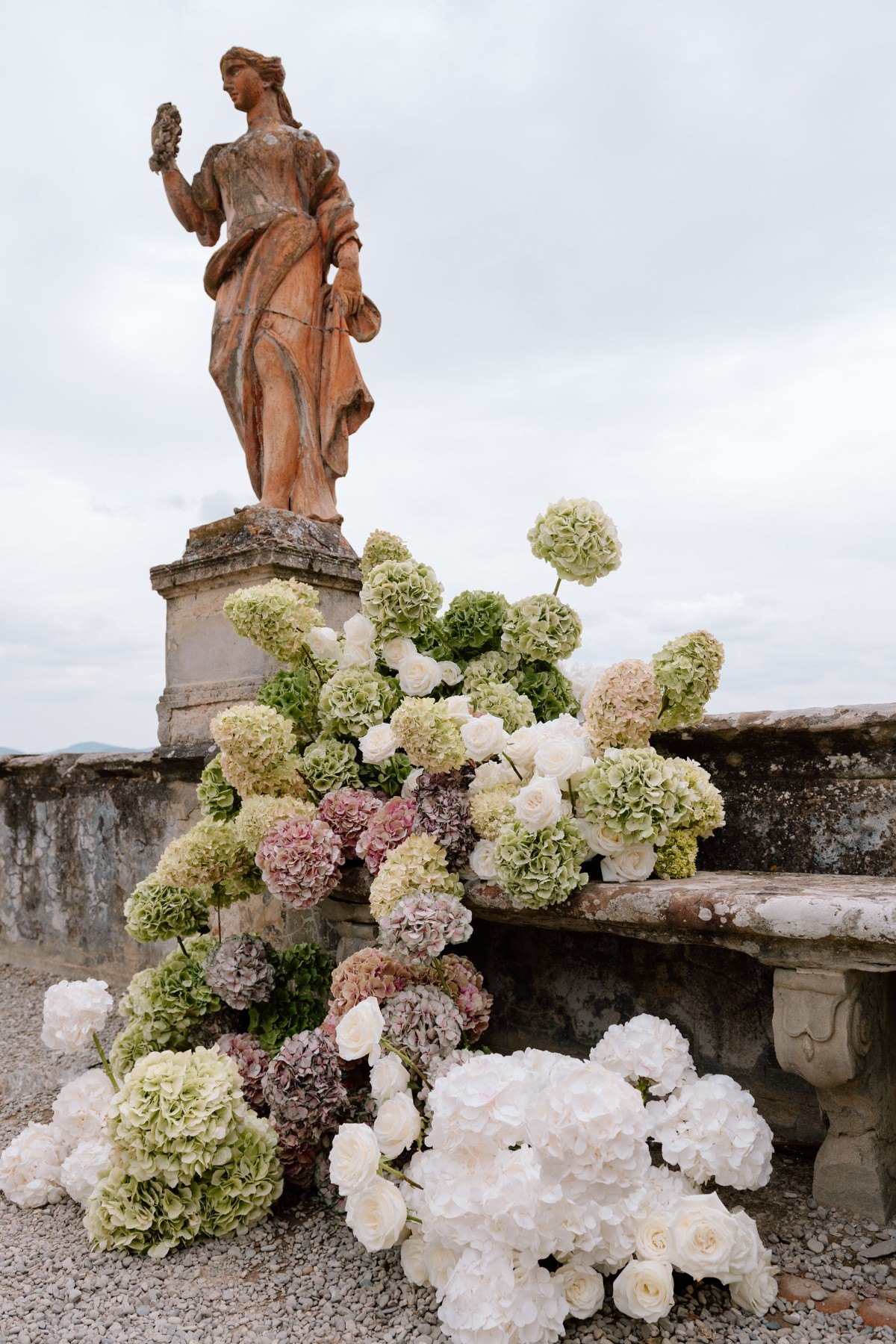
Not necessarily, and it catches a lot of couples off guard. Guest count changes how many tables need centerpieces, but installations are sized to the room and the moments you want to create, not to the headcount. Amor del Bueno has designed weddings for 50 guests with floral budgets comparable to weddings for 200. What really sets the number is how many floral moments there are, how full they are and how much of the space you want to transform.
How do you get the floral installation look on a smaller budget?
The advice here was close to unanimous. Stop sprinkling flowers on every surface and go big in one place.
Christine at Plant Girl Floral explains why it works. When a floral budget gets divided across lots of small pieces, none of them stands out and the whole effect gets diluted. Her suggestion is for couples to sit down together and decide what matters most. If a showstopping installation is the thing you'll remember forever, go for it, and pull back somewhere else to pay for it, whether that means simpler centerpieces or ceremony florals that get reused at the reception. "One true wow moment," she says, "will leave a bigger impression on you and your guests than a dozen details nobody remembers."
Where that moment goes depends on the wedding. The bar and the escort table are favorites because every guest passes them, and Violets of the Valley has a clever trick for both. They hide the vessel completely, so the flowers look like they're growing straight out of the surface. It gives you the feeling of an installation at a fraction of the scale. Arrangements raised on pedestals, a favorite of Fern Botanica, anchor the ceremony and can move to the bars afterward. Amor del Bueno often concentrates on a few places that will matter most, like the ceremony, the bar or the sweetheart table the couple will see in photos for years, then mixes centerpiece sizes so the rest of the room still feels considered.
Amor del Bueno“You don't have to do everything.”
Materials help, too. Branches, interesting foliage and seasonal flowers can be striking without being the most expensive option, and in a single statement piece they can carry a whole room.
Can you repurpose wedding flowers from the ceremony to the reception?
Giving ceremony flowers a second life at the reception is one of the most common ways couples try to stretch a floral budget, and most florists love doing it. Nobody wants to build a showpiece that's only enjoyed for half an hour. But whether it actually saves money depends on the piece, the move and the labor, and it only works if it's planned from the start.
The first question is what kind of piece it is. A hanging installation stays where it's rigged. Ground pieces are the ones that can travel, and meadows are especially good at it. A meadow lining the aisle can be carried in to frame the dance floor or the band, and Fern Botanica likes them for exactly this reason, since they read as one piece but can be broken apart for a quick flip and scattered through the room.
That same construction is also where things can go wrong. Violets of the Valley explains that a design meant to look like it's growing from the floor is usually lots of low containers, moss and individual elements arranged directly on the ground, not one object you can pick up. Building it to be portable can mean giving up some of that organic quality. Shape matters too, since a grounded floral arch that looks incredible at the altar won't necessarily make sense in front of a head table.
Then there's the labor nobody budgets for. At Violets of the Valley, setup usually wraps about an hour before guests arrive, so a flip means keeping a team on site through the ceremony, and that longer day adds up. Their turnover fee starts at $500, with a smaller team billed at $250 an hour and bigger installations needing more staff. Their rule of thumb is a useful one. Repurposing pays off when the design works well in both places, the move is simple and the labor costs less than making something new. If the design has to be compromised and a crew paid to rebuild it, the savings disappear quickly.
And now for the gossip. Florists have two pet peeves on this subject, and both are worth knowing. The first is a planner or coordinator promising a couple that the ceremony flowers can move before checking with the florist, since that decision can change how the whole piece is built. The second is letting the venue staff do the moving. The Violets of the Valley team has seen far too many reception photos with arrangements turned around backward, giving the chicken wire "a starring role." Leave the flowers to the people who built them.
What should you ask before falling for an idea?
A lot of installation heartbreak comes from falling in love with an idea before knowing the venue's rules, so the smartest time to ask is on the tour. A few questions cover almost everything.
A no isn't necessarily the end of the idea. Audrey in the Garden finds that restrictions often push florists toward something more interesting, as long as everyone is willing to approach the space a little differently.
When you sit down with your florist, bring the photo, but lead with what you love about it. Amor del Bueno starts every installation conversation by asking exactly that, because the answer might be the flowers themselves or might be the way the whole room feels, and those two answers lead to very different designs. Audrey would much rather build something that captures what you love about an image than copy a piece that was made for a different room. From there, ask what's driving the price of the piece you want, and mention up front if anything needs to move between the ceremony and the reception.
Then ask the question three of the six florists said they wish couples asked and almost never do, which is simply "What would you do?" Florists who work the same venues week after week watch couples bring in the same ideas over and over. "As creatives we always have dream ideas for a space," says the team at Fern Botanica, "so asking opens up new ideas." For Audrey, it's a chance to surprise someone.
Audrey in the Garden“I want flowers to feel like they're a part of the space, not just something that was brought in and placed there.”
More floral installations we love
Get lost in Cherry- Amelie Botanical Studio
- Amor del Bueno
- Audrey in the Garden
- Fern Botanica
- Plant Girl Floral
- Violets of the Valley
Photography: Anastasia Photography, Berkshire Wedding Photography, Charla Storey, David Lack Photo, Katie Gracen Weddings, Katie Liz Photo, Kelly Vahos, Kemal Uysal, Kyla Jeanette Photography, Ladoree Studio, Light as Gold, Liron Erel & Co, Lisa Marie Photography, Madi Pere, Matthew Hanlon Photography, Meghan Baskin, Meredith Coe Photography, Monica Leggio, Niki Marie Photography, Ruby Olivia Photography, Taylor Stuck Photography, Victoria Beardslee Photo.
All images are credited to their sources where known. If you own one of these images and would like the credit updated or the image removed, email us at hello@caratsandcake.com.
